Buying more passes doesn’t automatically save money in Osaka. In short: the Enjoy Eco Card for getting around the city, the Osaka Amazing Pass for two or three paid attractions a day, and a Keihan pass when you combine Osaka with eastern Kyoto and Uji. On a Universal Studios Japan day, or for Kyoto Station, Arashiyama and Kinkakuji, neither the Amazing Pass nor a Keihan pass may be the answer.
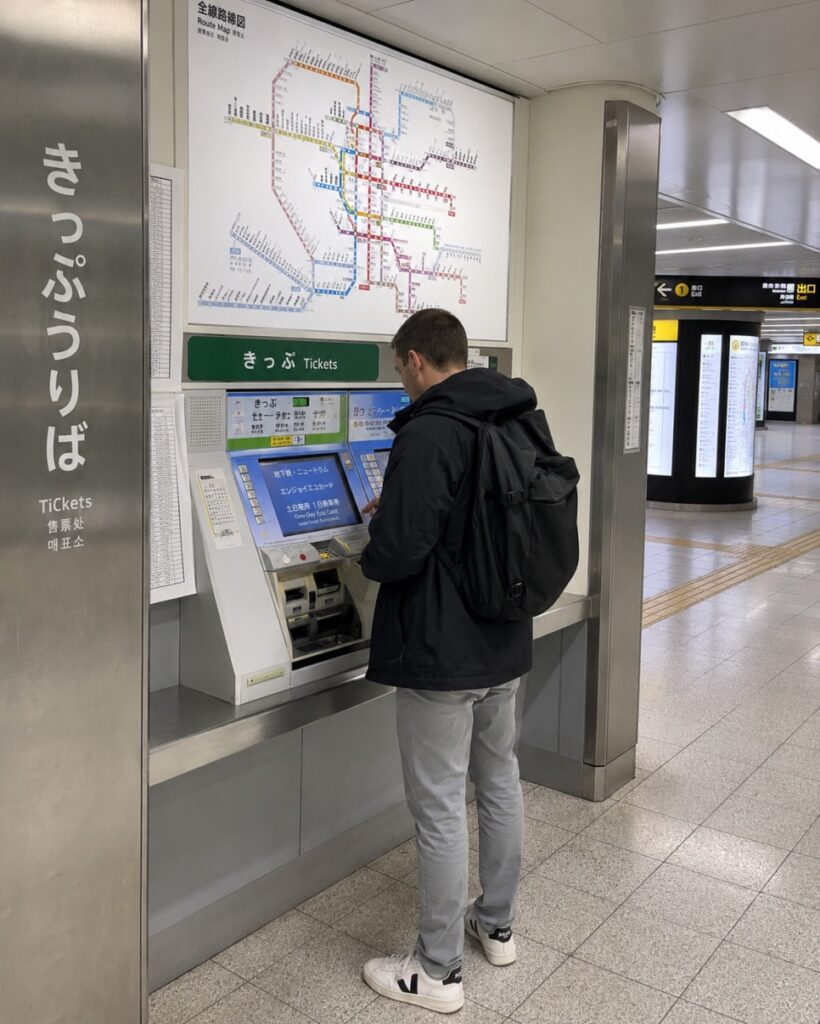
Planning an Osaka trip with kids, the pass names alone are confusing: Osaka Amazing Pass, Enjoy Eco Card, Osaka e-Pass, Keihan Kyoto-Osaka Sightseeing Pass, JR Kansai Pass and more. I used to think one pass would solve everything, but in practice your route matters more than the pass. With kids, cutting transfers and saving energy beats ticking off sights.
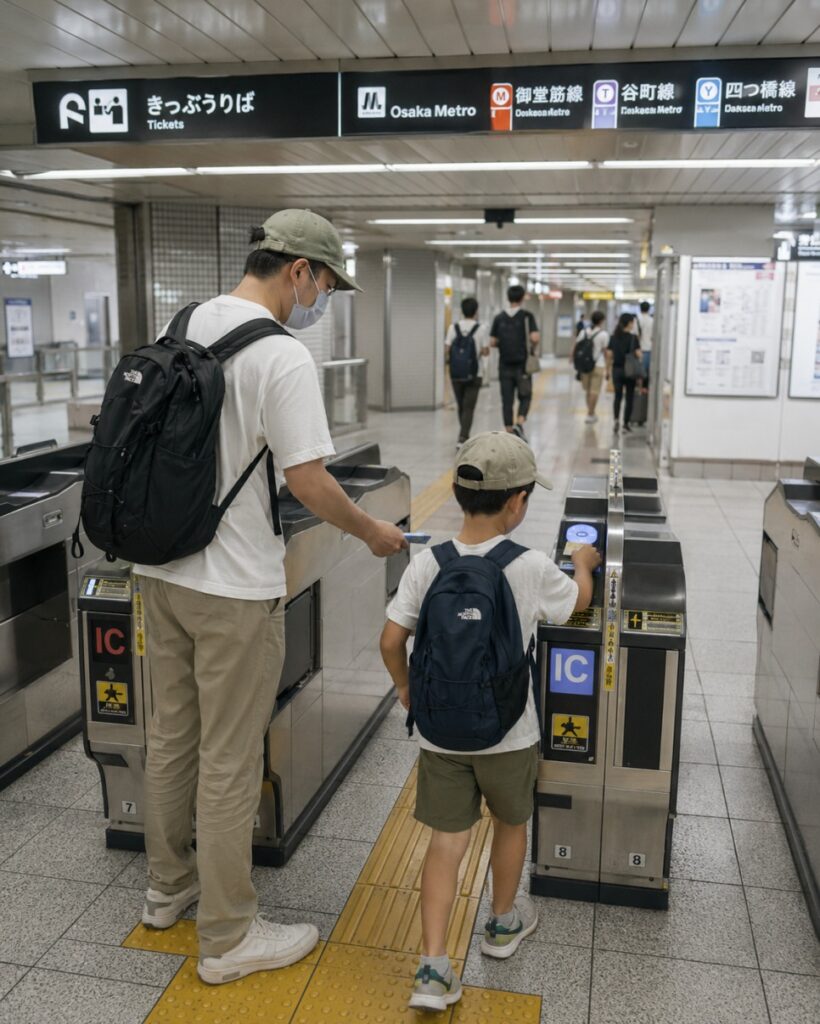
This guide covers the essentials for choosing an Osaka transport pass as of 2026. The right choice depends on whether you stay in Osaka, add a Kyoto day trip or go as far as Uji.
Osaka Transport Pass: The Bottom Line
It’s easiest to think of each Osaka transport pass as one of four options.
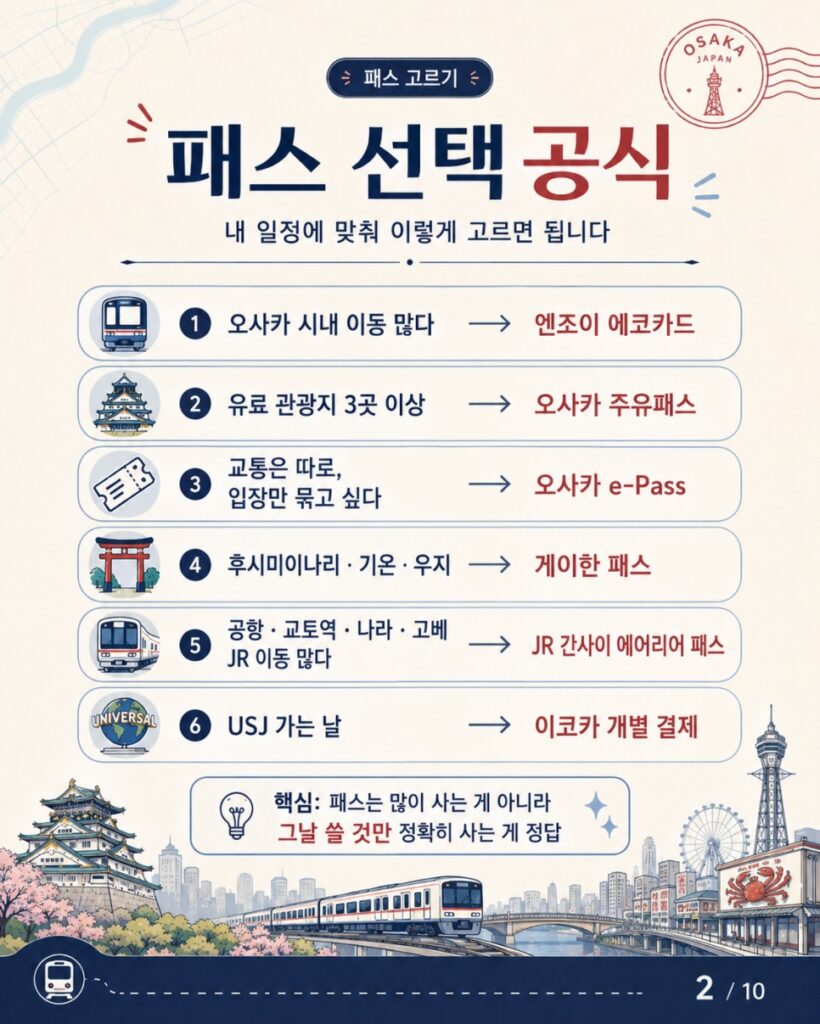
First, if you only need subway rides in the city, the Enjoy Eco Card is the cleanest choice.
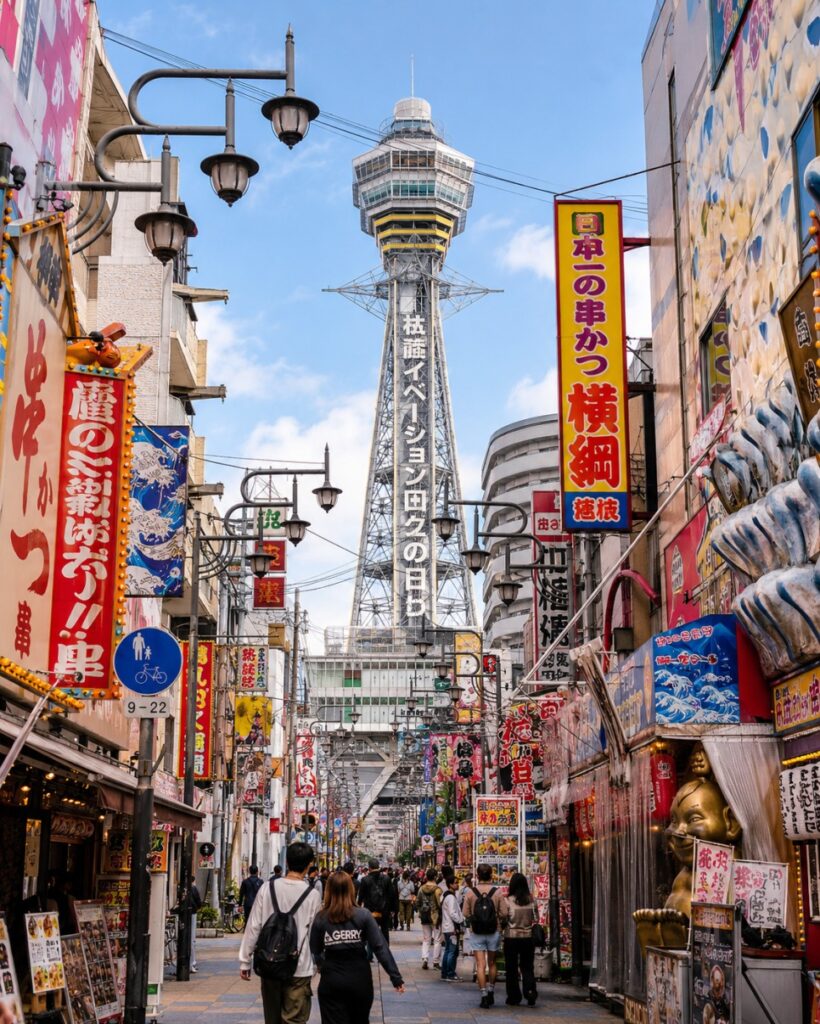
Second, if you plan several paid attractions like Osaka Castle, the Umeda Sky Building, Tsutenkaku and the Dotonbori River Cruise, the Osaka Amazing Pass is good.
Third, if you want attraction entry without transport, the Osaka e-Pass is an alternative.
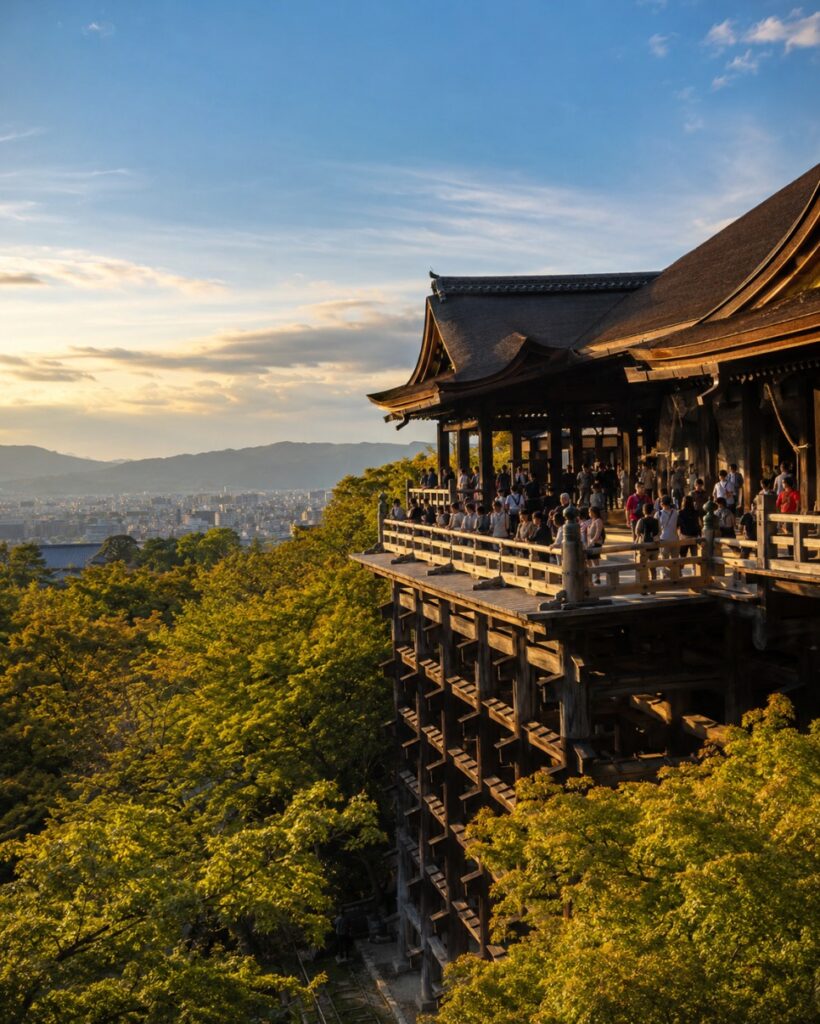
Fourth, for an eastern Kyoto day trip from Osaka to Fushimi Inari, Gion, Kiyomizu-dera and Uji, look at the Keihan passes.
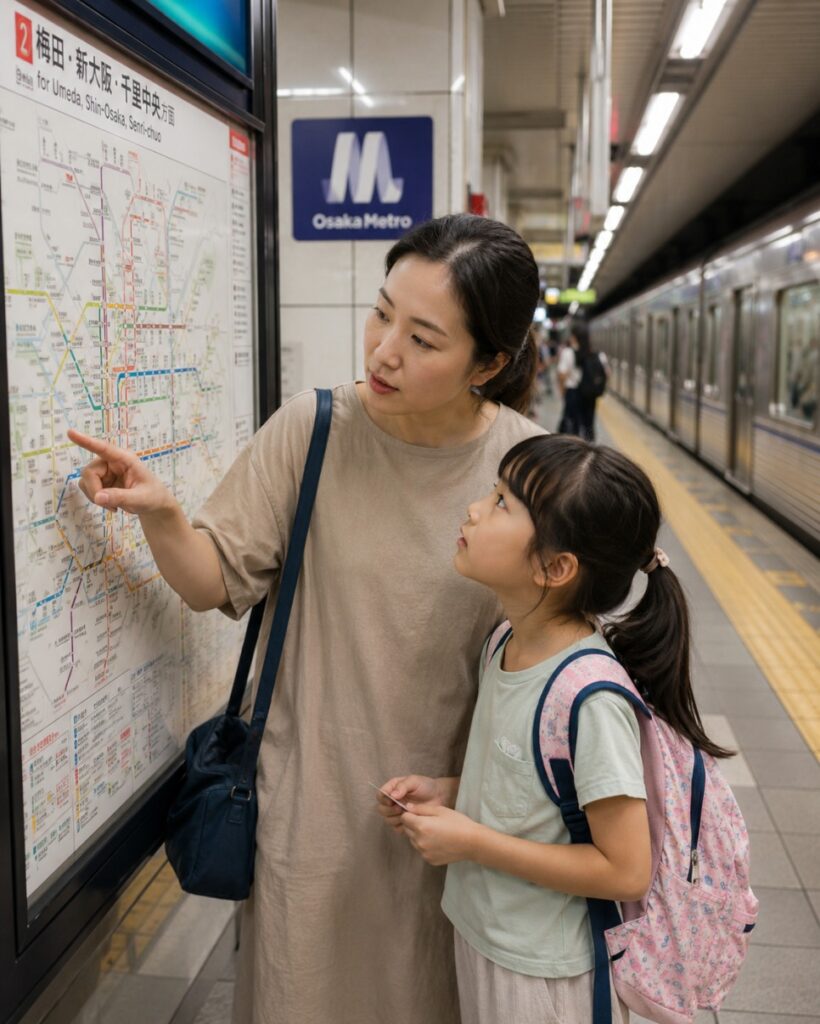
For families, “is the route easy?” matters more than “getting your money’s worth.” Five sights in a day won’t help if your child is exhausted, so match the pass to the pace of your day.
Osaka Amazing Pass: Only Worth It With Many Attractions
For 2026–2027, the Osaka Amazing Pass costs 3,500 yen for one day and 5,000 yen for two. It’s a digital ticket covering Osaka Metro, city buses and some private railways, plus free entry or discounts at about 40 major attractions.
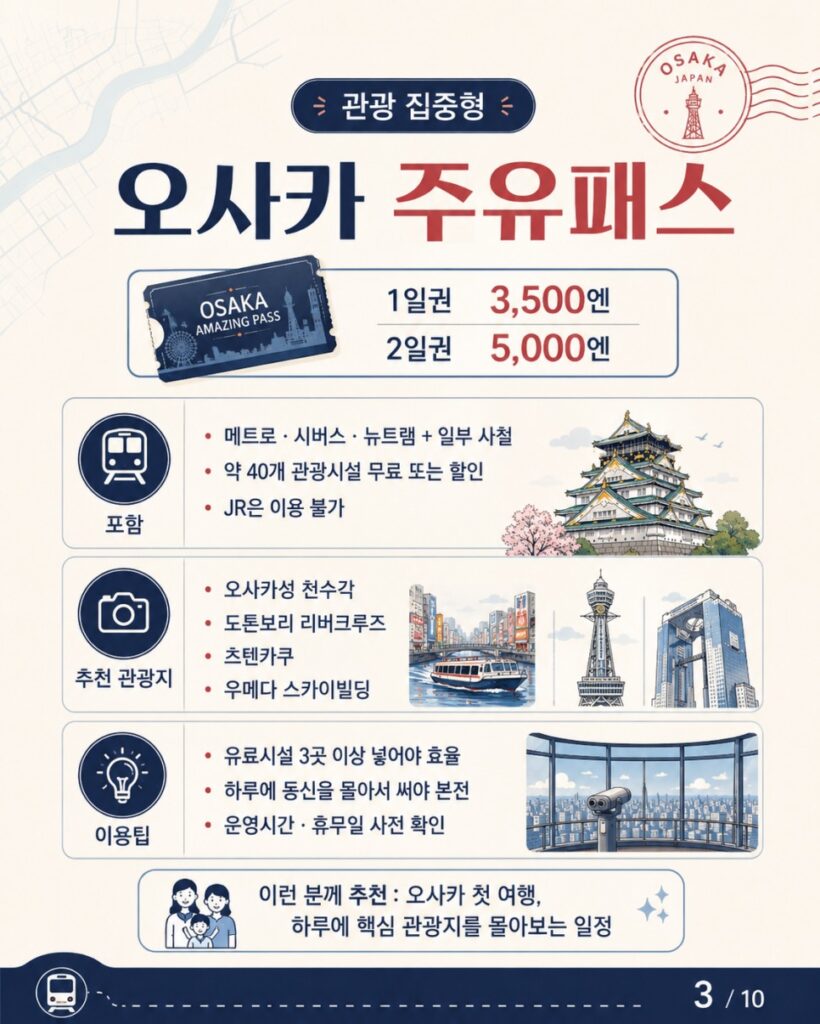
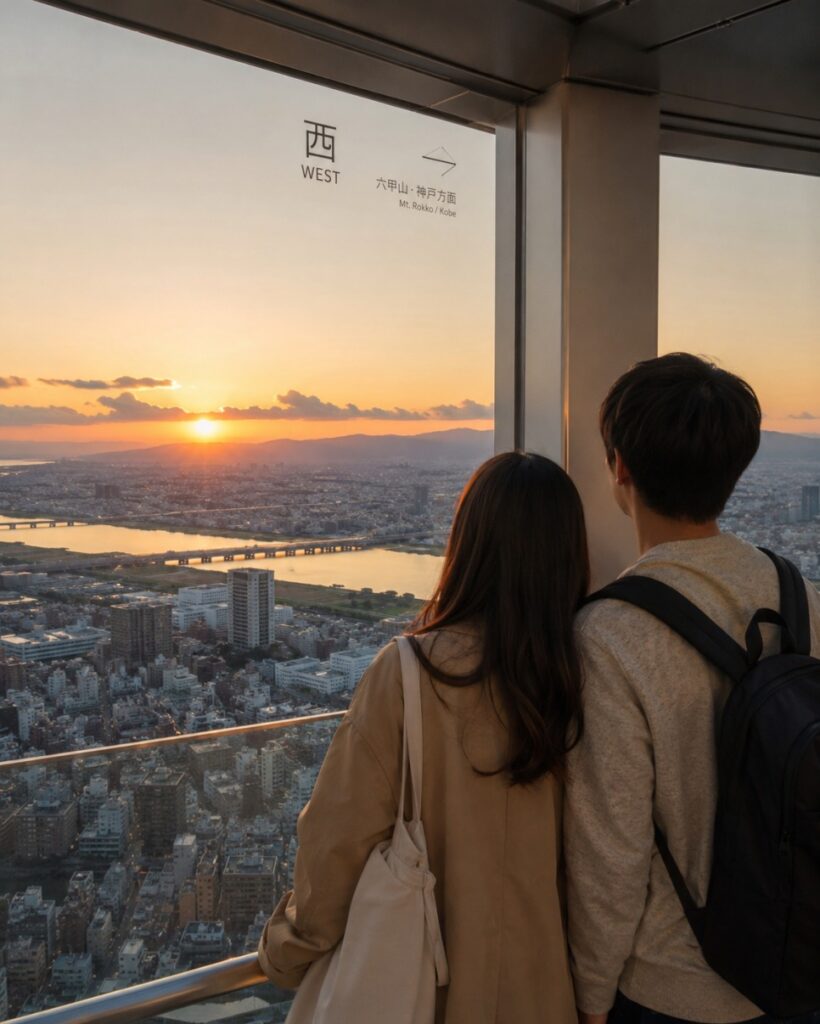
It shines on days with two or three paid sights, such as Osaka Castle’s main tower, the Umeda Sky Building Floating Garden, the Dotonbori River Cruise and Tsutenkaku. It’s ideal for first-timers who want to see the highlights in one day.
It’s more of a sightseeing pass with entry than a transport pass, though. On days with just a few subway rides, it’s expensive. With kids, check opening hours, last entry and cruise bookings; queues at popular sites can make a day tighter than the map suggests.
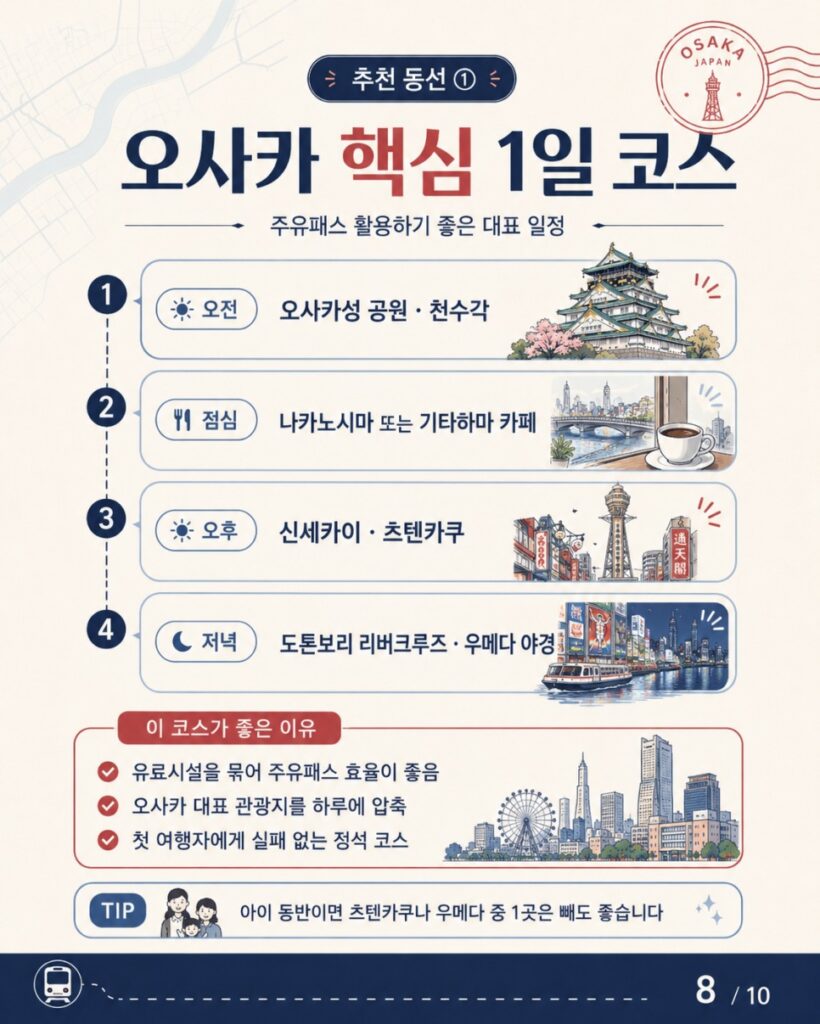
For families, aim for two areas a day instead of three: Osaka Castle in the morning, the river cruise and Shinsaibashi in the afternoon and Umeda at night. Add Tsutenkaku if your child has energy, but cut back with young kids or a stroller.
Enjoy Eco Card: When You Only Need City Transport
For subway-based travel in the city, the Enjoy Eco Card is the best value. As of 2026, it’s 820 yen for adults on weekdays, 620 yen on weekends and holidays, and 310 yen for children, covering Osaka Metro and city buses for a day, with some attraction discounts.
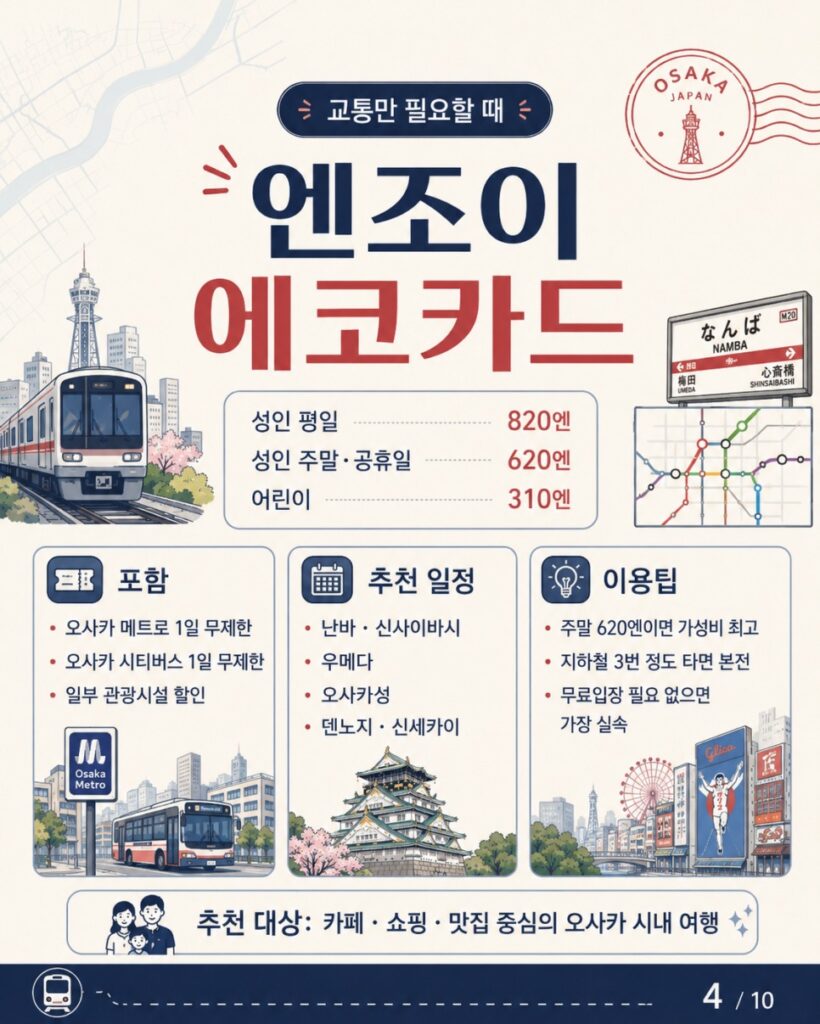
As an Osaka transport pass, this is the Amazing Pass’s real rival. If you don’t need free entry, there’s no reason to buy a 3,500-yen pass. For Namba, Shinsaibashi, Umeda, Osaka Castle and Tennoji by subway, the Enjoy Eco Card makes much more sense.
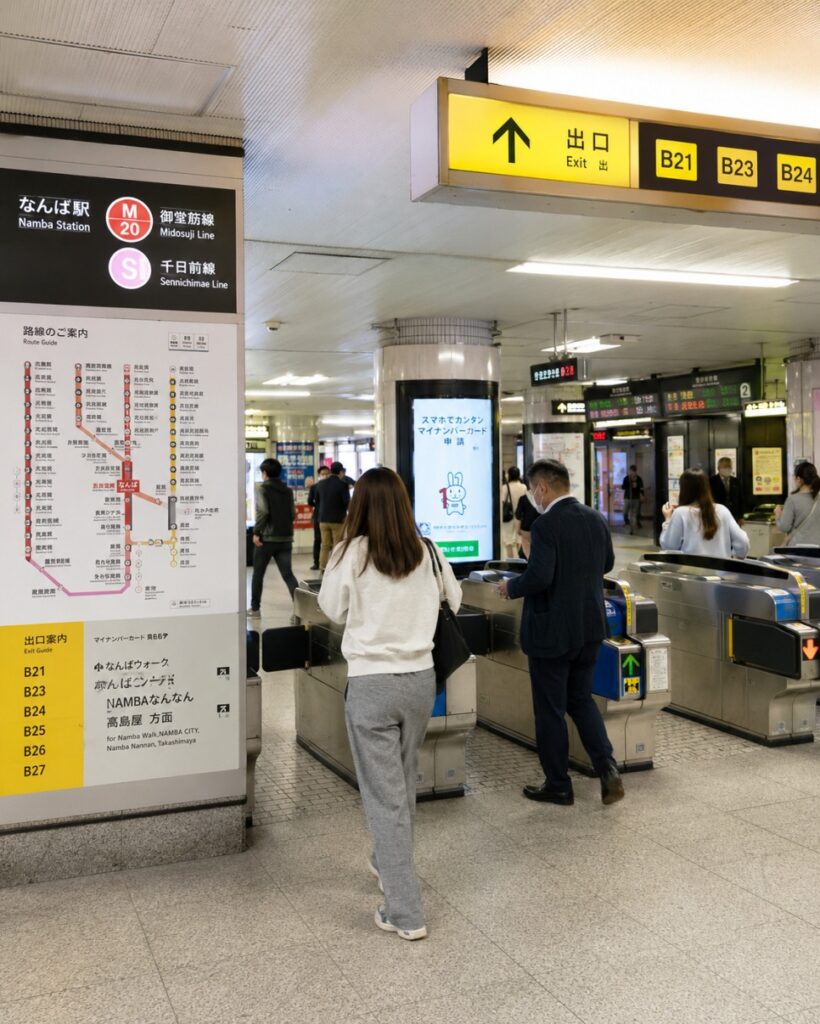
With kids, you often return to the hotel midday. On days split between morning sightseeing, a hotel break and dinner in Dotonbori, a day pass saves buying tickets and counting change.
JR isn’t included. On a Universal Studios Japan day that needs the JR Yumesaki Line, pay separately with an IC card like ICOCA.
Osaka e-Pass: Attraction Entry Without Transport
The Osaka e-Pass costs 2,400 yen for one day and 3,000 yen for two. The key point: it has no transport function. It’s an entry pass for major attractions via QR code.
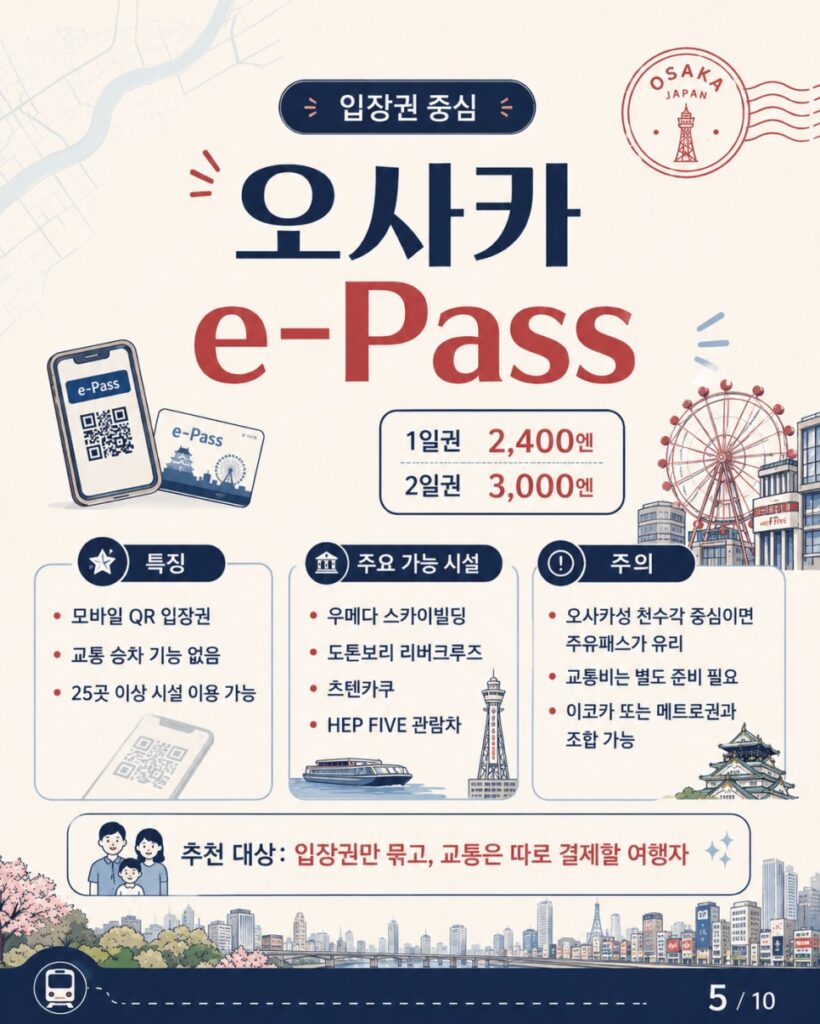
It suits travelers already using ICOCA who don’t ride the subway much but want to bundle a few paid attractions, like the Umeda Sky Building, Dotonbori River Cruise and Tsutenkaku. Conditions and hours vary, so check before you go.
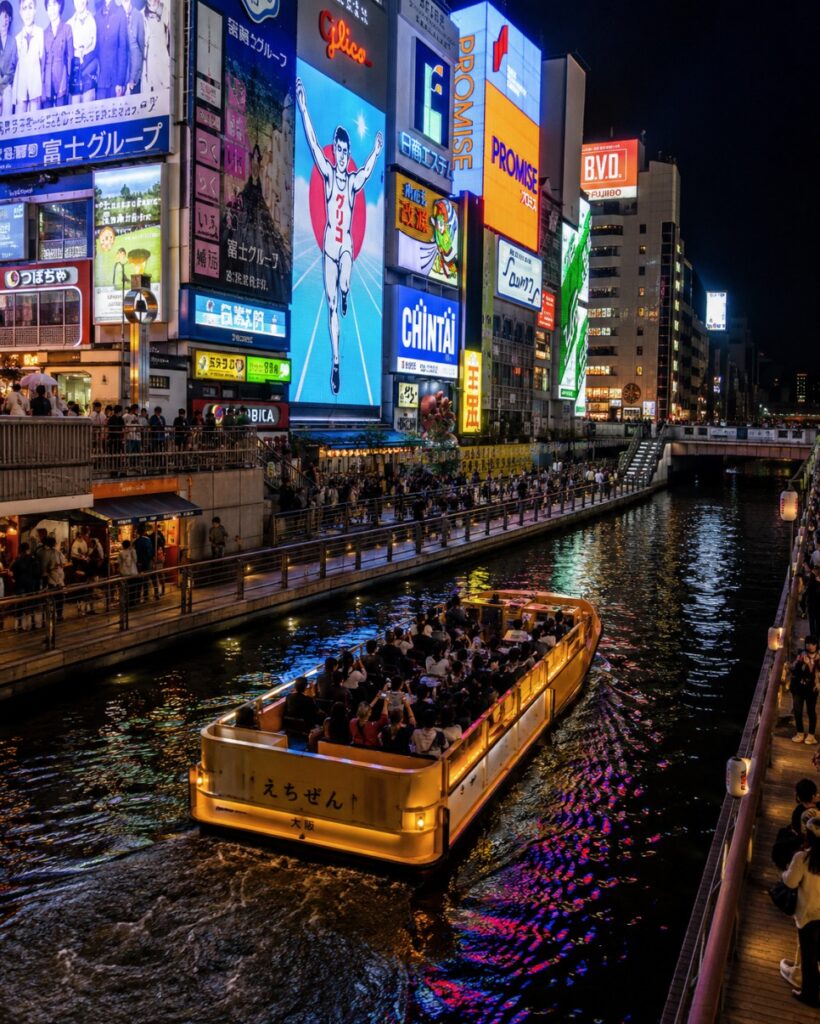
Compared with the Amazing Pass, transport is the big difference. Lots of subway rides plus lots of attractions favors the Amazing Pass; few rides and selected attractions favors the e-Pass.
Keihan Passes: Essential for Eastern Kyoto
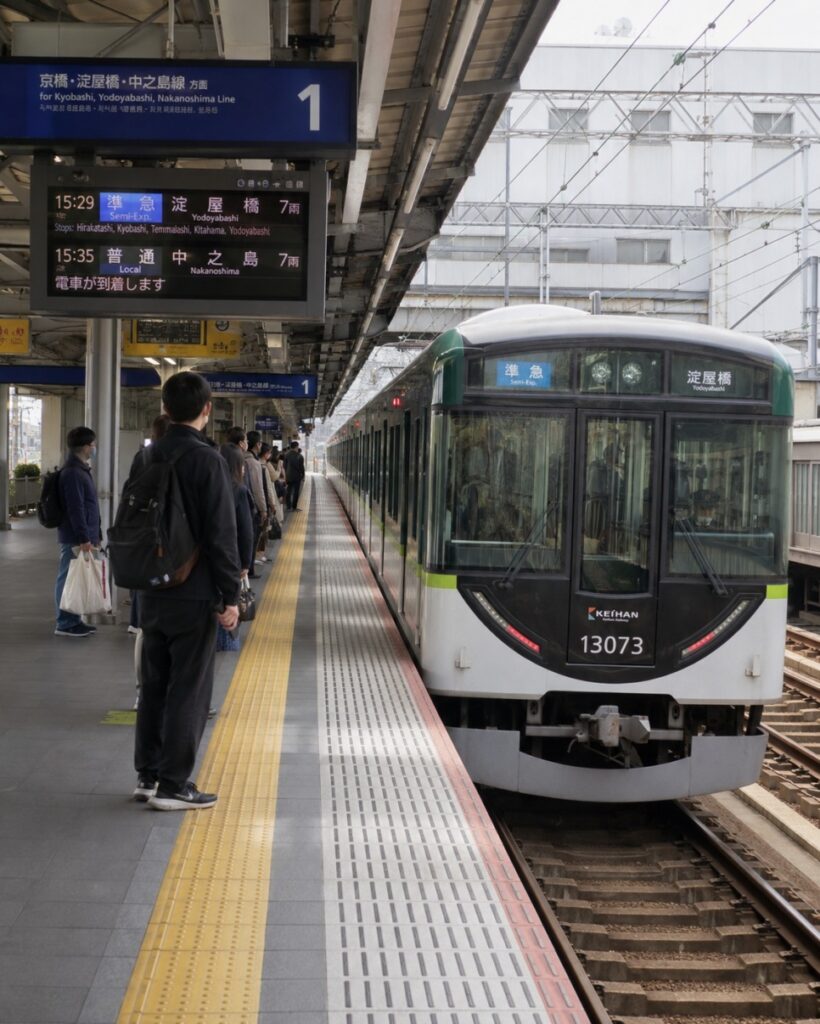
Any Osaka transport pass guide needs the Keihan passes. If you’re based in Osaka and day-tripping to Kyoto, Keihan is often more practical than JR. It doesn’t go to Kyoto Station, but it serves eastern Kyoto: Fushimi Inari, Gion, Kiyomizu-Gojo and Uji.
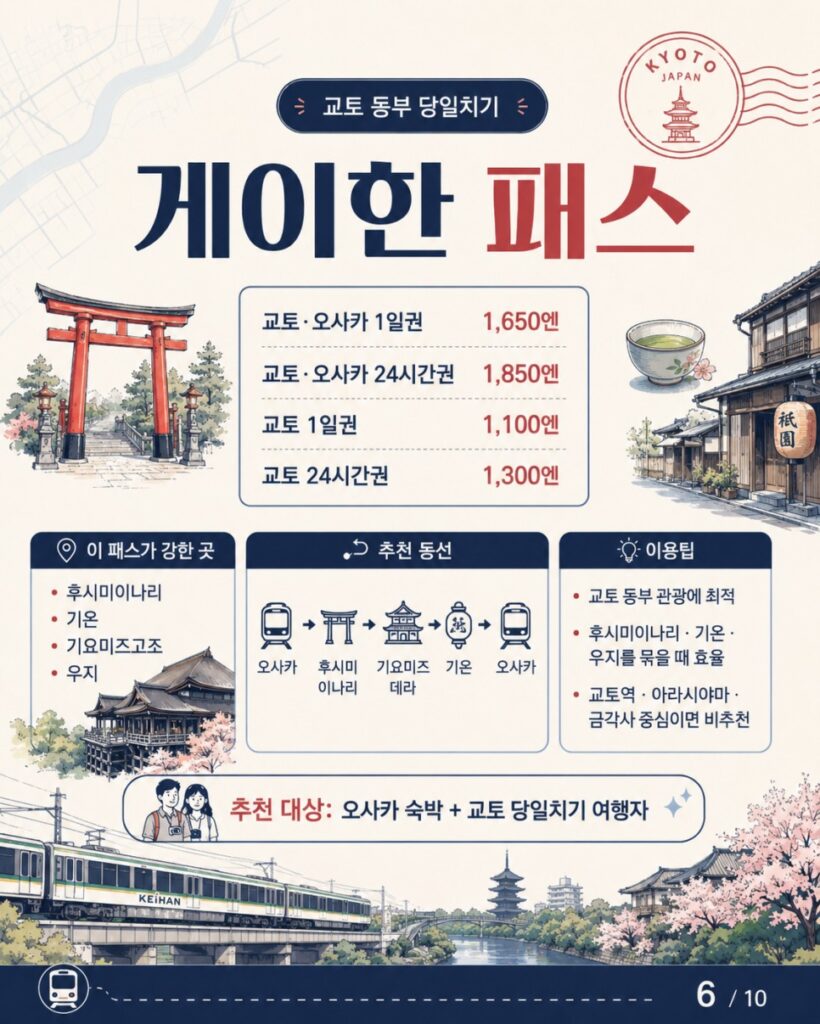
The Keihan Kyoto-Osaka Sightseeing Pass is 1,650 yen for one day or 1,850 yen for 24 hours. The Keihan Kyoto Sightseeing Pass is 1,100 yen for one day or 1,300 yen for 24 hours. The Keihan plus Osaka Metro one-day pass is 2,160 yen.
Your hotel location matters when choosing this Osaka transport pass. From Yodoyabashi, Kitahama, Tenmabashi or Kyobashi, the route is excellent. If you’re deep in Namba, getting to a Keihan station adds time, so include that leg in your calculation.
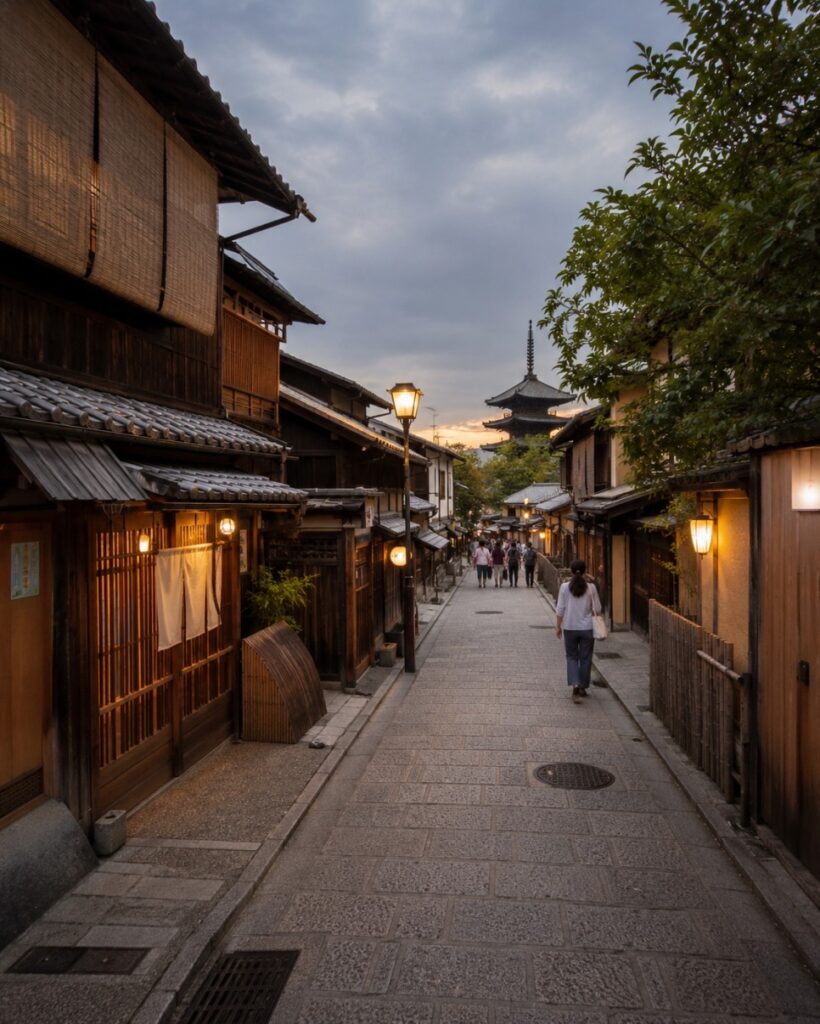
Top Keihan sights include Fushimi Inari Shrine, Gion, Hanamikoji, Yasaka Shrine, Kiyomizu-dera and Byodoin in Uji. Fushimi Inari is the signature stop, and Uji pairs its matcha street with Byodoin.
With kids, Fushimi Inari and Gion are the easiest. Kiyomizu-dera is lovely but hilly and crowded, so skip it on stroller days or when energy is low.
Keihan Pass Course 1: Eastern Kyoto Day Trip From Osaka
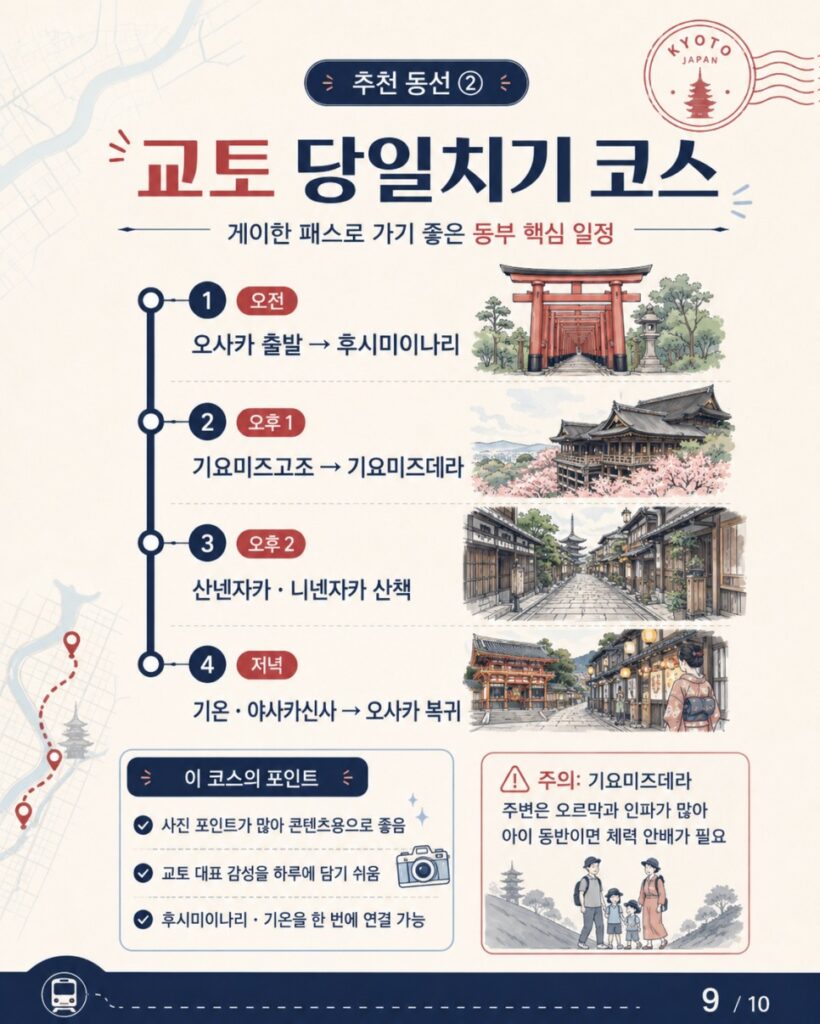
The basic route starts at Yodoyabashi or Kitahama in Osaka and covers Fushimi Inari, Kiyomizu-dera and Gion.
Start at Yodoyabashi or Kitahama, get off at Fushimi Inari and walk the shrine, ride to Kiyomizu-Gojo for Kiyomizu-dera, Sannenzaka and Ninenzaka, then go to Gion-Shijo for Yasaka Shrine, Hanamikoji and Gion before returning to Osaka on Keihan.
This is the classic first-time Kyoto route, packed with atmosphere and photo spots. There’s a lot of walking around Kiyomizu-dera, though; with kids, stroll Sannenzaka and Ninenzaka lightly and move on to Gion.
The recommended pass is the one-day Keihan Kyoto-Osaka Sightseeing Pass. If you start late afternoon and want to use it the next morning, consider the 24-hour version.
Keihan Pass Course 2: Fushimi Inari and Uji in One Day
To make the most of a day, combine Fushimi Inari and Uji.
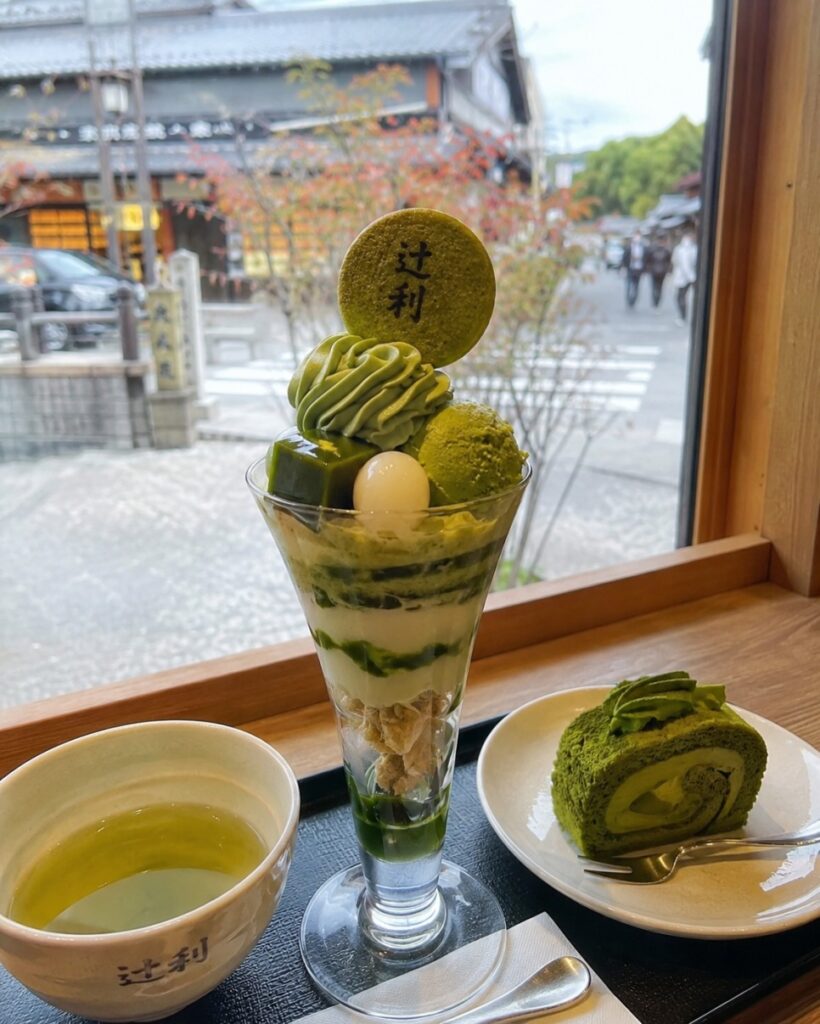
Start at Yodoyabashi or Kitahama, visit Fushimi Inari Shrine, transfer at Chushojima for Uji to see Byodoin and the matcha street, then return on Keihan to Gion-Shijo for an evening walk in Gion before heading back to Osaka.
This route packs in a shrine, a temple, the matcha street and Gion at night, but it’s a long day. With kids, adding Uji eats your slack time, so drop Kiyomizu-dera if you go to Uji.
Keihan Pass Course 3: Osaka Castle, Eastern Kyoto and Dotonbori
To combine city travel and eastern Kyoto in one day, the Keihan plus Osaka Metro one-day pass can pay off.
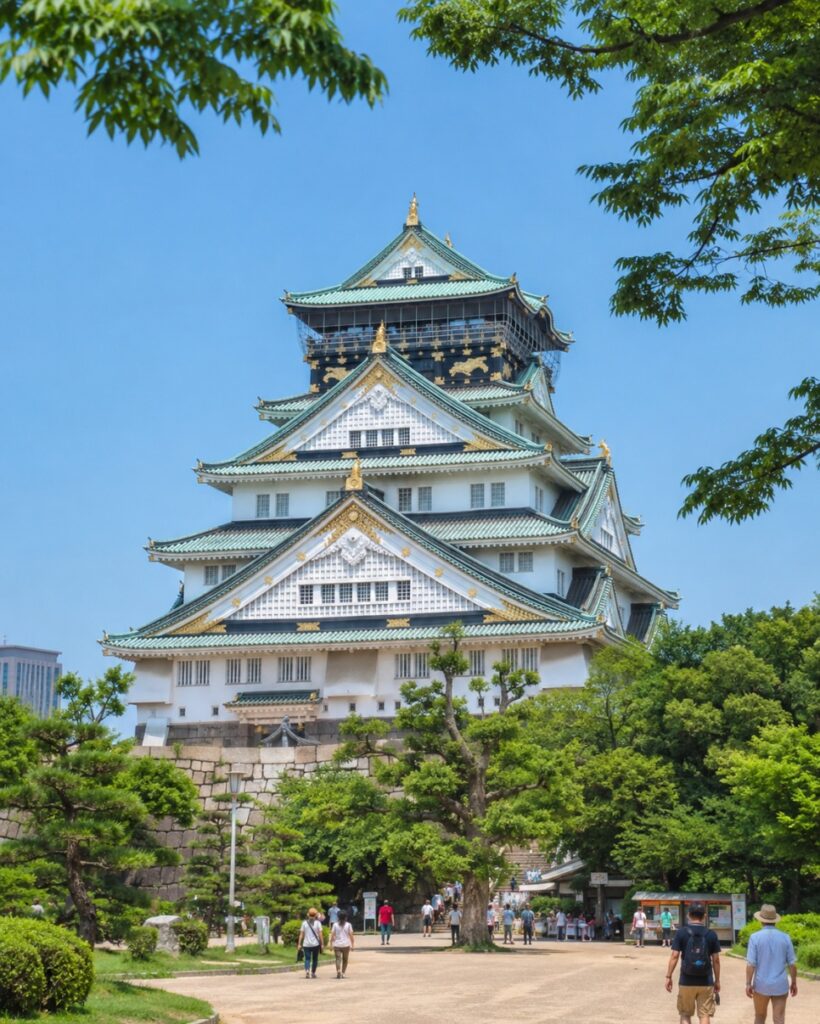
Take the metro to Tenmabashi and walk Osaka Castle park, ride Keihan from Tenmabashi toward Kyoto for Fushimi Inari, Gion and Yasaka Shrine, then return to Osaka and take the metro to Namba or Dotonbori.
This covers half a day in Osaka and half in Kyoto on one ticket, but it’s busy. With kids, stick to a walk in the castle park rather than entering the tower.
When Keihan Passes Pay Off and When They Don’t
They clearly pay off for Fushimi Inari, Gion, Kiyomizu-dera and Uji from Osaka, especially if you’re staying near Yodoyabashi, Kitahama, Tenmabashi or Kyobashi and prefer trains over buses.
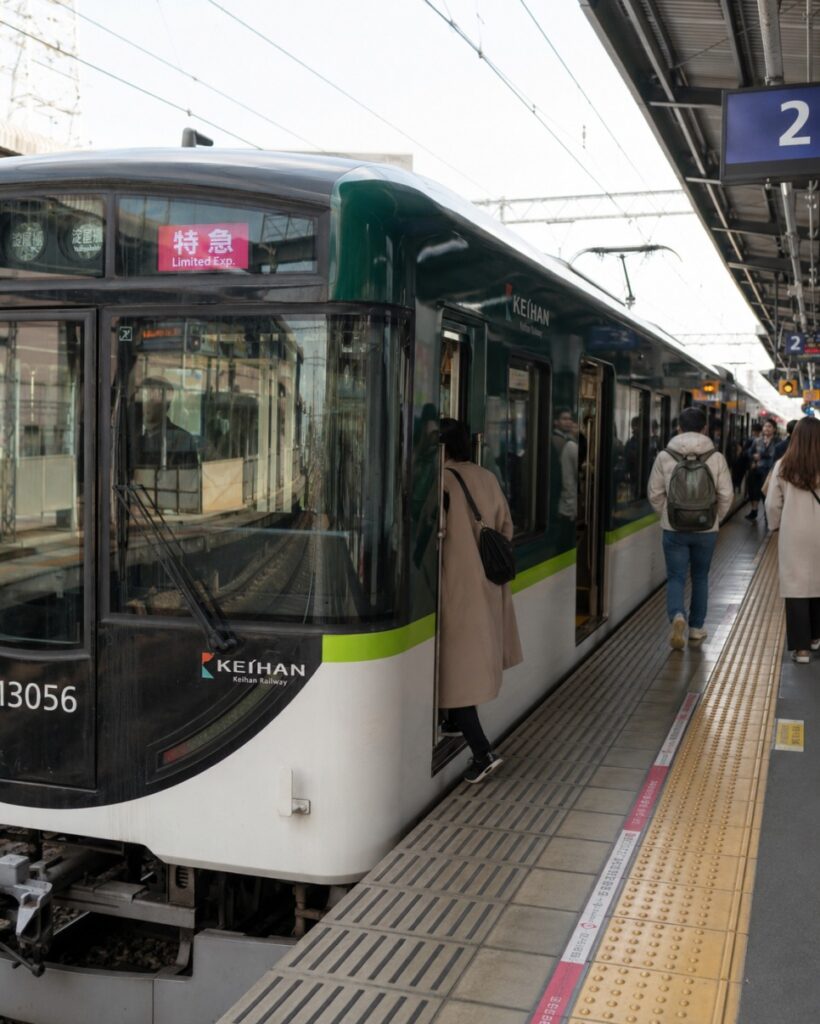
They’re less useful if your focus is Kyoto Station, Arashiyama or Kinkakuji, or if reaching a Keihan station from Namba is a hassle. If you’ll ride many Kyoto buses or visit just one Kyoto sight, pay as you go.
On a Universal Studios Japan day, skip Keihan passes entirely. The JR Yumesaki Line is involved, so paying with ICOCA is simplest.
When to Consider the JR Kansai Pass or Kansai Railway Pass LITE
The JR Kansai Pass isn’t for sightseeing within Osaka. It’s for itineraries with lots of JR trips to Kyoto, Nara, Kobe, Himeji or Wakayama. For Namba, Umeda, Dotonbori and Osaka Castle, you don’t need it.
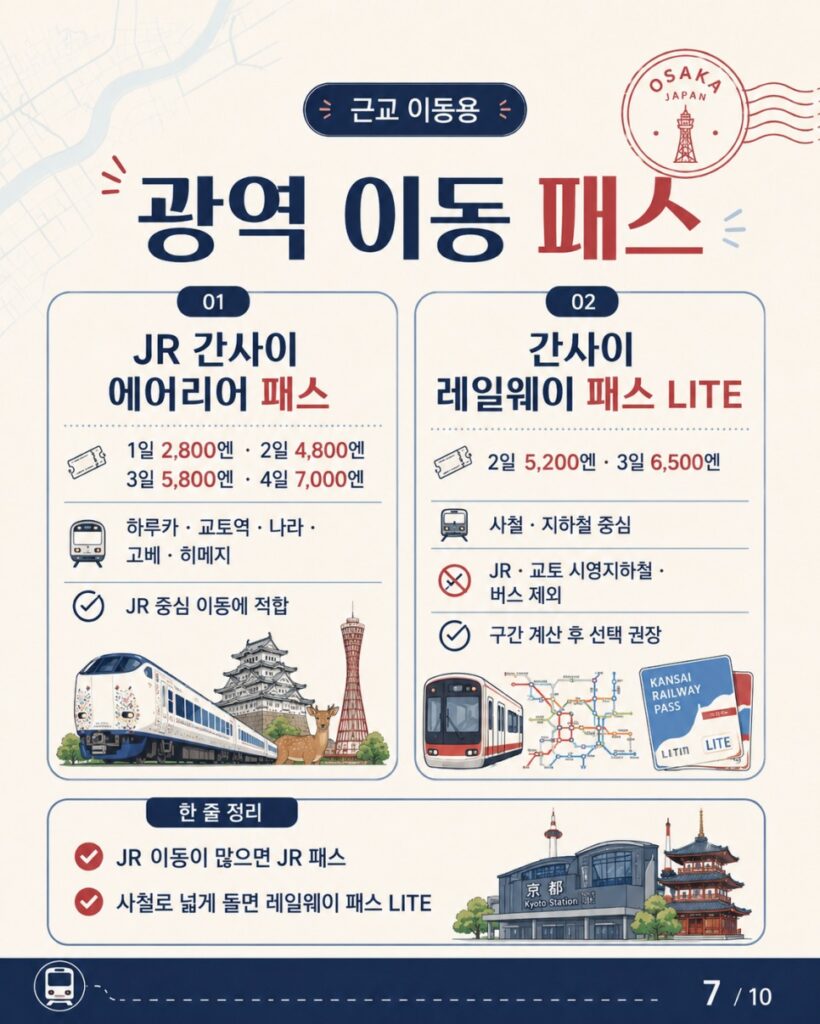
The Kansai Railway Pass LITE covers Kansai’s private railways broadly, but as of 2026 it excludes JR, the Kyoto City Subway and buses, so it’s harder to recommend than before. At 5,200 yen for two days and 6,500 yen for three, a simple Osaka–Kyoto round trip won’t justify it; it’s only for multi-city trips on private lines.
Here’s the final Osaka transport pass pick for families.
Just exploring Osaka lightly: the Enjoy Eco Card is the best value.
Two or three paid Osaka attractions a day: the Osaka Amazing Pass.
Attraction entry only, with transport paid separately: the Osaka e-Pass.
Fushimi Inari, Gion and Uji from Osaka: the Keihan Kyoto-Osaka Sightseeing Pass.
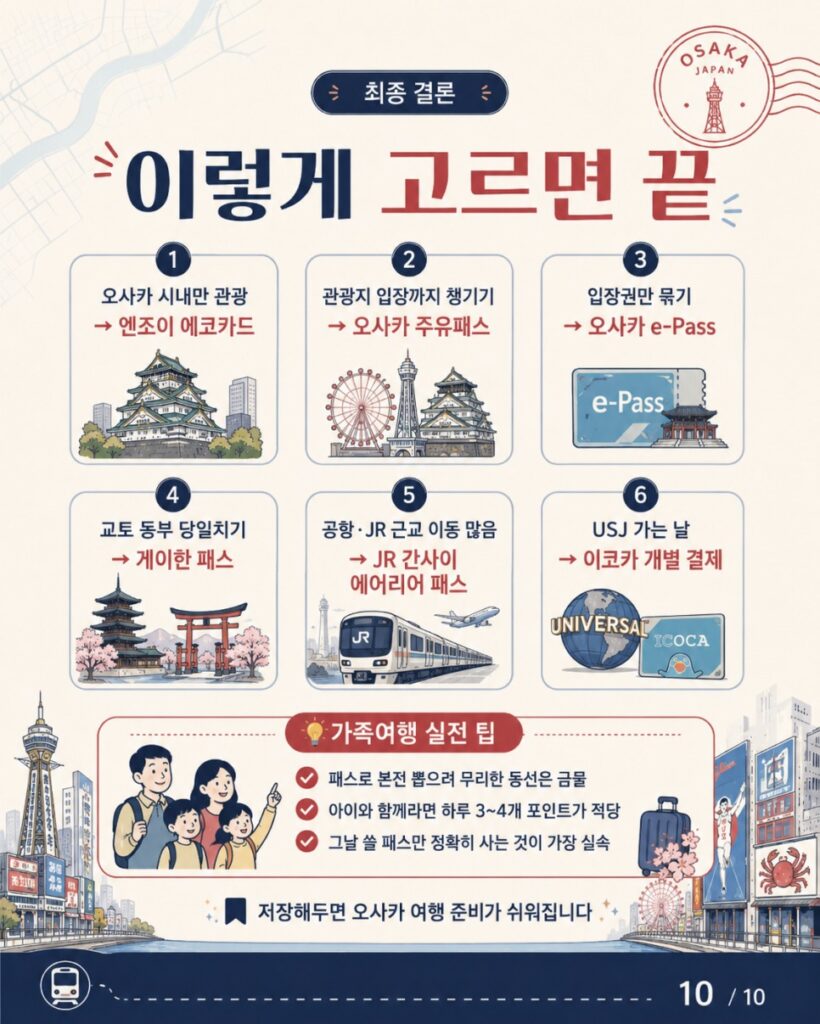
Lots of city travel plus eastern Kyoto: the Keihan plus Osaka Metro one-day pass.
Kyoto Station, Arashiyama or Kinkakuji: JR, Hankyu and Kyoto buses fit better than Keihan.
Universal Studios Japan day: pay as you go with ICOCA rather than a pass.
My most realistic recommendation for families: day one with the Enjoy Eco Card to get your bearings, day two with the Amazing Pass for attractions, day three with a Keihan pass for eastern Kyoto. That way each Osaka transport pass plays to its strengths.
Osaka Transport Pass FAQ
Do you have to buy the Osaka Amazing Pass? No. It pays off with two or three paid attractions a day; on subway-only days, the Enjoy Eco Card is cheaper.
Can you ride JR with the Amazing Pass? No. Universal Studios Japan, parts of the Osaka Loop Line and the JR Kyoto Line need separate fares.
Which Osaka transport pass is best with kids? With light travel, the Enjoy Eco Card is easiest. If your child walks well and you plan several sights, the Amazing Pass works, but don’t force a money’s-worth marathon.
Is a Keihan pass good for a Kyoto day trip? For Fushimi Inari, Gion, Kiyomizu-dera and Uji, yes; for Kyoto Station, Arashiyama or Kinkakuji, other lines are better.
When should you use the Keihan plus Osaka Metro pass? When you’ll ride the subway several times in Osaka and visit eastern Kyoto the same day, like Osaka Castle, Fushimi Inari, Gion and Dotonbori.
Do you need a pass on a Universal Studios Japan day? Usually not. It involves JR, so paying with an IC card like ICOCA is simplest.
Route comes before the pass name. The Enjoy Eco Card for Osaka only, the Amazing Pass when you want attractions, and Keihan for eastern Kyoto and Uji: that rule alone saves you from buying the wrong Osaka transport pass.
If you’re planning Osaka with kids, count your family’s energy before pass prices. A trip isn’t a game of getting your money’s worth; it’s about good memories. Save this and compare as you build your itinerary.
Rules and details in this guide are as of June 2026. Check the latest official information before you travel.
More Family Trips on Yans World
- Start and End Your Osaka Trip with a Dotonbori Food Tour (Matarin Pudding, Geumryong Ramen, Mogu Pancakes)
- Tips for Visiting Universal Studios Japan with Kids: Complete Guide to Popular Attractions and Areas
- Umeda Station Kurazushi in Osaka + Hep Five Ferris Wheel
Schedules and prices can change, so check the Osaka Info official tourism site before you go.