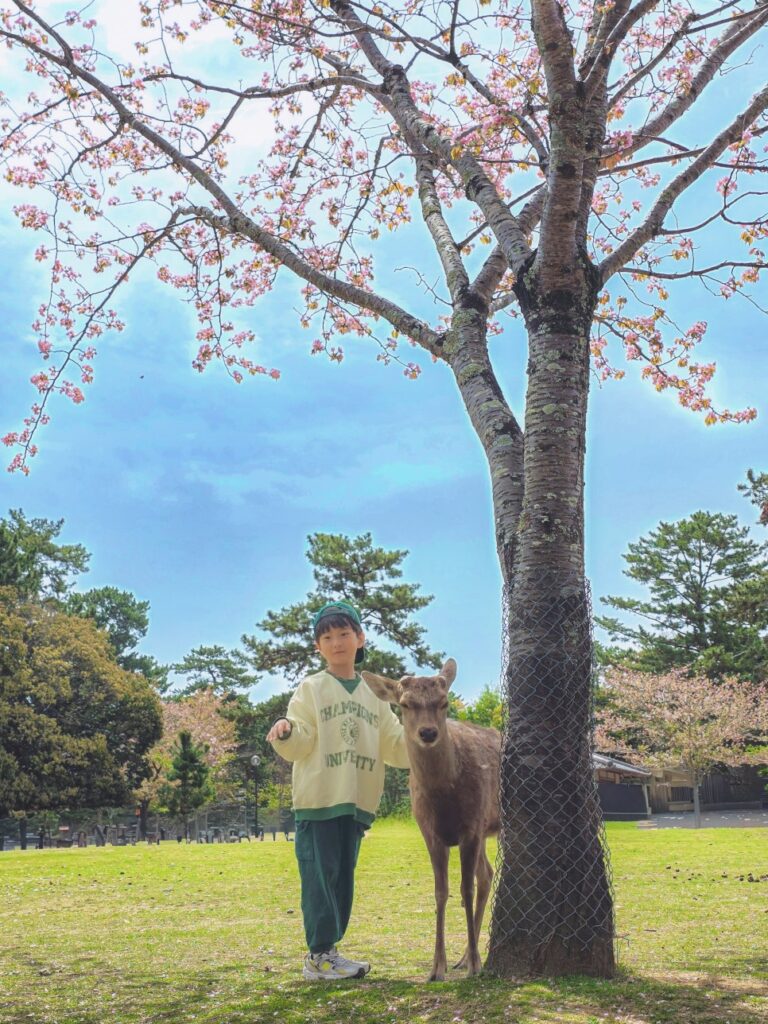
If you can spare just one day during an Osaka trip, one of the best healing spots is Nara
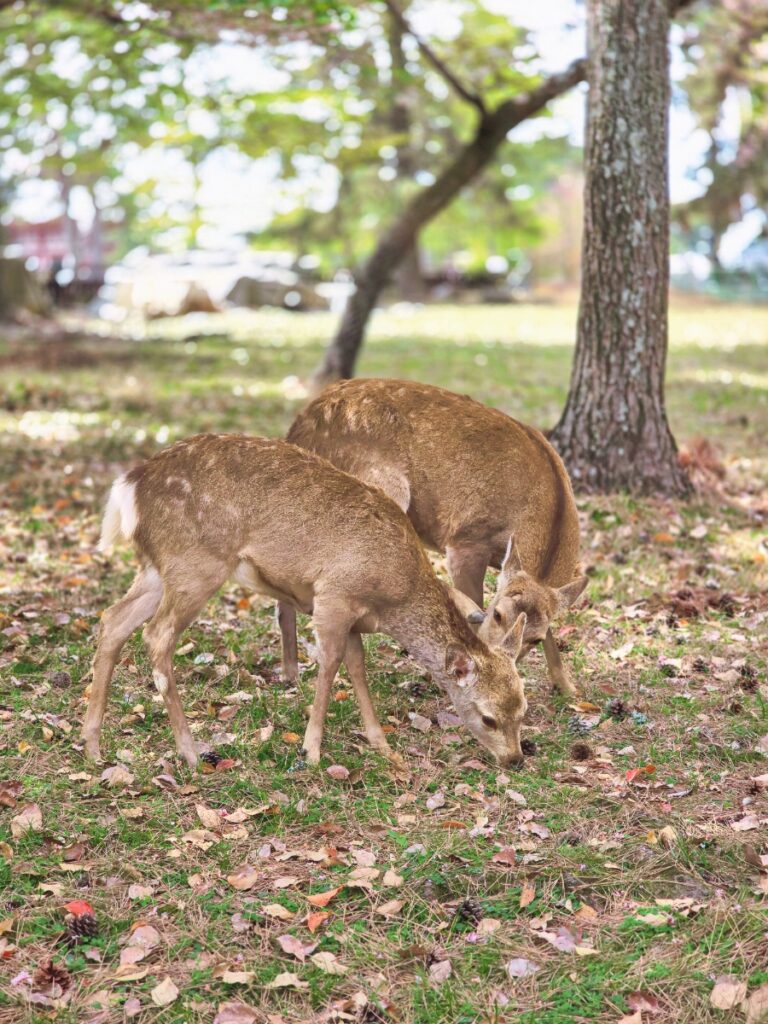
Deer Park. Walking slowly away from the city bustle and interacting with the deer was truly special.
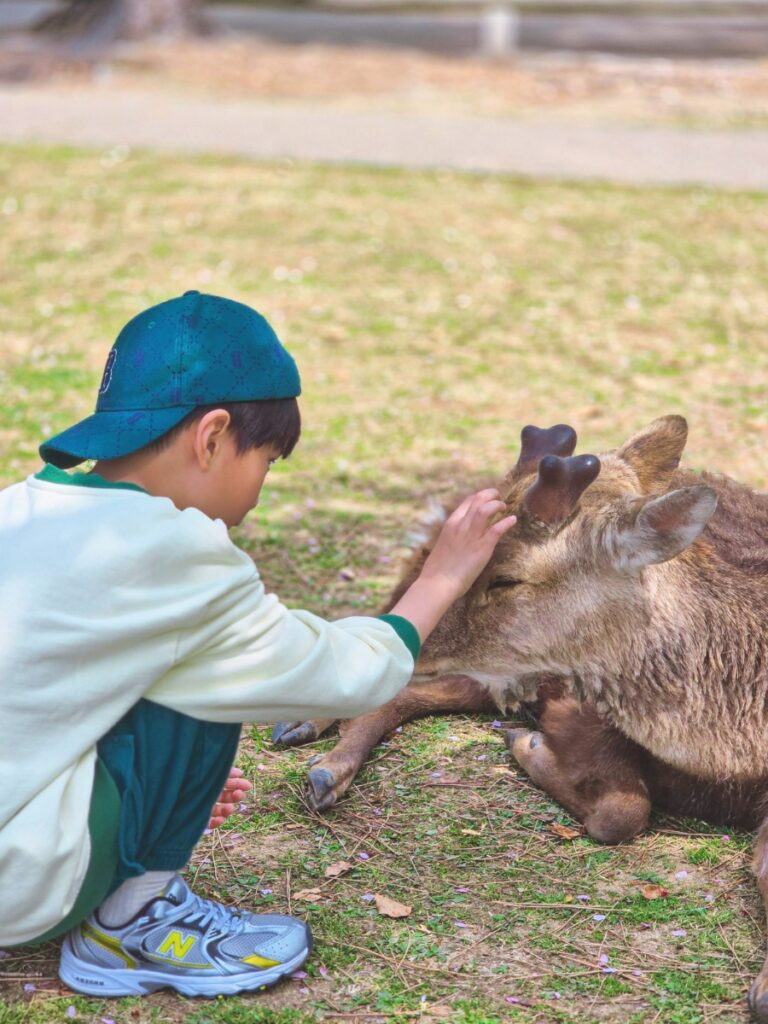
It’s an especially memorable place with kids. Based on our visit, here’s everything from transport to deer-cracker tips and safety rules.
How to Get to Nara Deer Park From Osaka
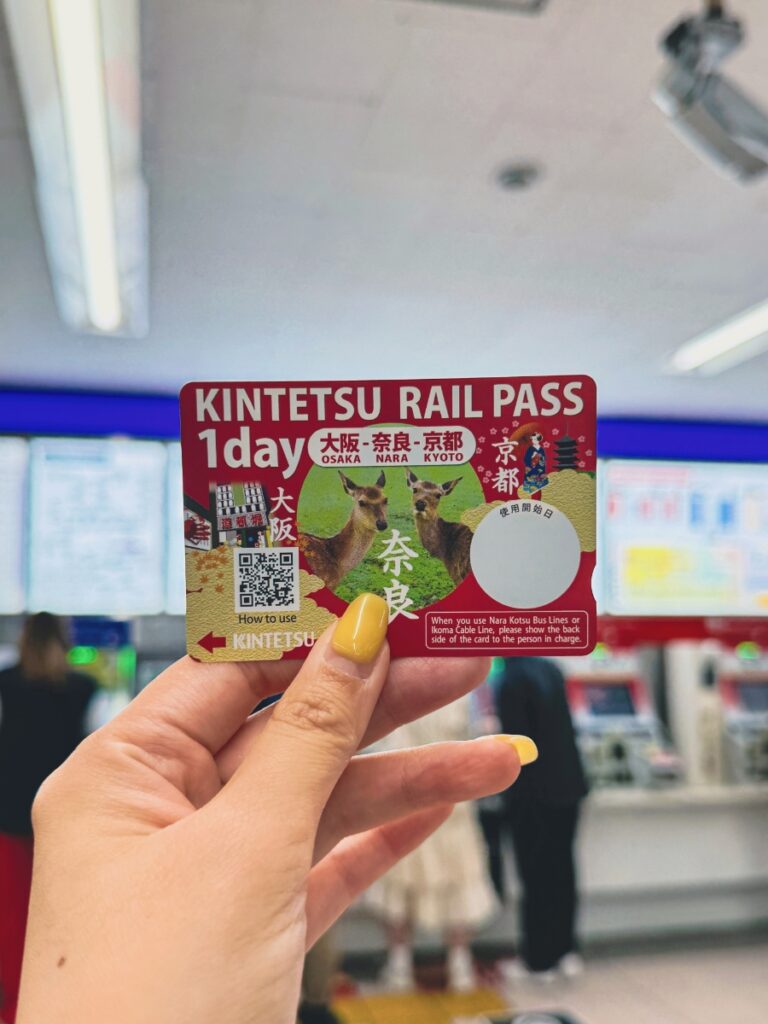
You can reach Nara from central Osaka by train in under an hour. There are two main routes.
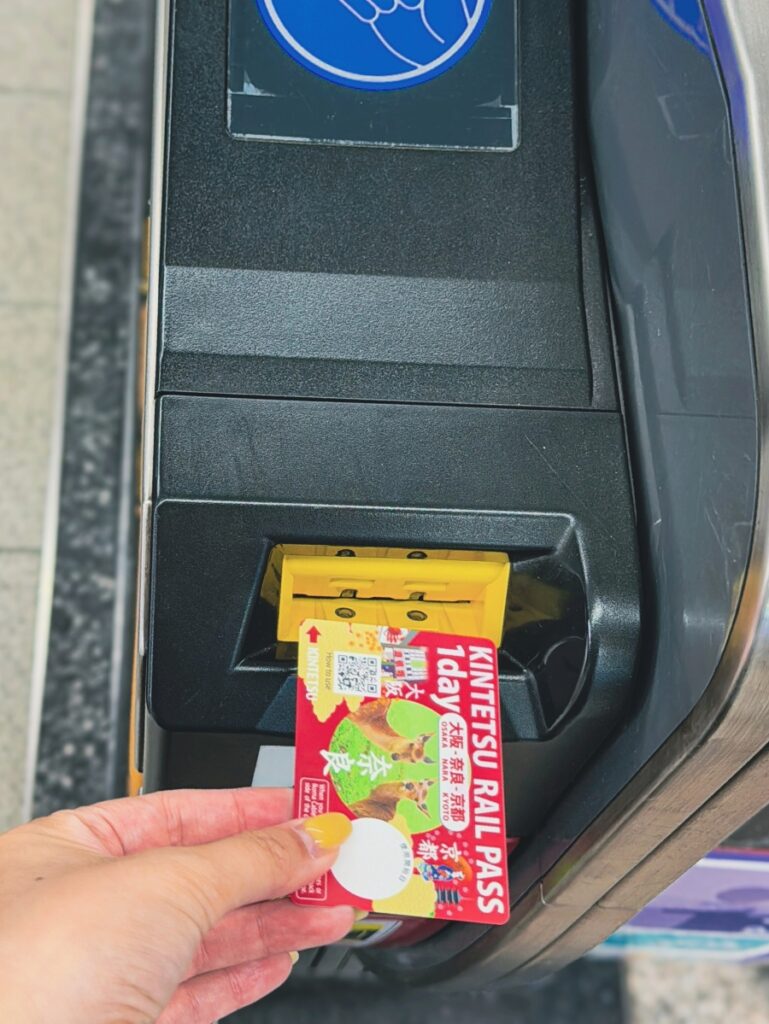
1) Kintetsu Nara Line (most recommended!)
- From Osaka-Namba Station to Kintetsu-Nara Station
- Travel time: about 35 to 40 minutes
- Fare: about 570 yen
- Pros: Nara Park is a 5-minute walk from the station, the closest and easiest option
2) JR Nara Line
- From Osaka or Tennoji Station to JR Nara Station
- Travel time: about 50 minutes
- Fare: about 800 yen
- Pros: good for JR Pass holders, but it’s about a 20-minute walk to the park
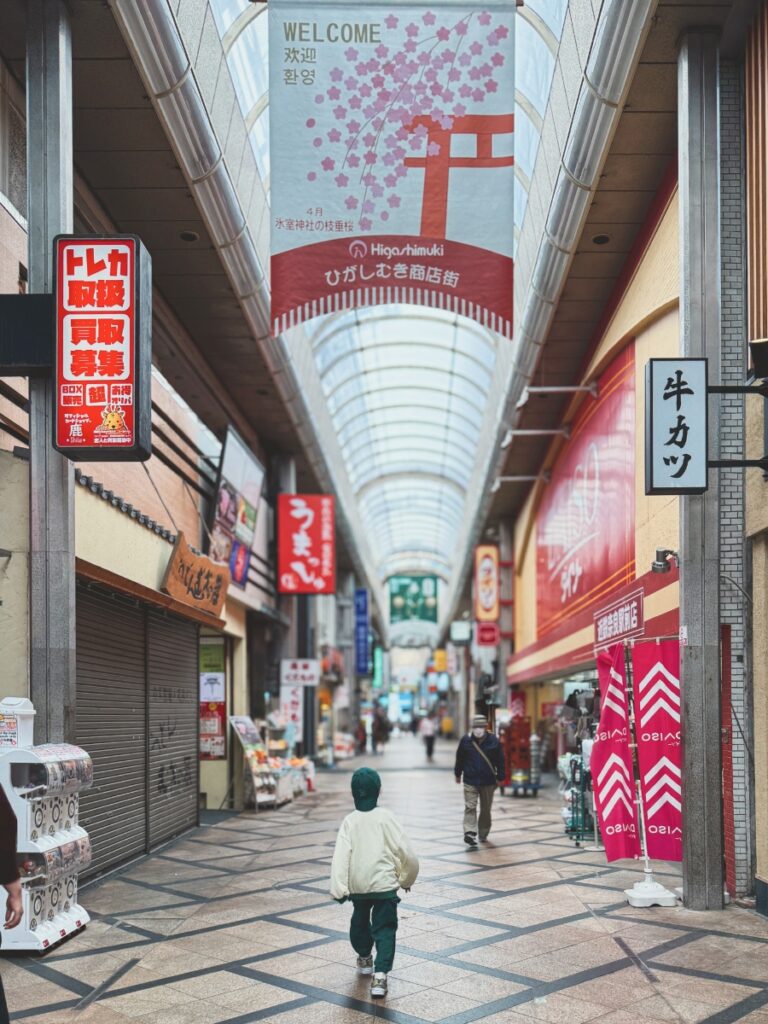
Tip: for a short trip, Kintetsu-Nara Station is the way to go. Right outside the station
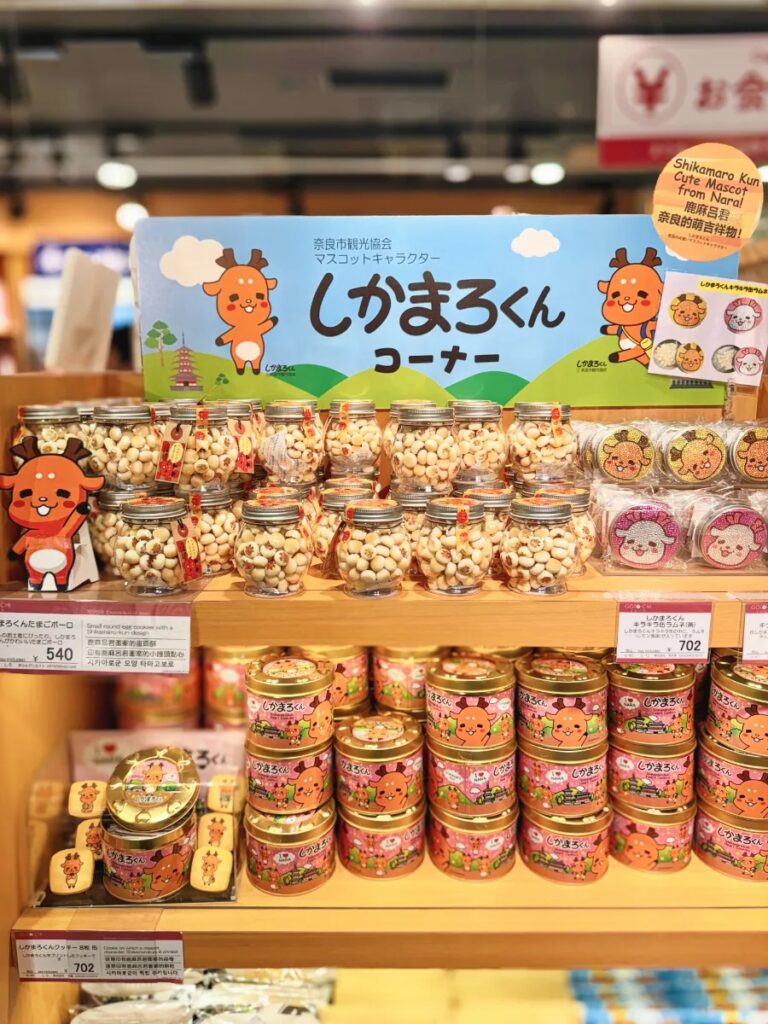
is a shopping arcade, and after just 5 minutes on foot you’ll start seeing deer.
How Much Is Admission to Nara Deer Park?
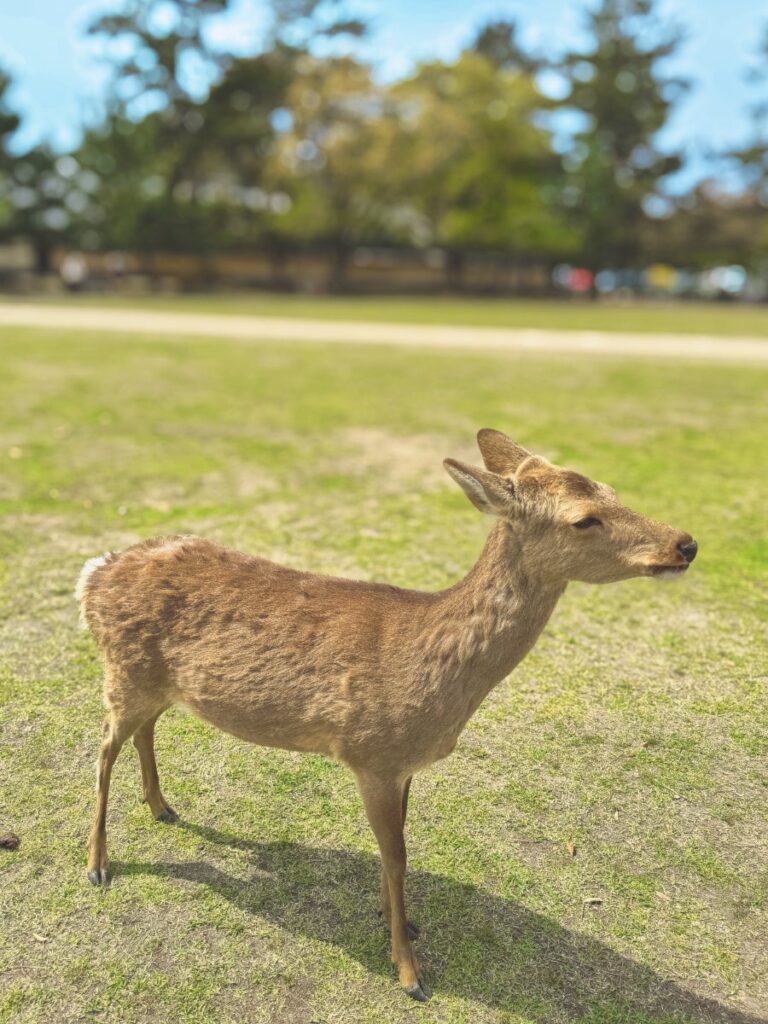
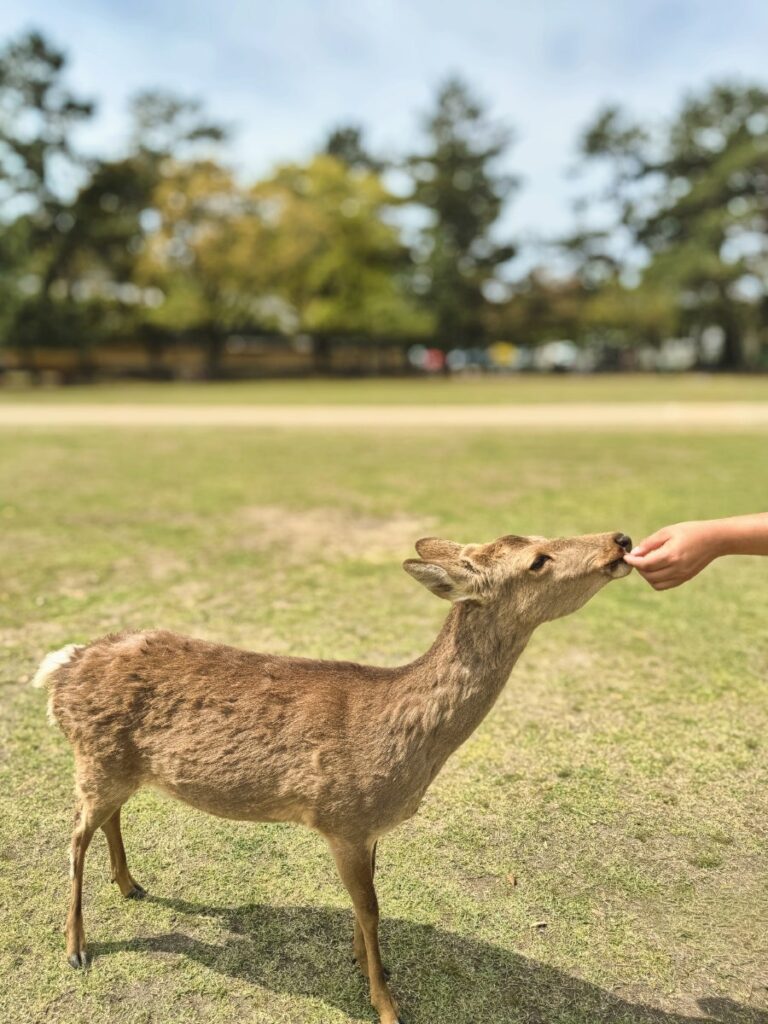
Nara Deer Park itself is free! The whole park is open, so you can stroll and meet the deer freely.
Nearby sights charge separate admission. At the time of our visit, Todaiji’s Great Buddha Hall was 600 yen (300 yen for elementary students), the Kofukuji National Treasure Museum was 700 yen and Kasuga Taisha was 500 yen.
If you’re only here for the deer, it costs nothing at all.
Feeding Deer Crackers (Shika Senbei): A Complete Guide
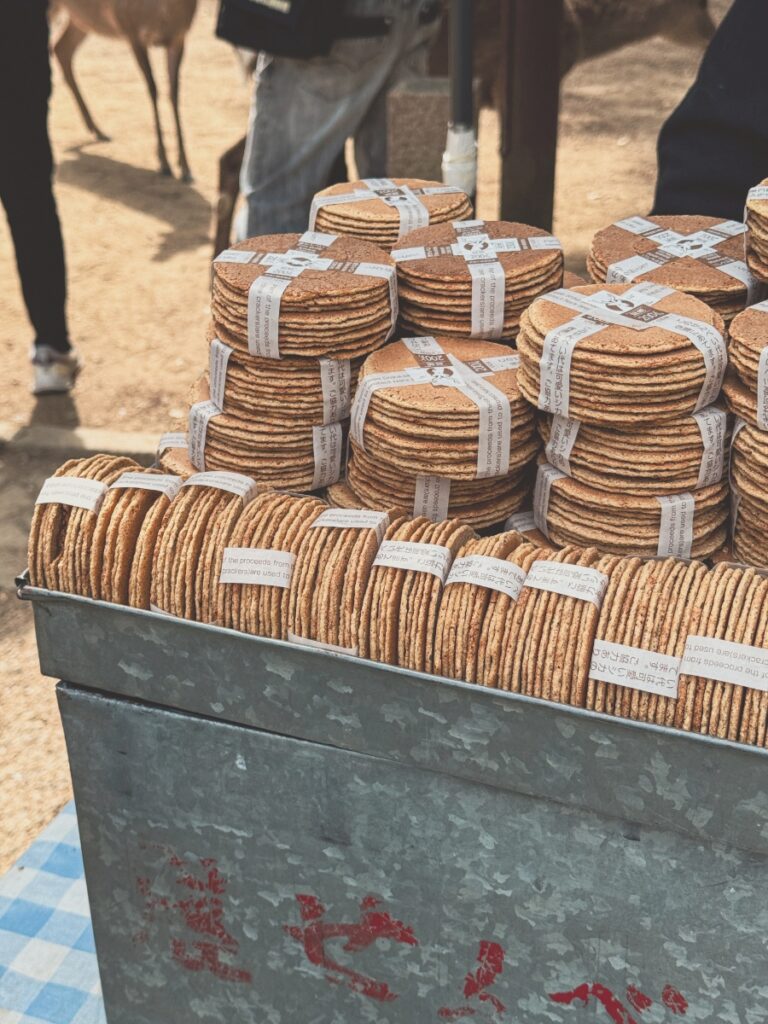
Feeding deer crackers is the highlight of Nara Deer Park.
Basic information
- Price: 200 yen per bundle (about 10 crackers)
- Where to buy: stalls run by older locals in yellow aprons throughout the park
Three Steps for Feeding Deer Crackers
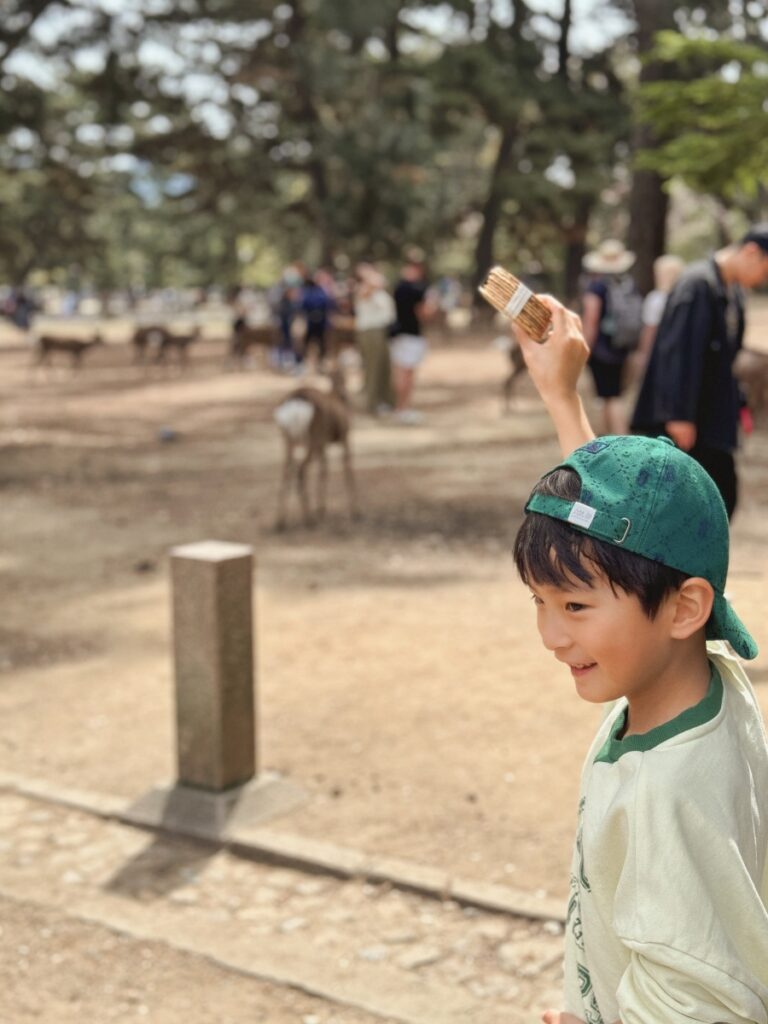
Step 1: Hide them right after buying!
Deer notice the smell quickly. Put the crackers in your bag immediately, or you could be surrounded by a herd in seconds.
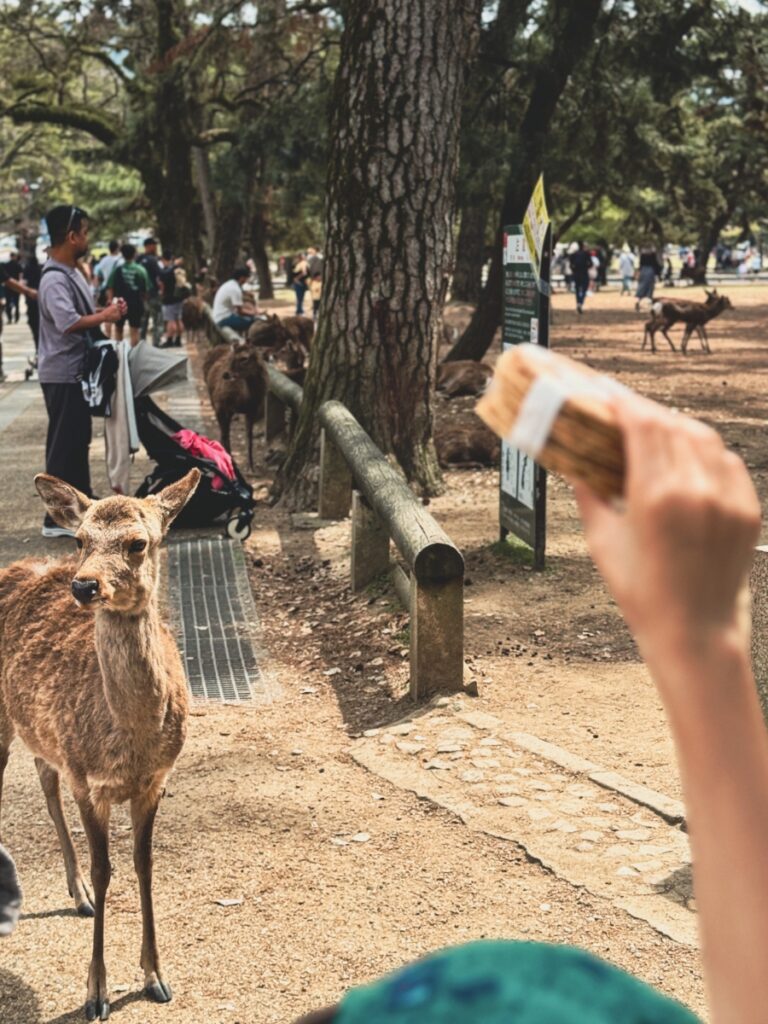
Step 2: Move to a quiet spot
Deer near the stalls deal with so many tourists that they’re impatient. Walk to the inner lawn or a quieter area and feed one or two deer slowly.
Step 3: Show empty hands
When you’re out of crackers, open both hands with palms up. It’s the “deer language” locals use, and the deer understand and back off.
Nara Deer Park Safety Tips (Must-Read With Kids)
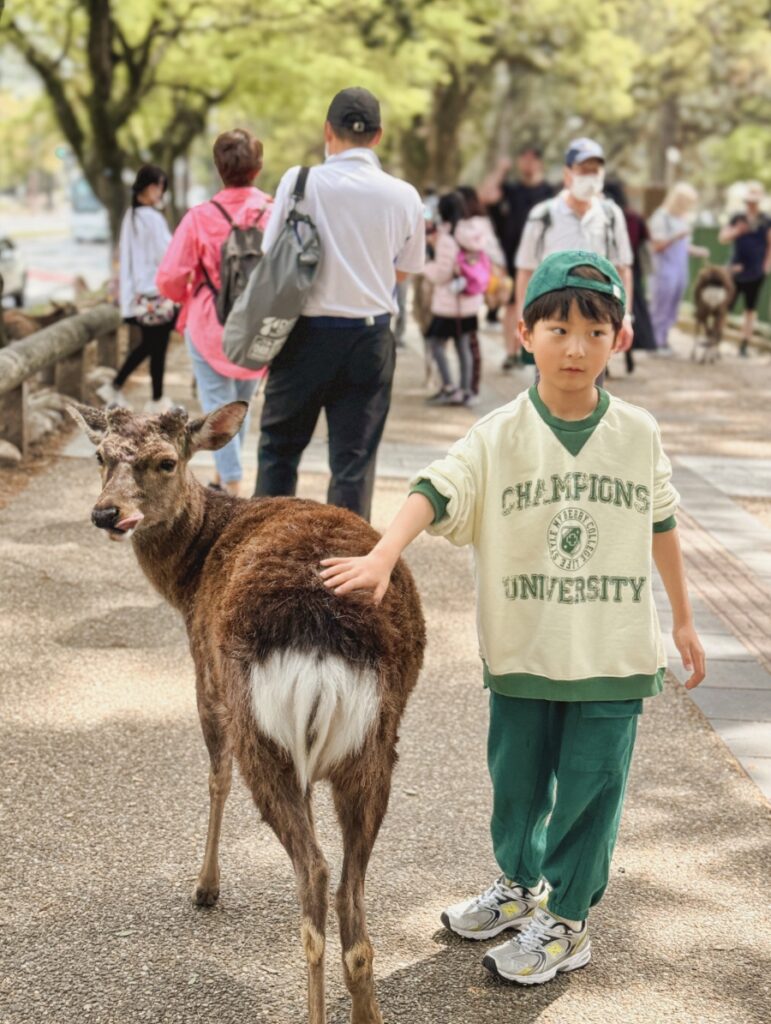
Deer are gentle, but they’re still wild animals. There are a few things to know, especially with kids.
Important rules
- No food other than deer crackers: never give bread, snacks or drinks
- Watch paper and plastic: deer mistake maps, pamphlets and plastic bags for food and bite them
- Use the empty-hands signal: if deer crowd around, stay calm and raise your hands to show they’re empty
- No sudden movements: running or shouting only excites them more
Seasonal cautions
- Spring (May to June): fawn season, when mother deer are sensitive
- Autumn (August to November): rutting season, when males can be more aggressive
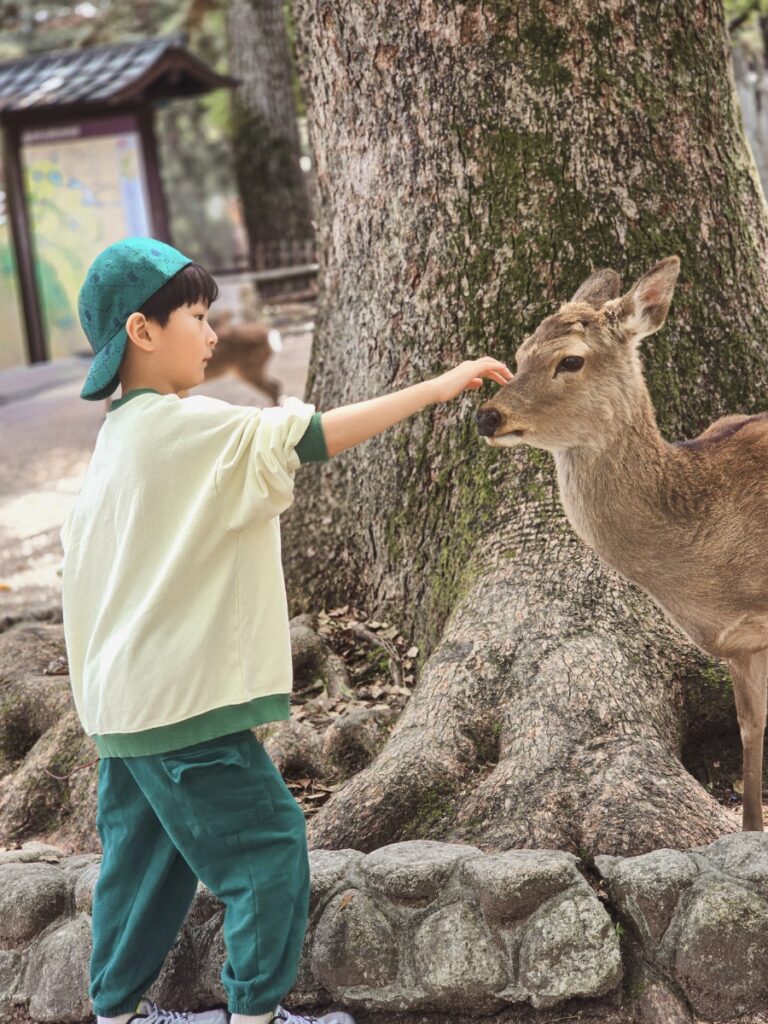
We once didn’t hide our cracker bag and were surrounded by five deer! We stayed calm, backed away slowly, and it was fine.
Three Best Photo Spots at Nara Deer Park
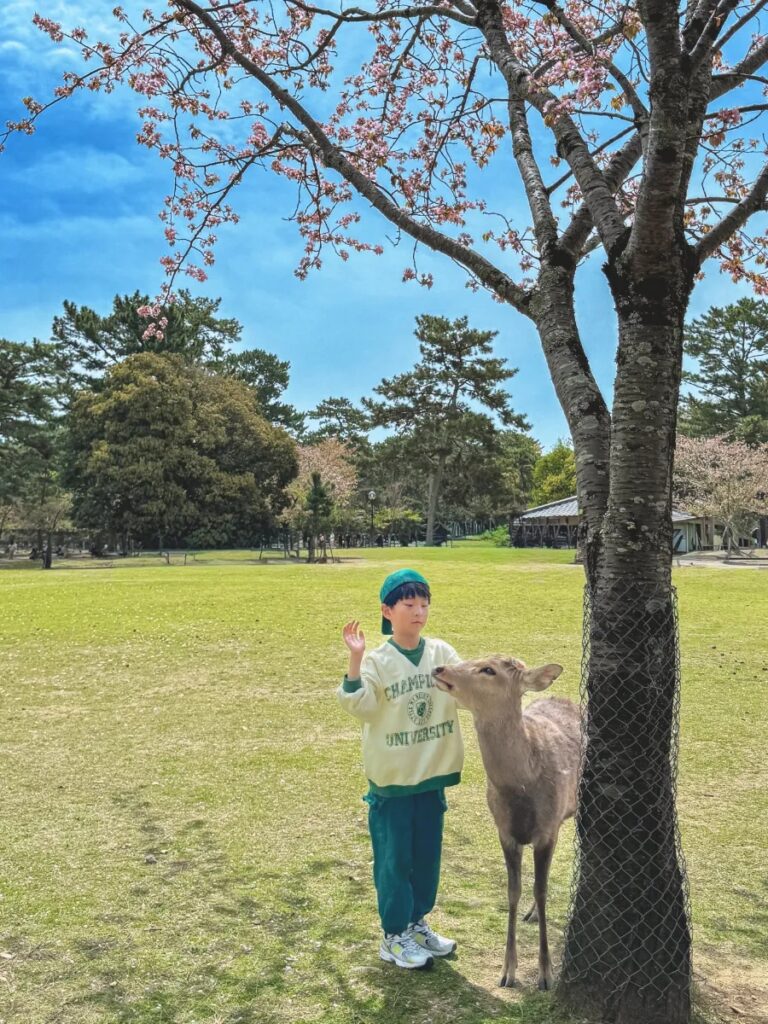
Seeing the deer is great, but with a beautiful background you’ll get amazing shots.
1. The lawn in front of Todaiji’s Great Buddha Hall
Nara’s signature photo spot, with grand temple architecture and deer in one frame. The light is best from 9 to 10 a.m.
2. Cherry blossom and autumn leaf paths
Photos with deer under full cherry blossoms in spring or among red leaves in autumn are magical.
3. Nara Prefectural Office rooftop garden (free observatory)
A hidden spot overlooking the whole park. It’s free and quiet, so you can take scenic photos at your leisure.
Who Will Love Nara Deer Park
- Anyone looking for a day trip from Osaka
- Families who want an animal experience with kids
- Anyone who needs a healing break from the city
- Travelers who want to enjoy traditional Japanese temples and nature together
Walking through the quiet park and meeting the deer’s eyes, away from the busy city, I felt the true charm of traveling in Japan.
Nara Deer Park is more than a tourist spot; it’s a special place where nature and people live in harmony.
Prices, hours and details in this post are from our visit in October 2025 and may have changed, so check the latest information before you go.