Everyone goes to Nijo Market. We went to Jogai — and it wasn’t even close.
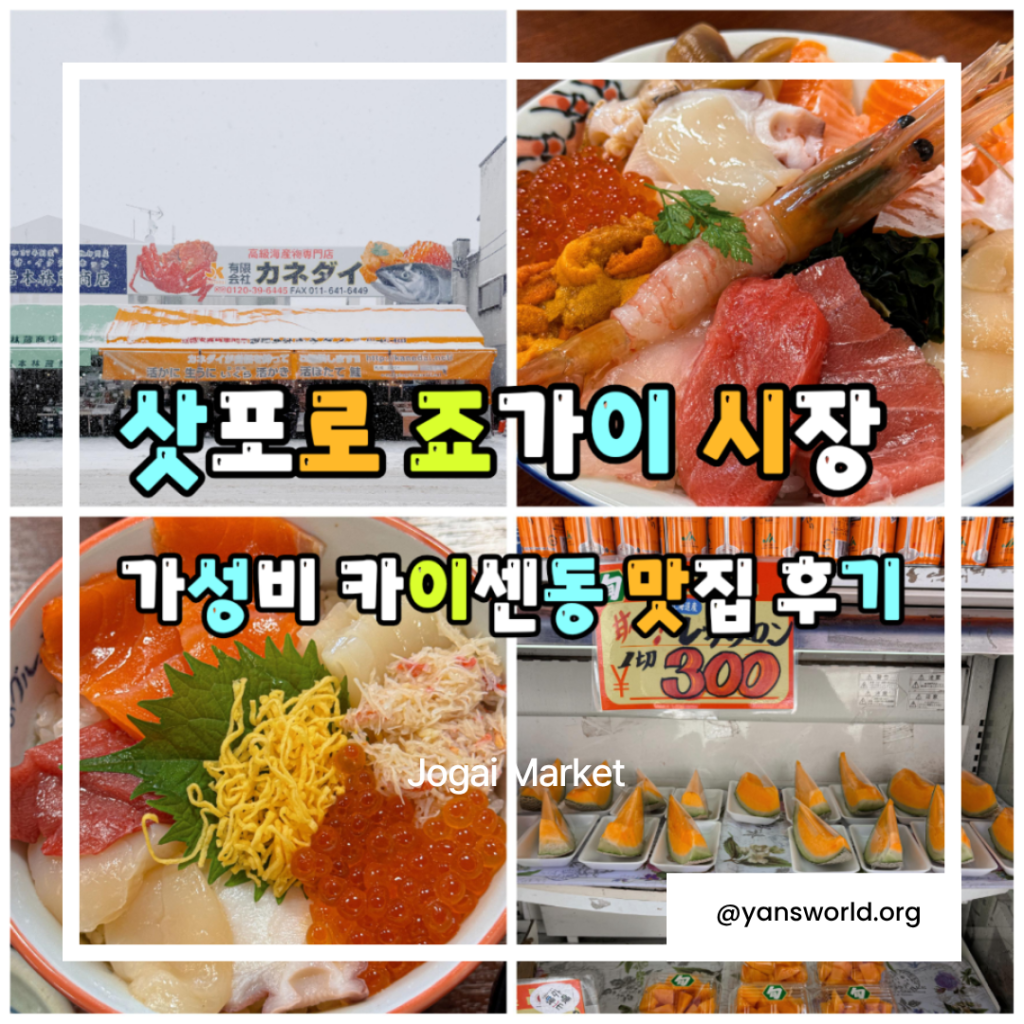
Why Not Nijo Market?
Nijo Market is Sapporo’s most famous seafood spot — centrally located, easy to walk to from Susukino. But travelers who’ve been there tell a consistent story: too crowded, too narrow for families with kids, and prices inflated by tourist demand.

Traveling with a young child changes your priorities. We needed space, comfort, and genuine value — not Instagram convenience.


That led us to Jogai Market (場外市場), located beside Sapporo’s Central Wholesale Market.
Nijo vs Jogai: The Real Differences


Scale & Atmosphere Nijo feels like a narrow alley. Jogai is a full seafood complex with around 60 shops. Wide walkways mean strollers move freely, and a large car park makes it ideal for rental car travelers too.
Price & Value Nijo kaisendon averages ¥3,500–5,000 with the emphasis on visual impact. Jogai, supplied directly from the wholesale market, gives you more variety and volume for the same — or lower — price. Locals come here for major occasions. That says everything.
Dining Comfort Nijo’s restaurants are mostly counter-only seating — awkward with young children. Jogai has proper table seating and floor-level dining rooms. For families, it’s not a competition.
The Kaisendon: What We Actually Ate


We ordered the “Special Kaisendon” and a 7-topping bowl for our child — and the moment the bowls arrived, we understood why locals don’t bother with Nijo.

Uni (Sea Urchin): No bitterness whatsoever — pure, creamy sweetness spreading across the entire palate. The definition of fresh.

Botan Ebi (Sweet Shrimp): The texture was firm and bouncy in a way that instantly explains why Hokkaido seafood has its reputation.
Giant Scallop: Nearly half the size of a palm. Tender, sweet, unforgettable.


The seafood layer was so thick that every spoonful overflowed. All of this for under ¥3,000 — what would have cost at least ¥4,500 at Nijo.
Our child — usually selective about food — ate every last grain of rice. Staff noticed immediately and brought child-sized utensils without being asked. Small gestures, lasting impression.
Pro Tip: When to Visit
Jogai Market opens around 6:00 AM and begins winding down by 3:00–4:00 PM. For the freshest kaisendon, visit between 9:00 AM and 11:00 AM — peak freshness, peak selection.
After Lunch: Market Stroll

Don’t leave after eating — Jogai rewards a slow walk. Yubari melon sold by the slice makes a perfect post-meal dessert: cold, fragrant, and impossibly sweet.
Grilled scallops and hairy crab legs are sold as street food at genuinely reasonable prices. We picked up melon and Hokkaido pudding for our child — fresher and cheaper than anything at the airport or downtown shops.


If you only have one kaisendon meal in Sapporo, make it Jogai. Lower prices, more seafood, wider spaces, friendlier atmosphere — and the honest energy of a market where locals actually shop.
Nijo Market is convenient. Jogai Market is worth it. One subway stop or a 15-minute taxi ride — and you’ll be eating Sapporo’s best seafood bowl without the tourist markup.