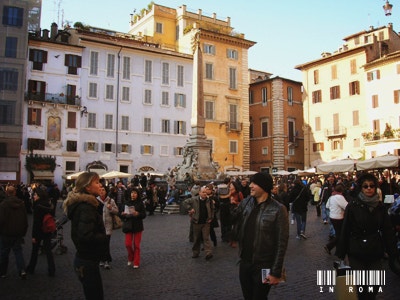
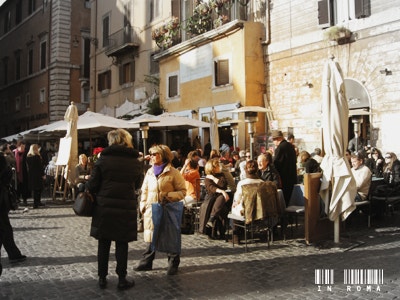
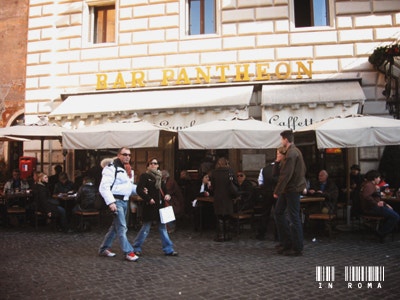
After gelato, we wandered through narrow alleys and emerged onto the open Piazza della Rotonda. A crowd had gathered around the central fountain, most of them here to see the Pantheon facing the square. Even so, Europeans love their piazzas, and basking in the sun here is part of daily life.
The Pantheon takes its name from the Greek for “all gods.” It began as a temple built by Agrippa, friend and son-in-law of Augustus, around 27-25 BC. Fire destroyed it in 80 AD, Domitian restored it, another fire under Trajan leveled it again, and Emperor Hadrian rebuilt it between 118 and 125 AD. Michelangelo praised it as “designed by angels,” and it remains the crowning achievement of Roman architecture.
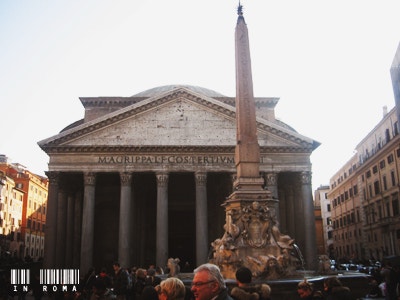
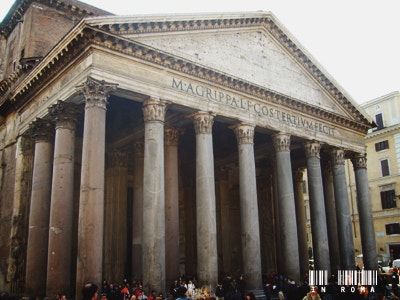
Above the portico, a bronze inscription reads “Marcus Agrippa, son of Lucius, built this during his third consulship.” Hadrian had it carved to honor Agrippa, the original builder, though the current building is entirely Hadrian’s work. In 608, the Byzantine emperor Phocas gave the temple to Pope Boniface IV, and the following year it became the church of St. Mary and the Martyrs, which is why it survived the centuries nearly intact.
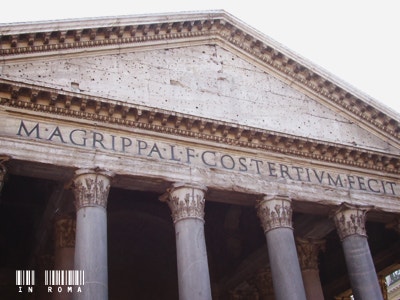
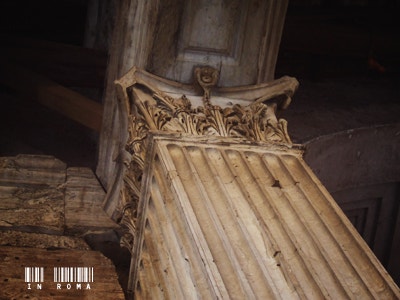
The portico’s 16 columns, each 12.5 meters tall and 4.5 meters around, are single blocks of granite brought from Egypt.
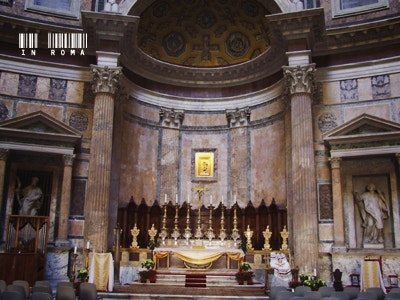
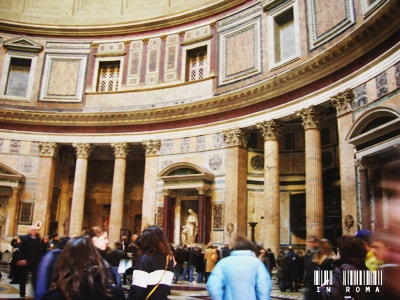
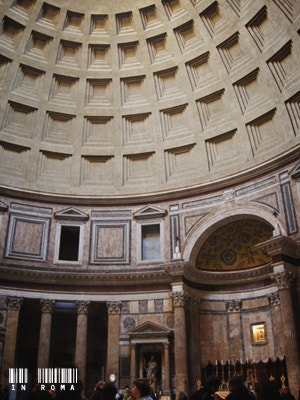
Beyond the two massive bronze doors lies the great round interior, preserved almost exactly as built. The yellow columns are in perfect condition. The building is a cylinder capped by a hemisphere, the cylinder’s diameter exactly equal to the height from floor to ceiling, and the 9-meter dome is held up by the outer walls alone, with no supporting columns.
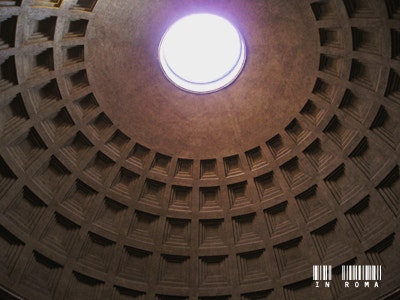
At the center of the ceiling, a 9-meter opening ringed in bronze, the oculus, is the interior’s only source of light. It symbolized the sun at the center of the universe within this round temple of the cosmos, let sacrificial smoke escape, and made artificial lighting unnecessary. Bronze stars once set into the ceiling’s coffers caught the sunlight in spectacular reflections. Rain does fall through the opening, but not much, because the warm air rising inside pushes the rain back out.
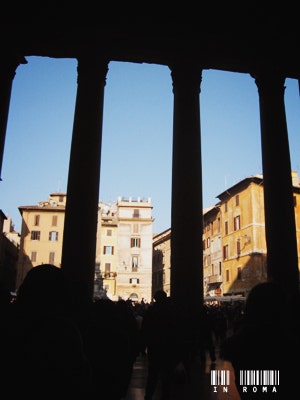
From inside the Pantheon, you can look back out at Piazza della Rotonda.
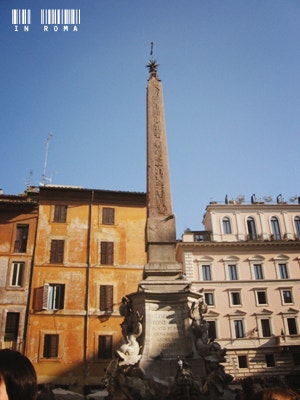
The fountain in front of the temple was begun under Gregory XIII and completed under Clement XI with the addition of the obelisk.
Prices, hours and details in this post are from our visit in January 2008 and may have changed, so check the latest information before you go.