Hot springs are a highlight of any trip to Japan. I’ve traveled around Japan a lot, but until this stay I’d only tried a ryokan in Fukuoka. Kyoto also has hotels where you can enjoy a ryokan-style onsen, so here’s a route that pairs a Kyoto day of sightseeing with an onsen stay at Manyo-no-yu. Kyoto is a must on almost any Osaka trip.
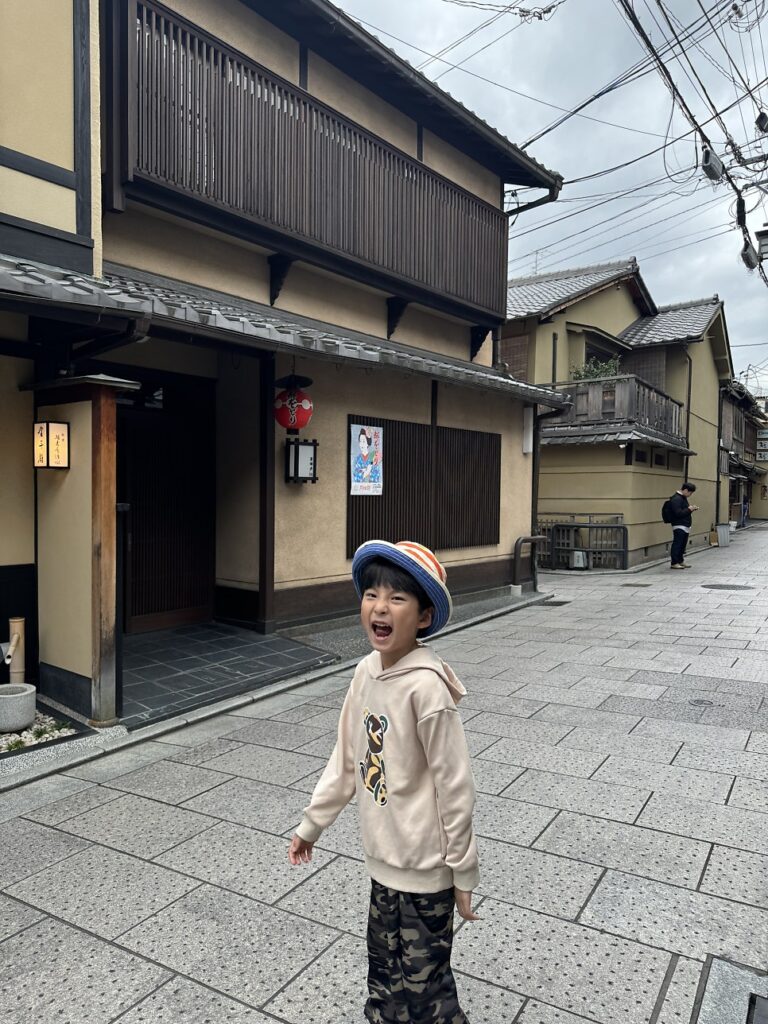
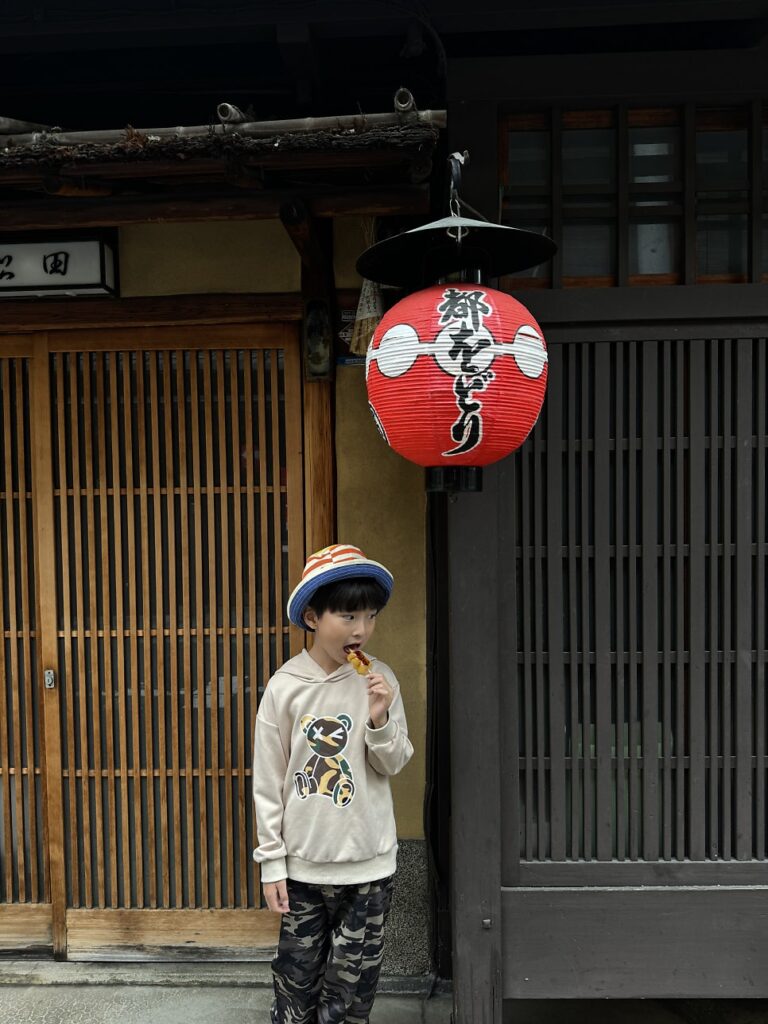
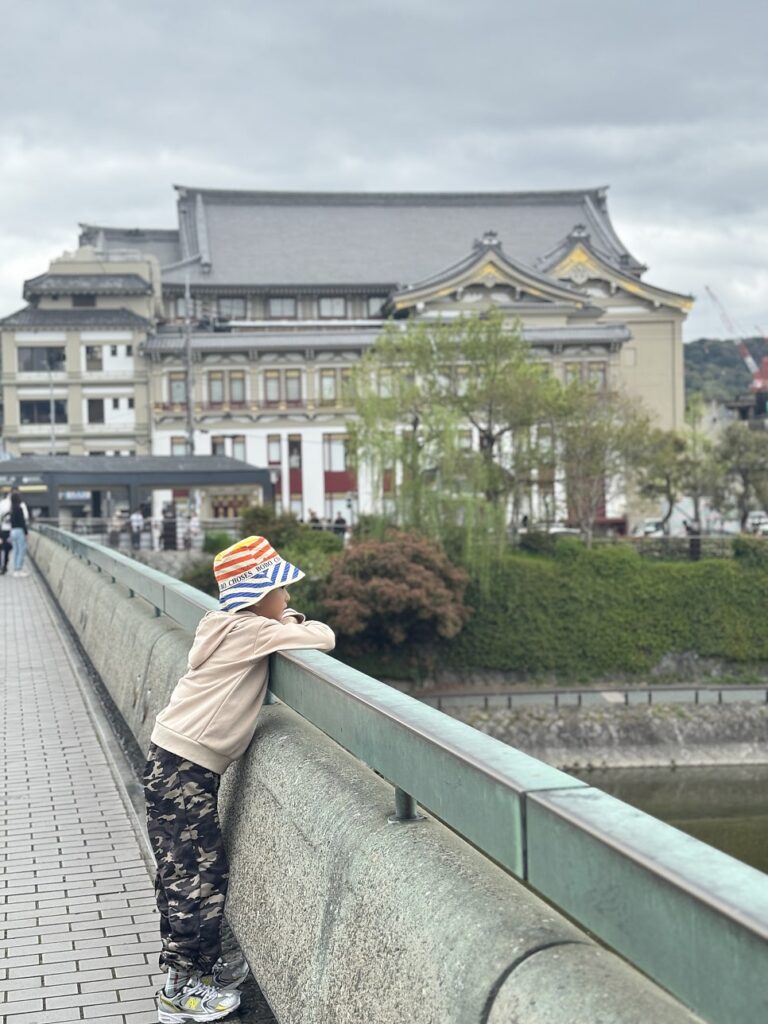
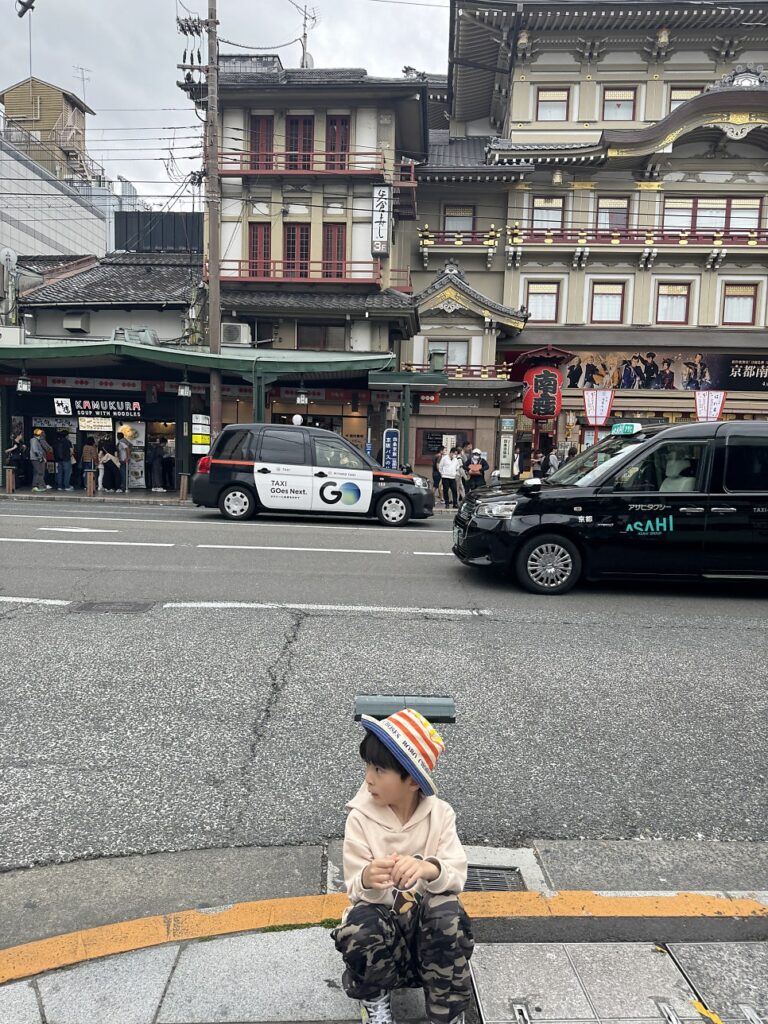
Kyoto is full of old temples and traditional houses, and showing Yans world history is half the fun. Comparing them with Korean temples and homes makes him enjoy traveling even more.
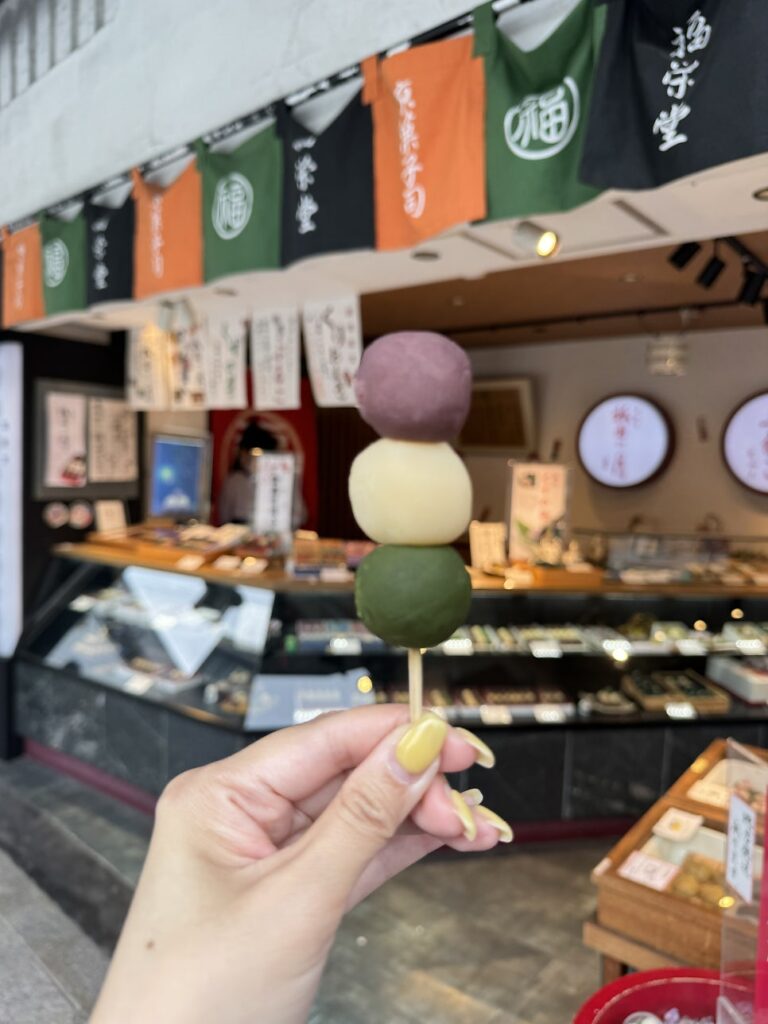
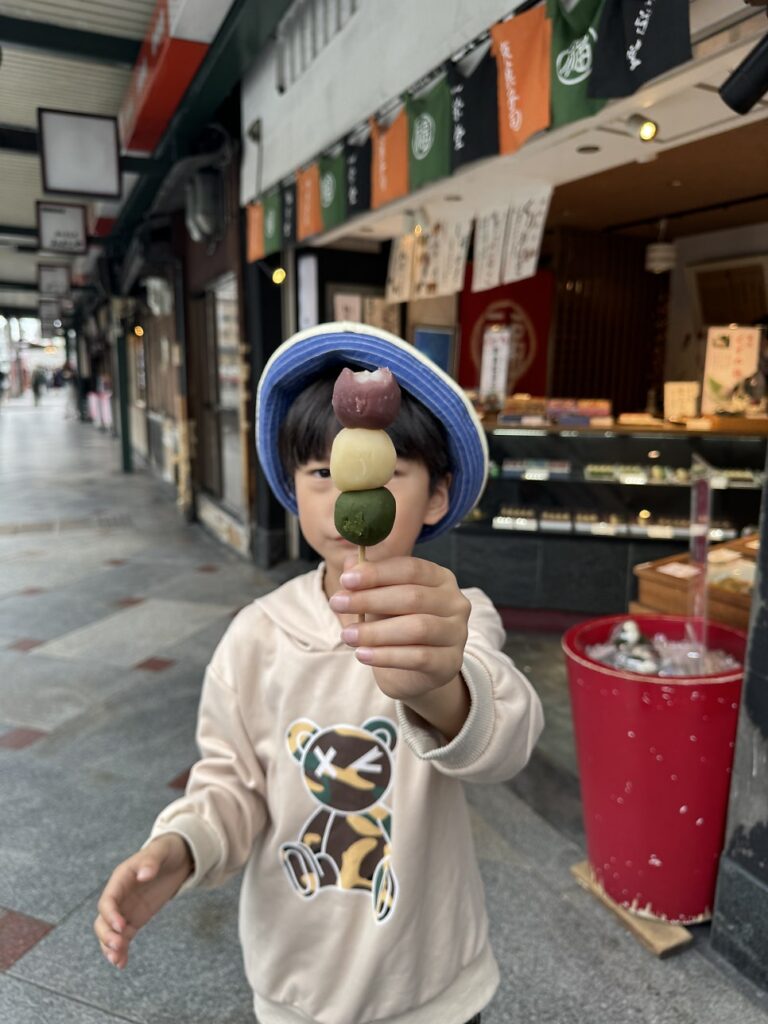
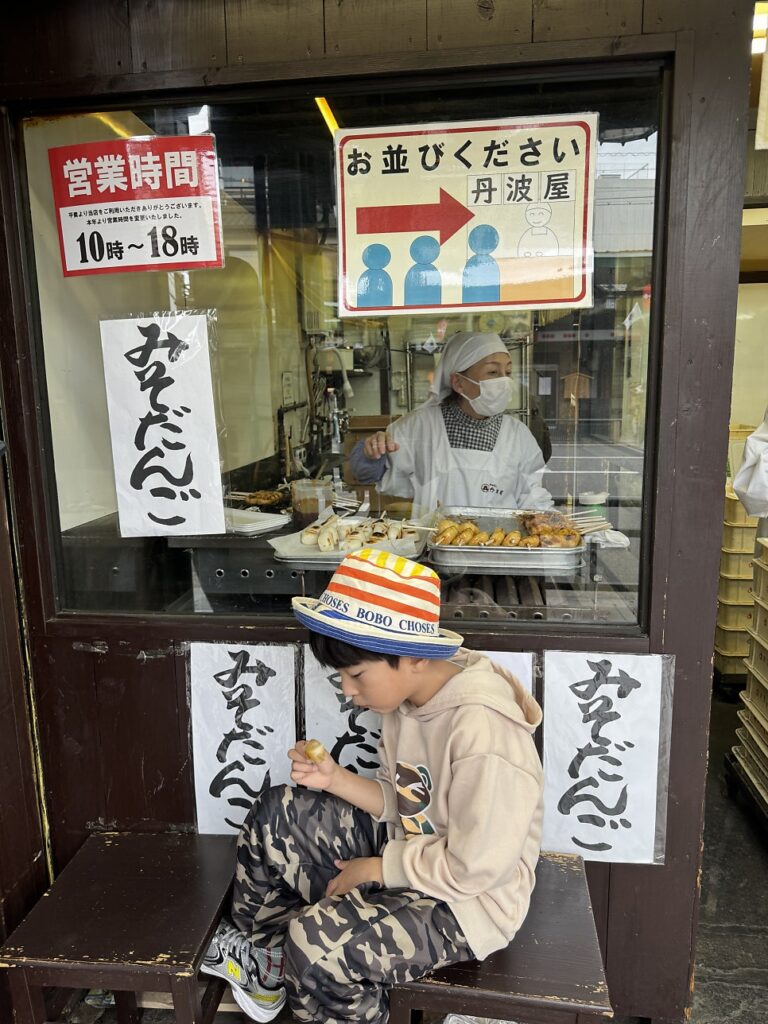
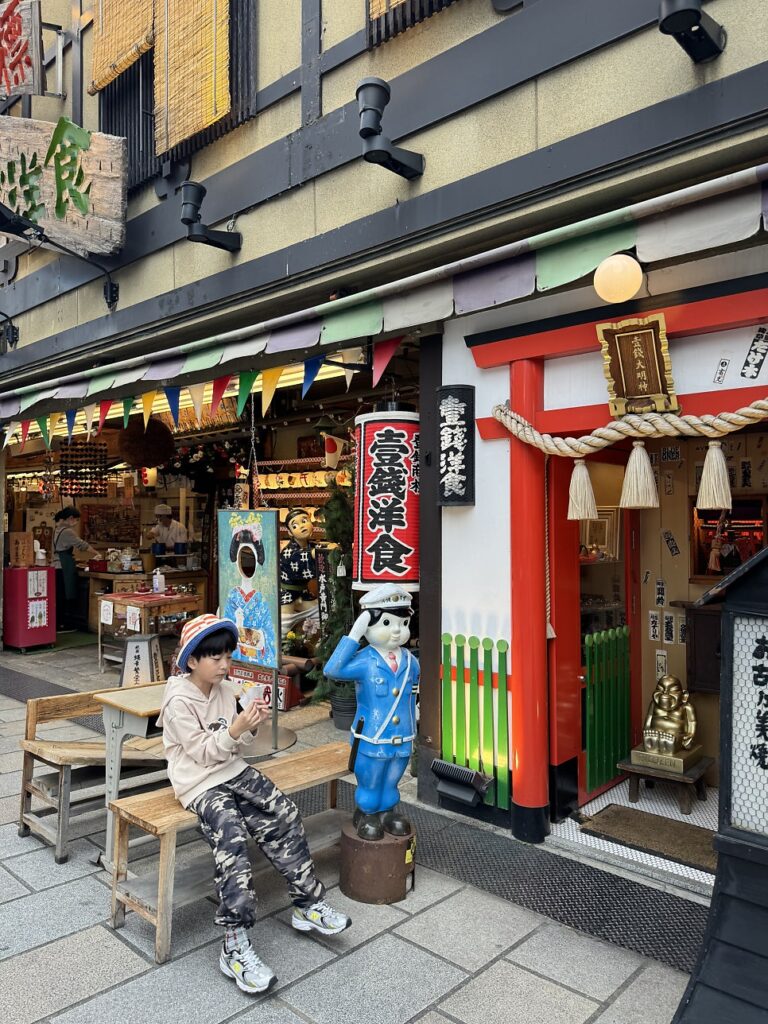
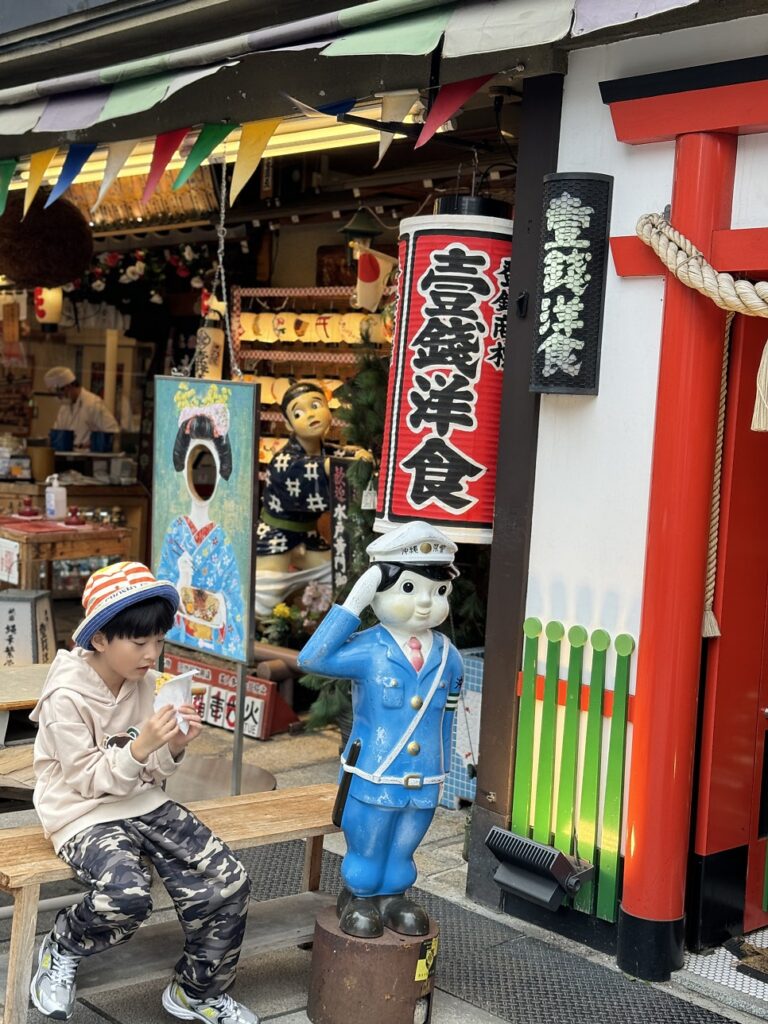
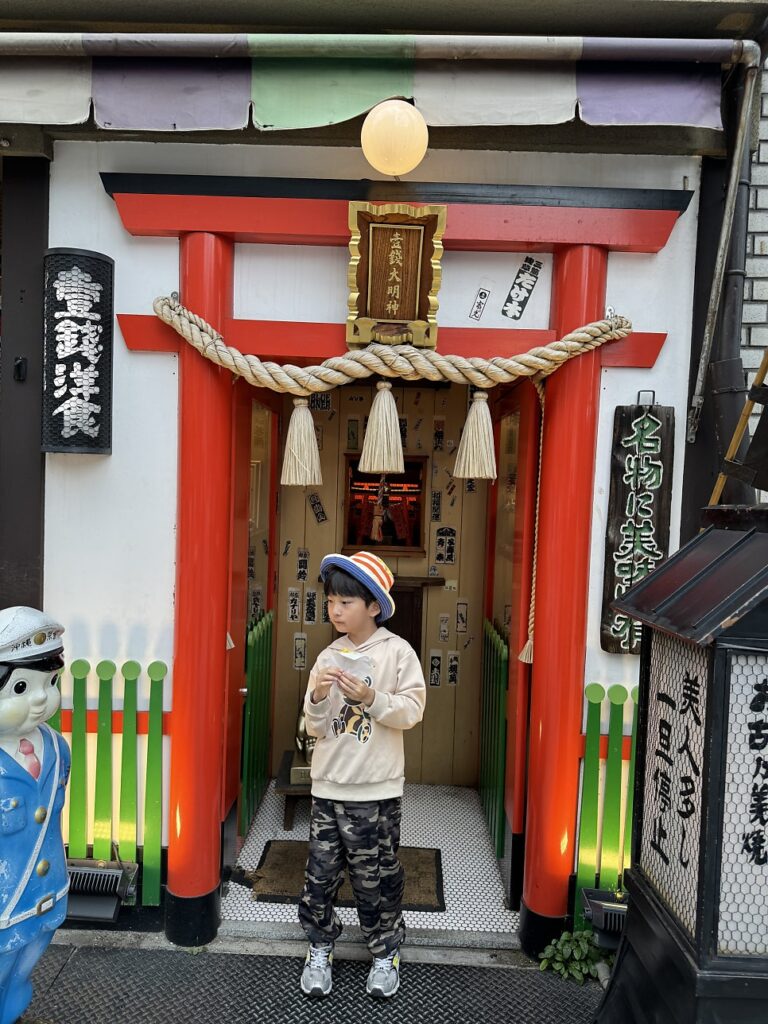
We snacked on dango, rice dumplings and taiyaki as we walked. Trying street food in every alley is part of the joy of Osaka and Kyoto.
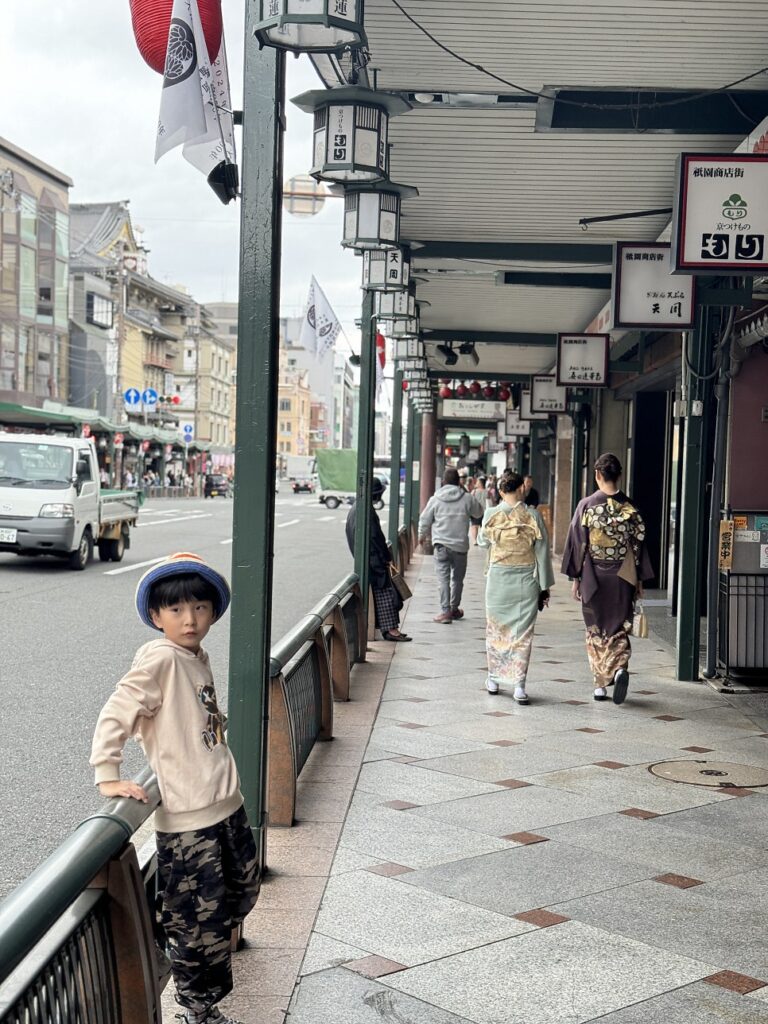
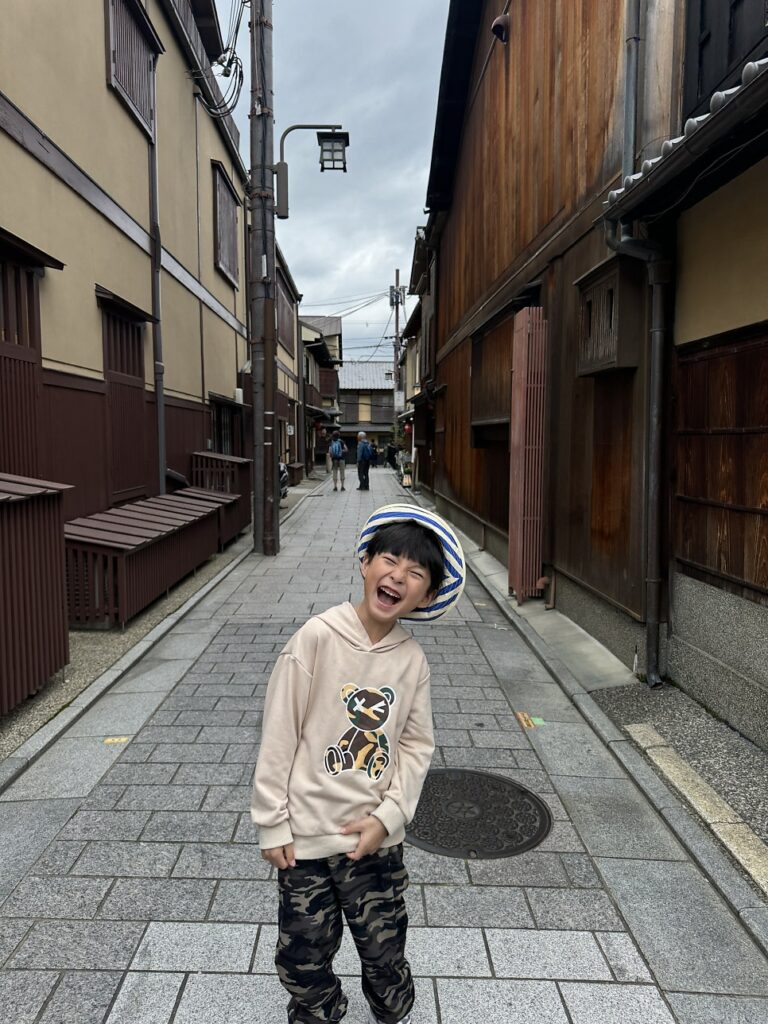
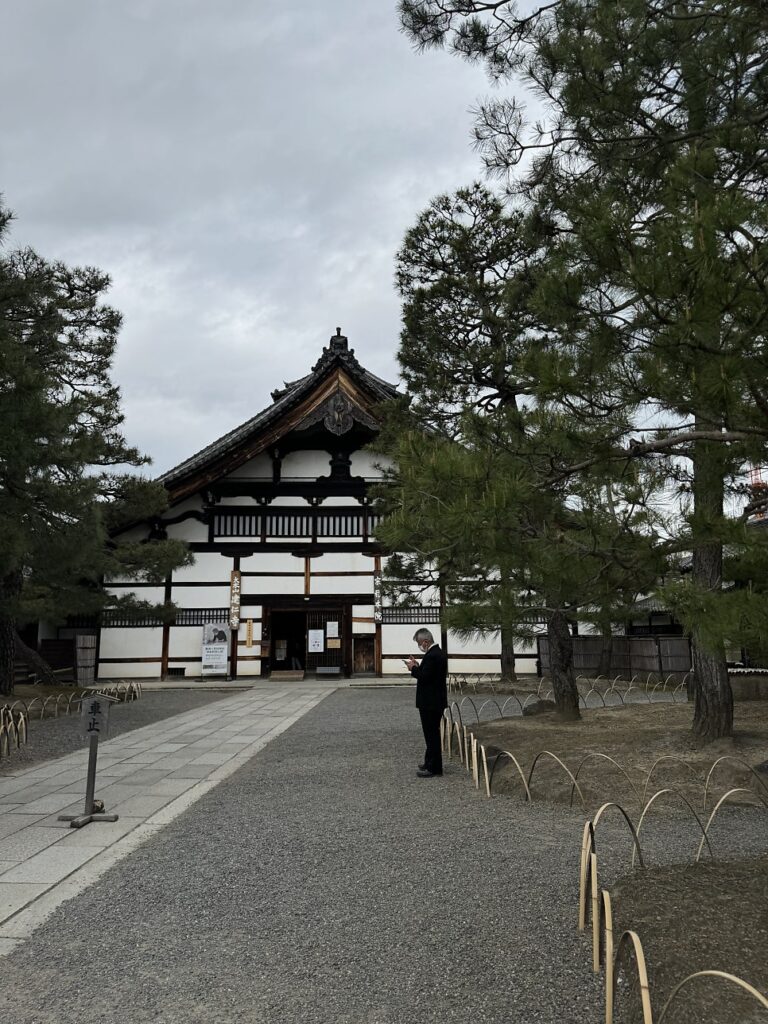
In the morning, get off at Kyoto-Kawaramachi Station and explore Gion, Kashiwaya-cho and Kiyomizu-dera.
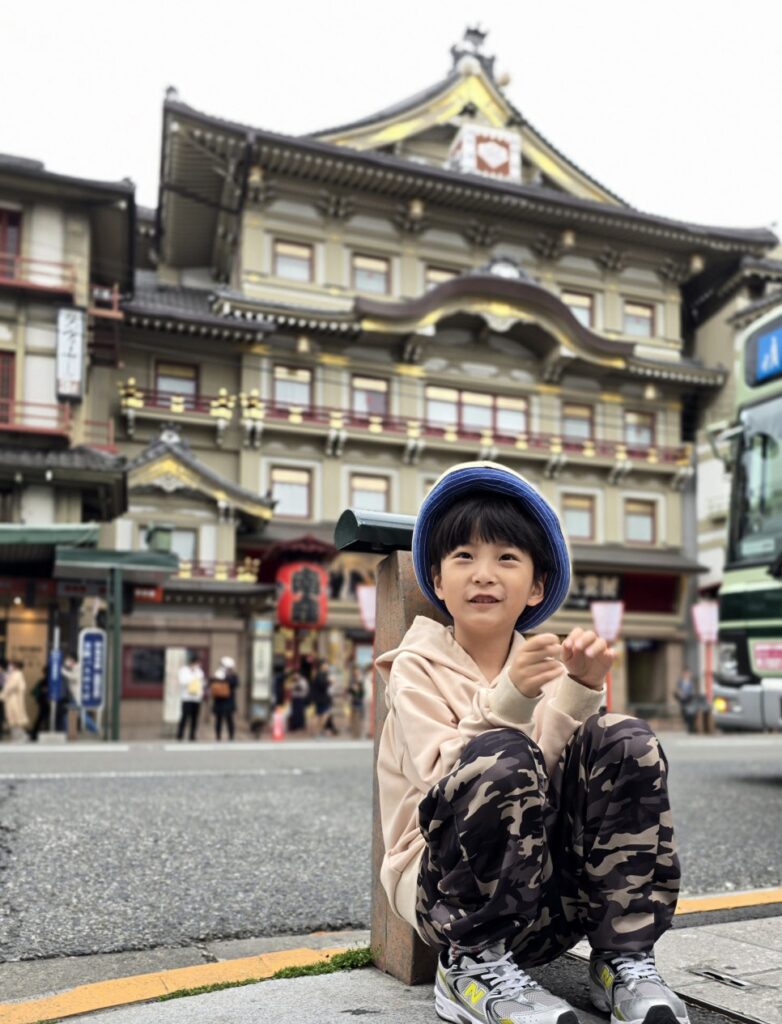
Arriving at 10 a.m. and sightseeing until 2 p.m. is enough to see central Kyoto. In the afternoon, we headed to our hotel in western Kyoto for the hot springs.
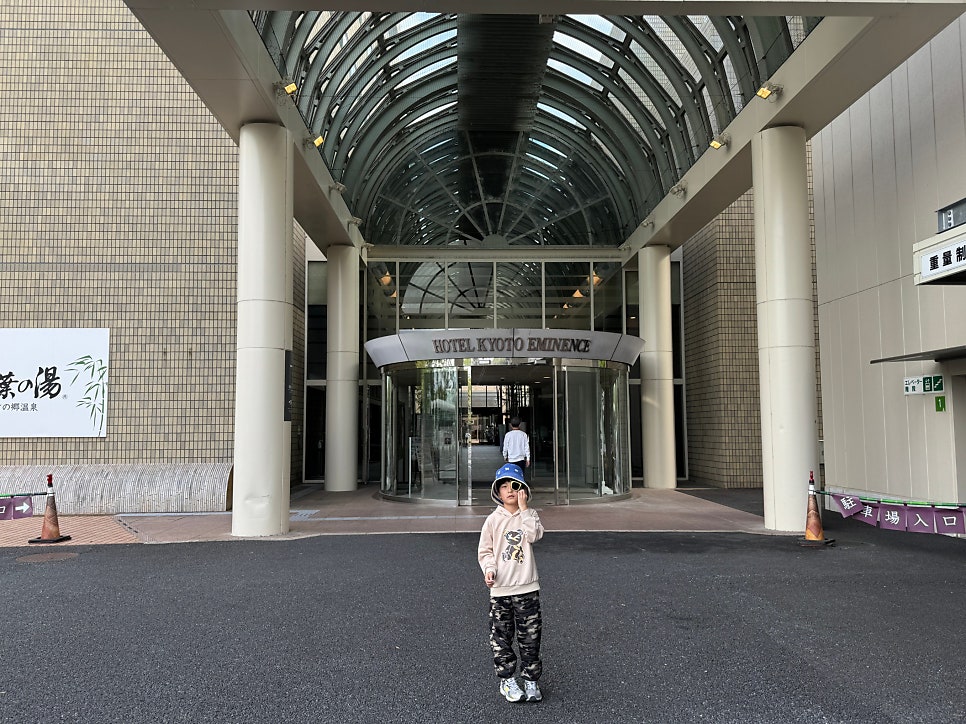
You might assume an onsen means an expensive ryokan stay, but many places offer walk-in day use, and some have affordable rooms. We stayed at Takenosato Onsen Manyo-no-yu, run by Hotel Kyoto Eminence. It works for solo travelers and families alike.
1. How to Get to Manyo-no-yu Kyoto
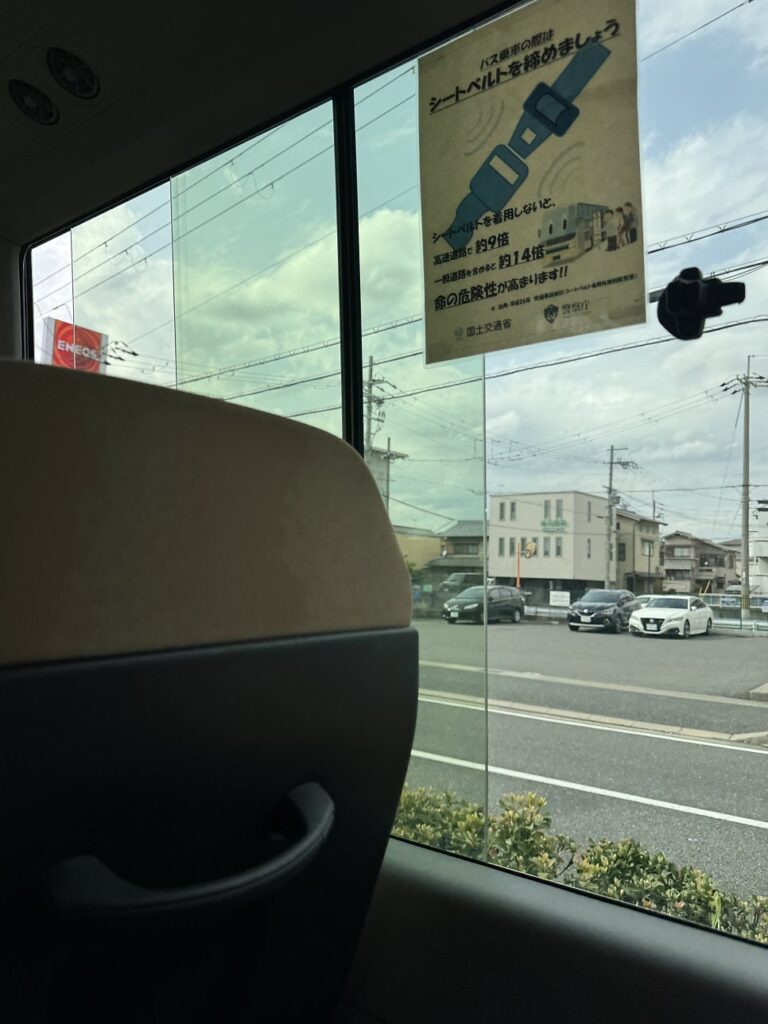
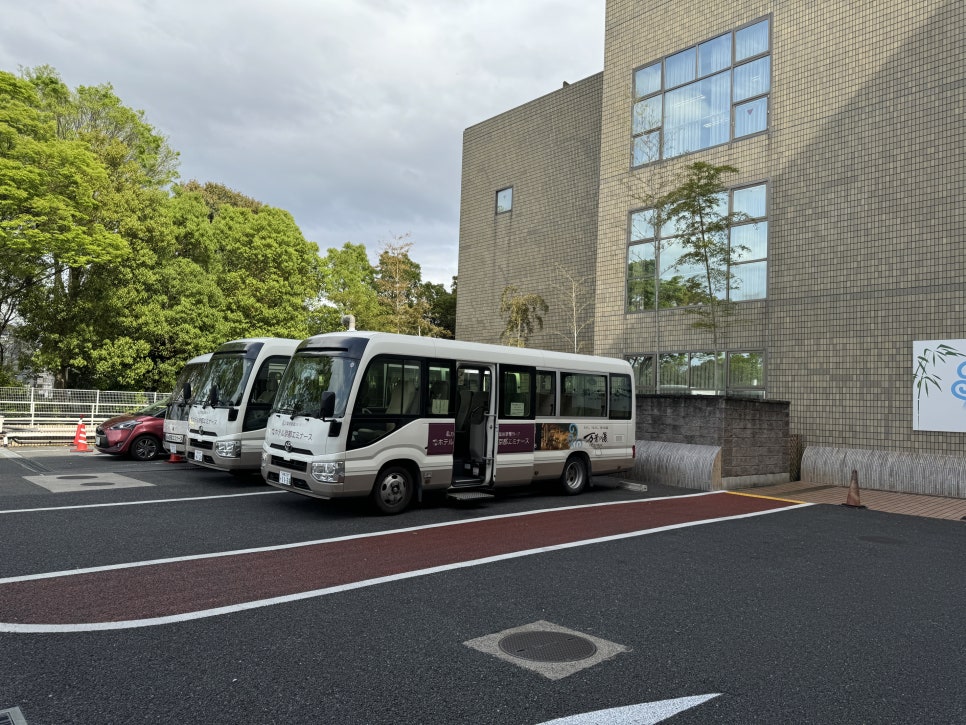
The shuttle bus is the easiest option. Catch it from JR Katsuragawa Station or Rakusaiguchi Station on the Hankyu line. As of 2024, hotel-bound shuttles left Katsuragawa on the hour and Rakusaiguchi at five past each hour, and the ride took about 15 minutes.
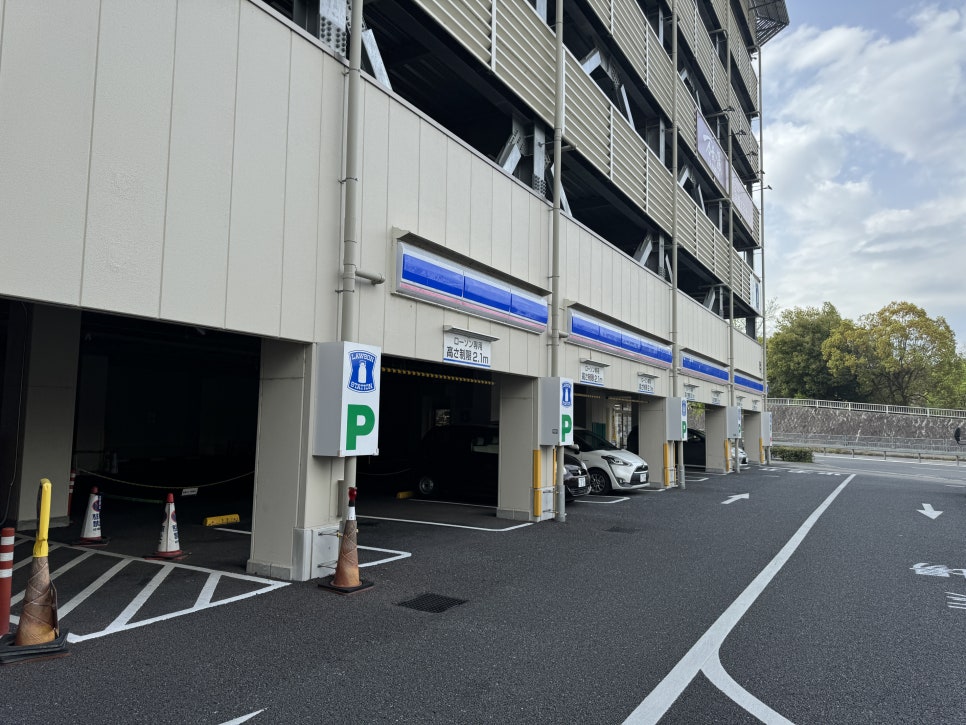
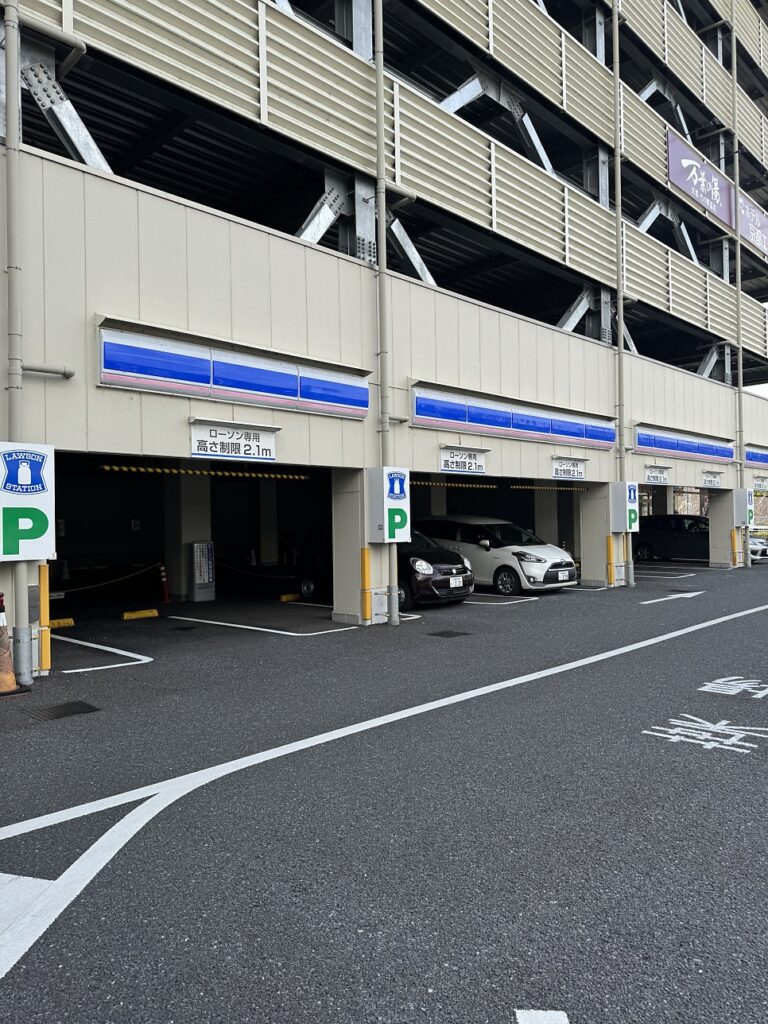
There’s a Lawson convenience store right next to the hotel, handy for quick snacks.
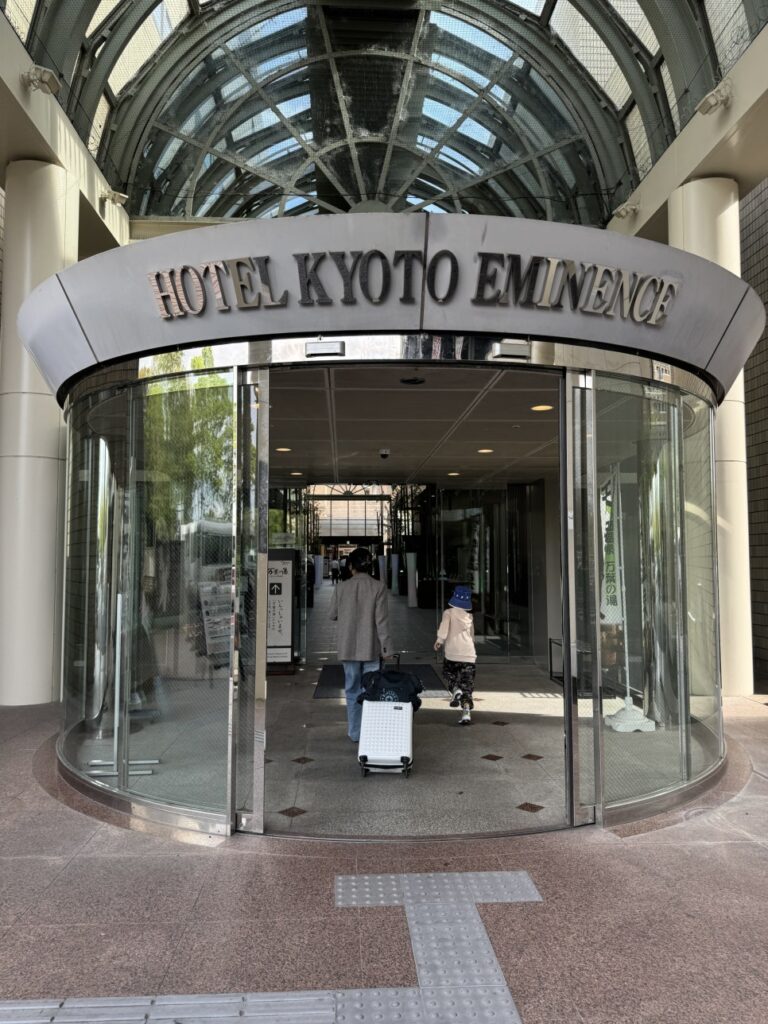
Because the hotel runs this onsen, it’s very well maintained and popular with locals. I’d love to stay again next time I’m in Kyoto.
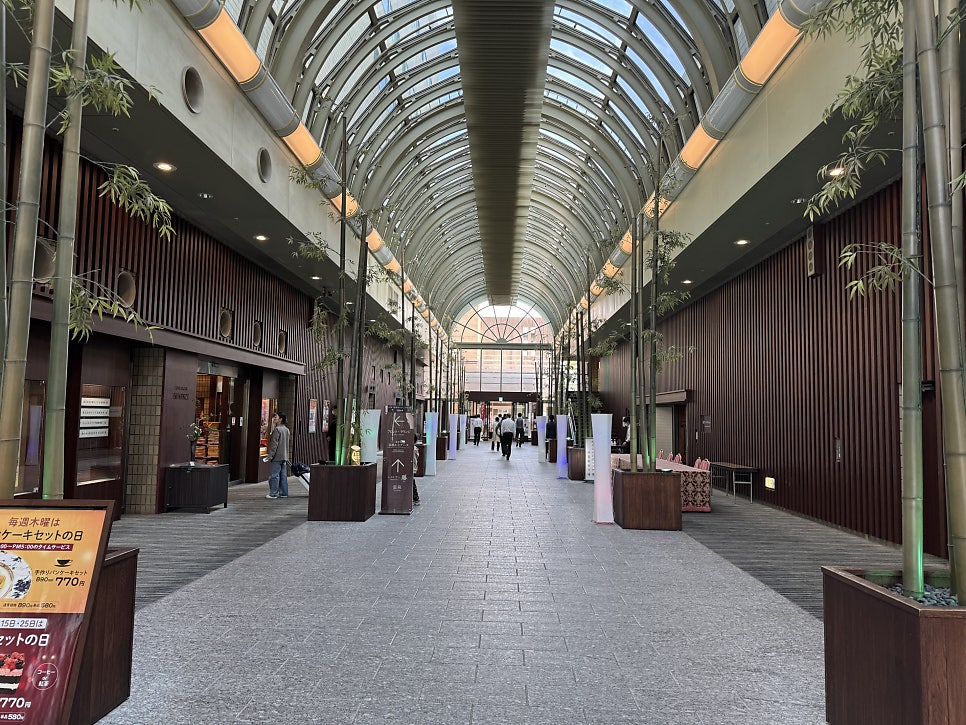
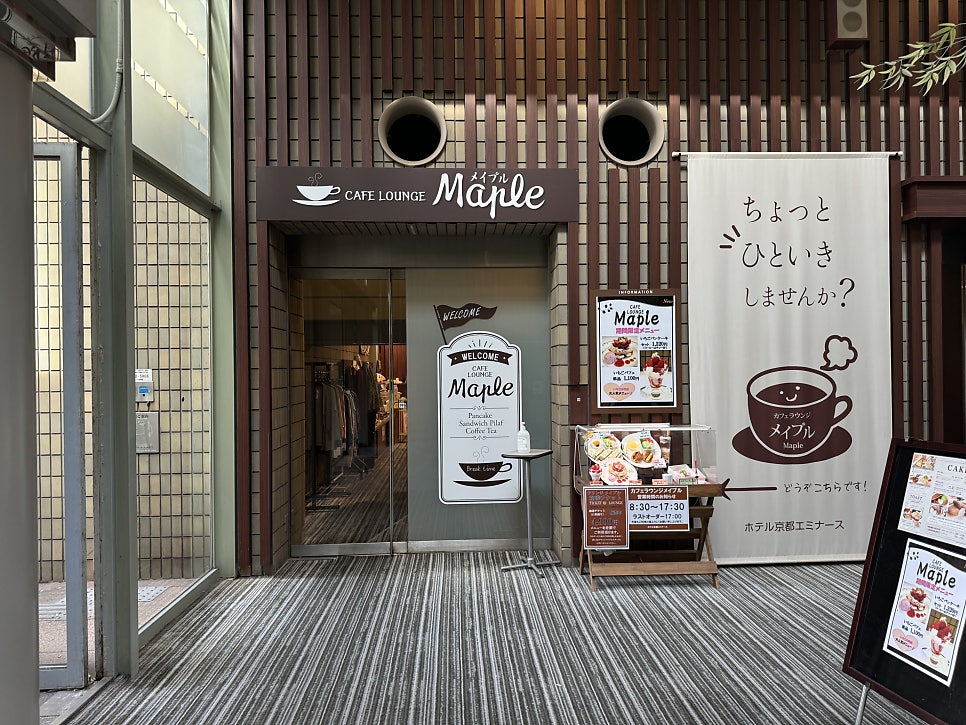
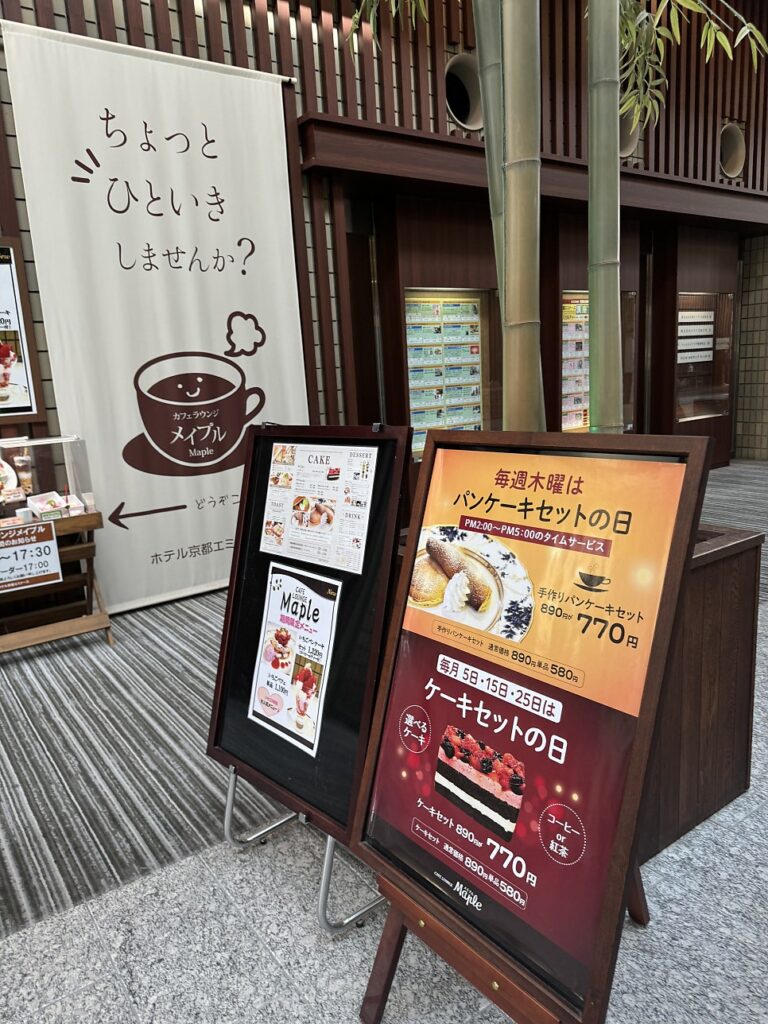
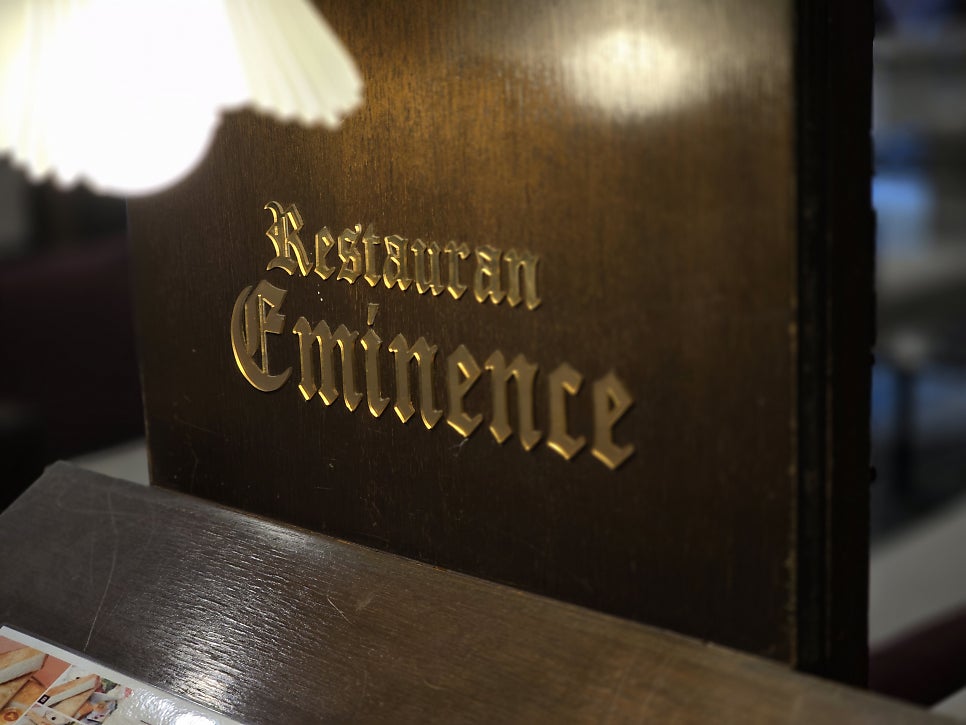
The hotel is large and has a cafe with reasonable prices.
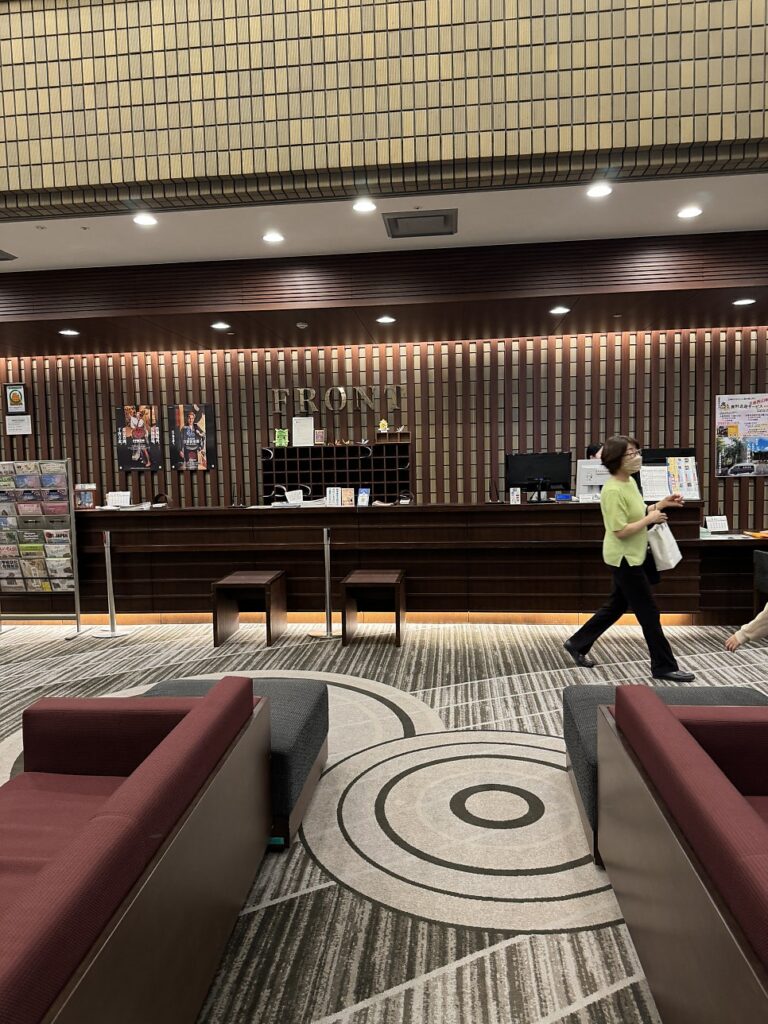
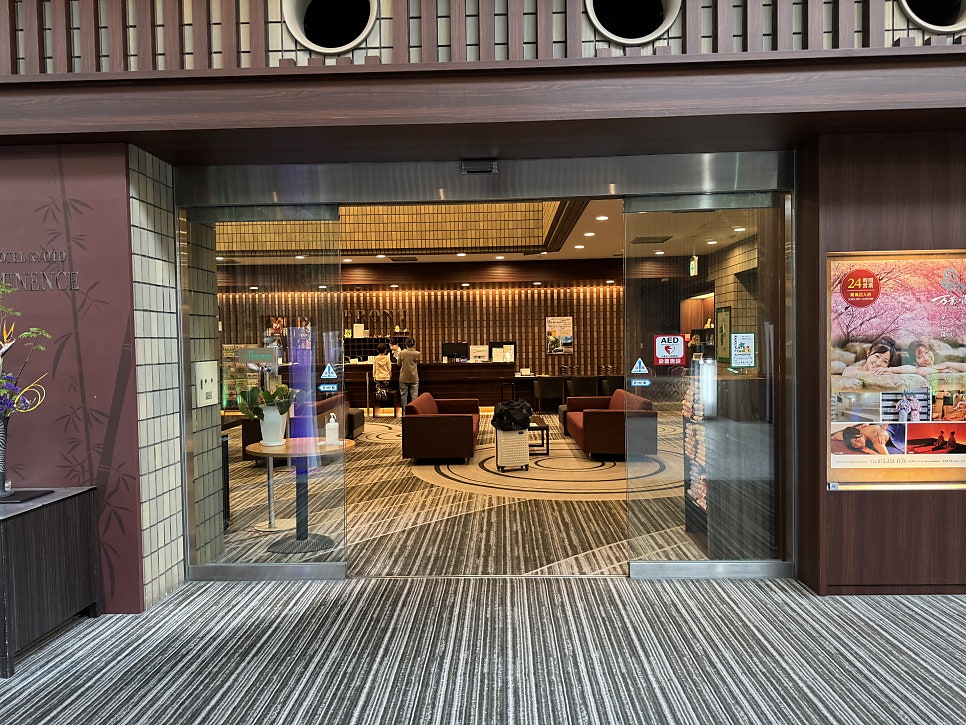
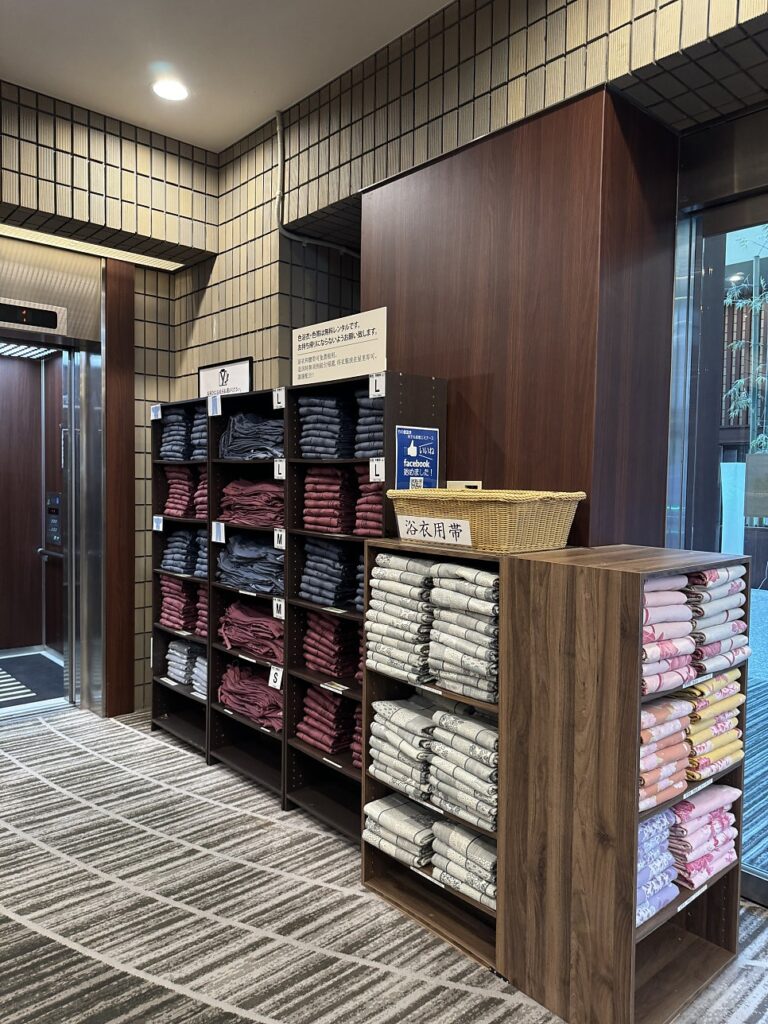
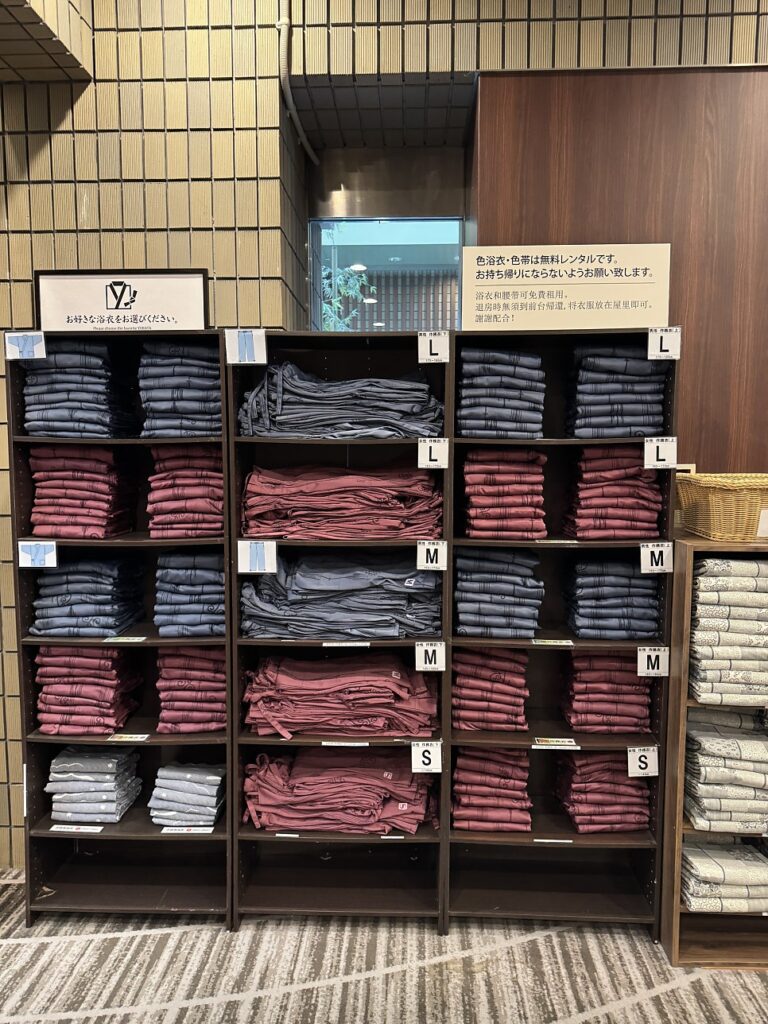
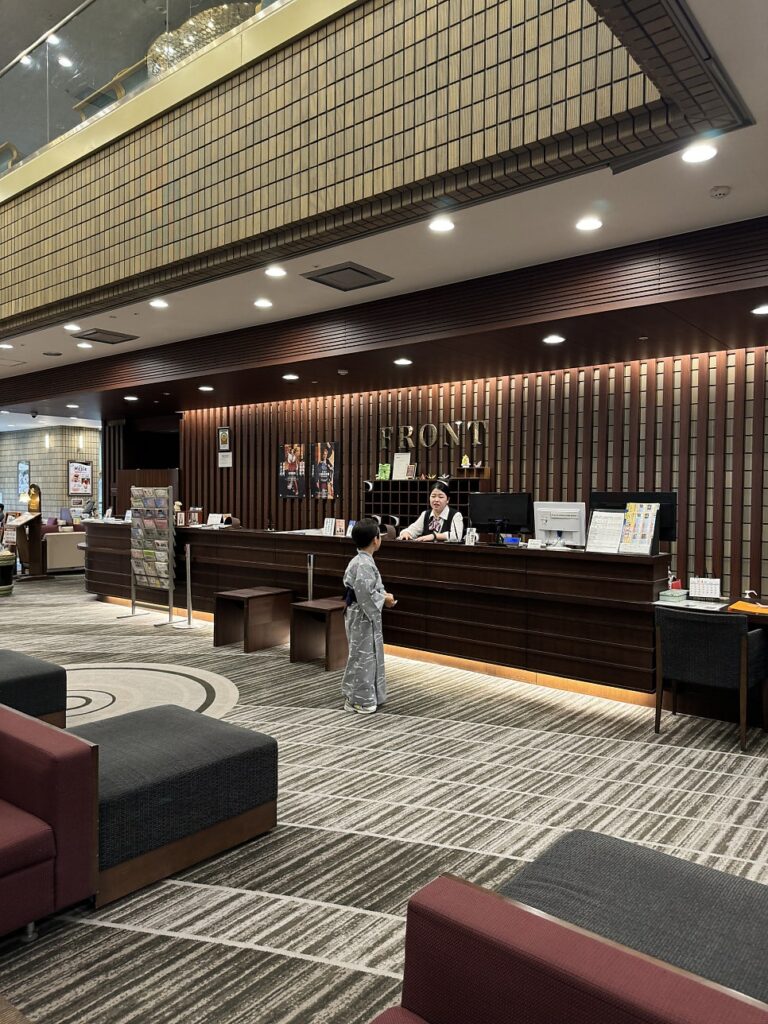
We headed into the lobby to check in. You can borrow yukata for free in the lobby, including kids’ sizes, in many styles, colors and sizes. It was my first time wearing one, and it was comfortable.
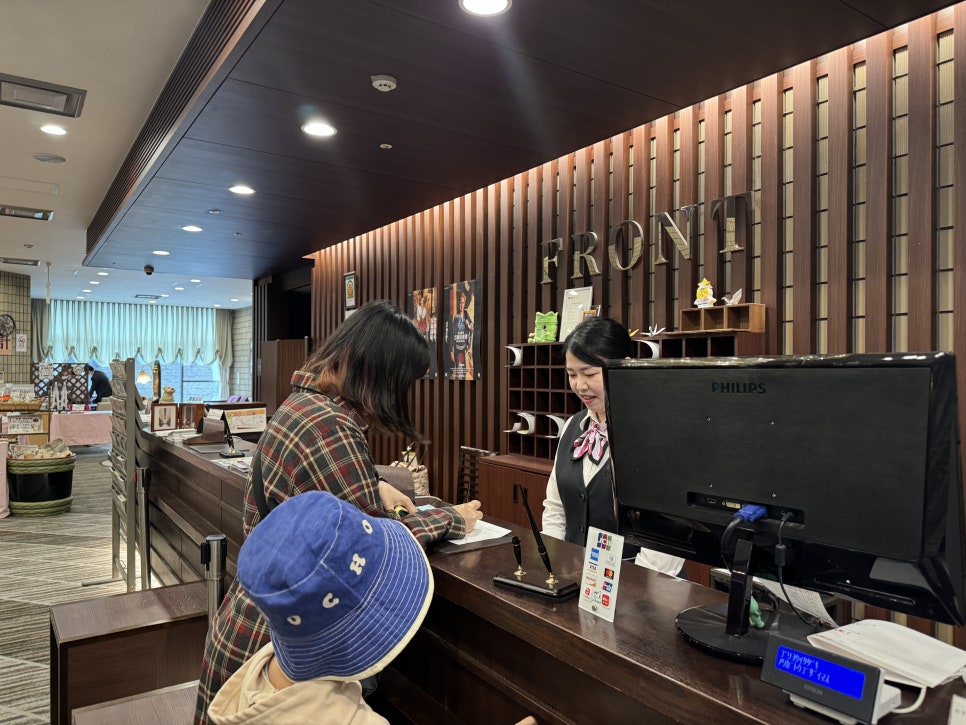
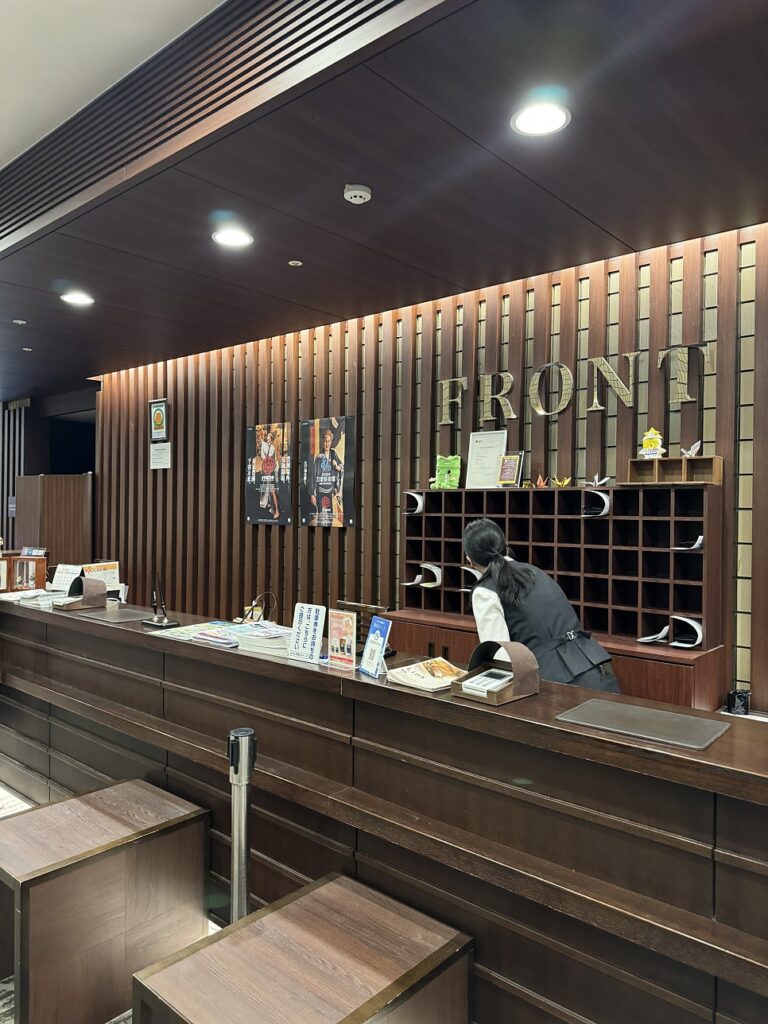
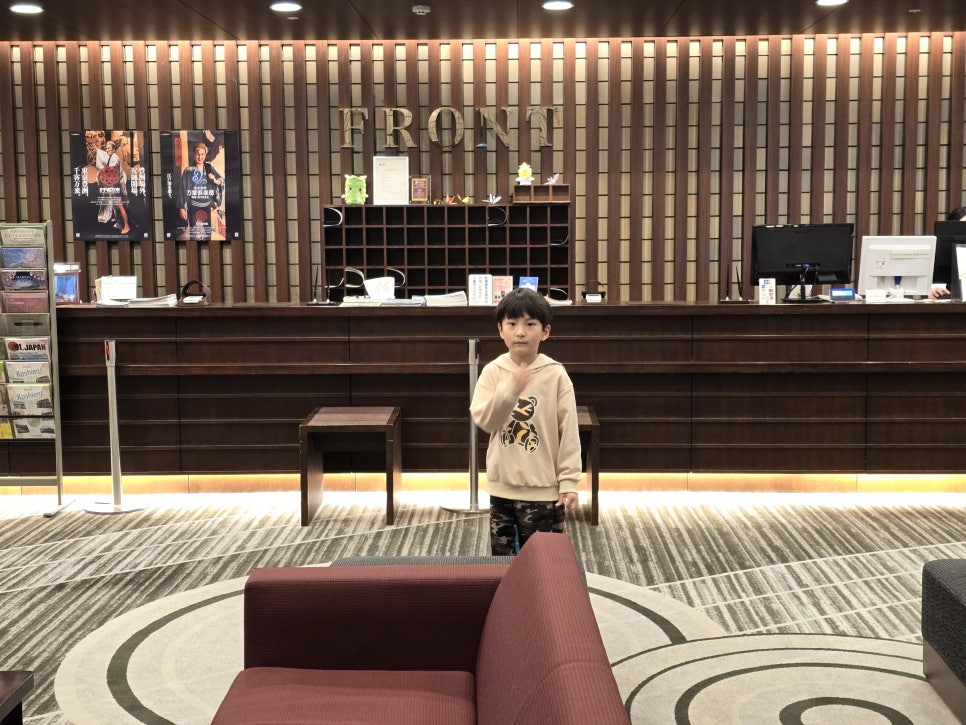
Check-in starts at 3 p.m.; we arrived at 3:20 and checked in right away. Each guest receives a room card on a lanyard, which you use to pay for food, drinks and facilities. Checkout is at 11 a.m., so there’s time to relax. A staff member who speaks excellent Korean is also on hand.
Our room was on the fourth floor, quiet and well soundproofed.
2. Our Room at Manyo-no-yu
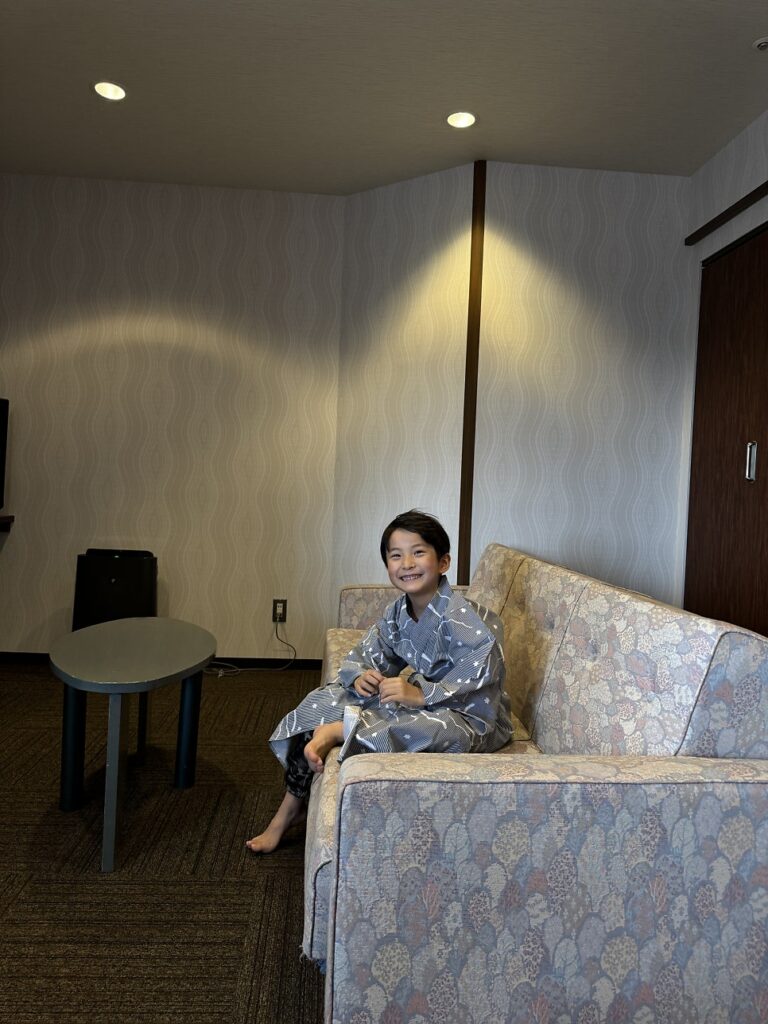
We had a Western-style triple room with three beds.
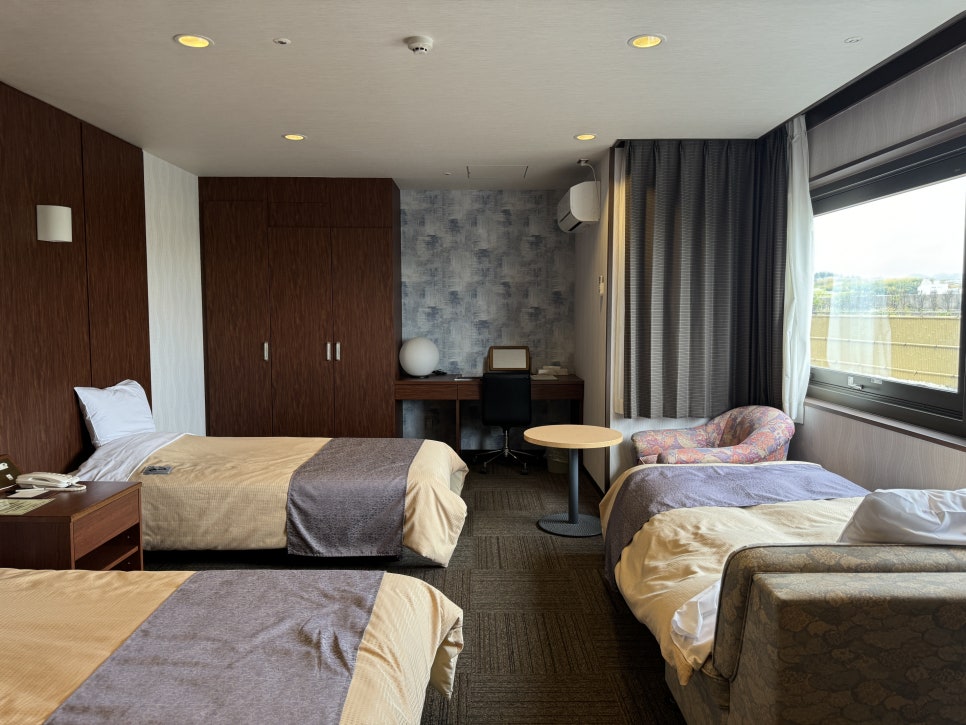
It’s a bit dated but well kept, like a little trip back in time.
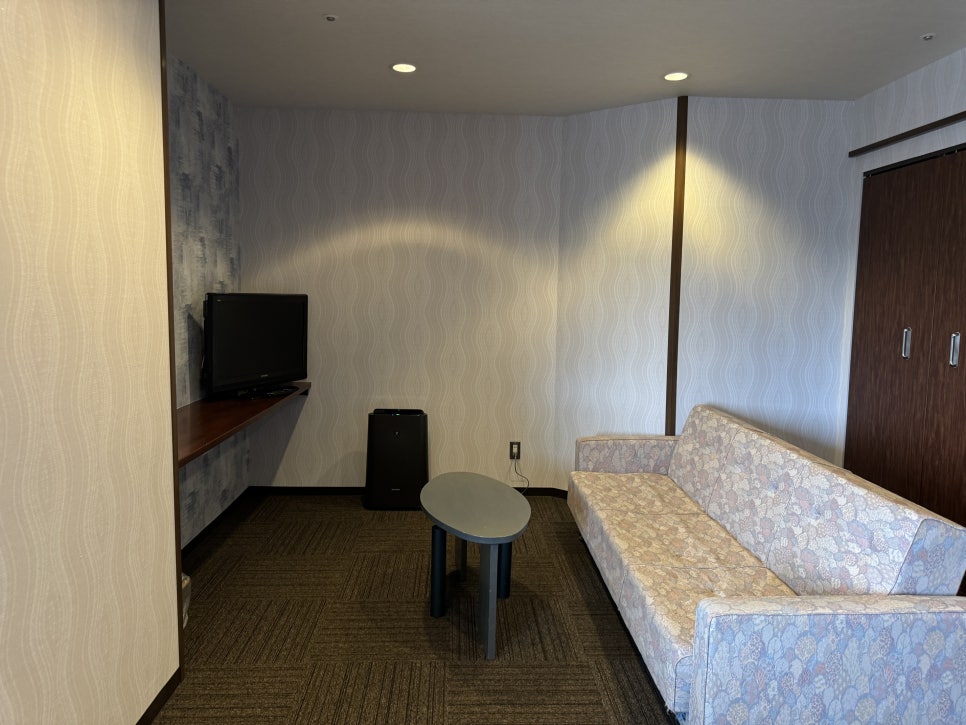
There’s a large sofa, a table and an air purifier.
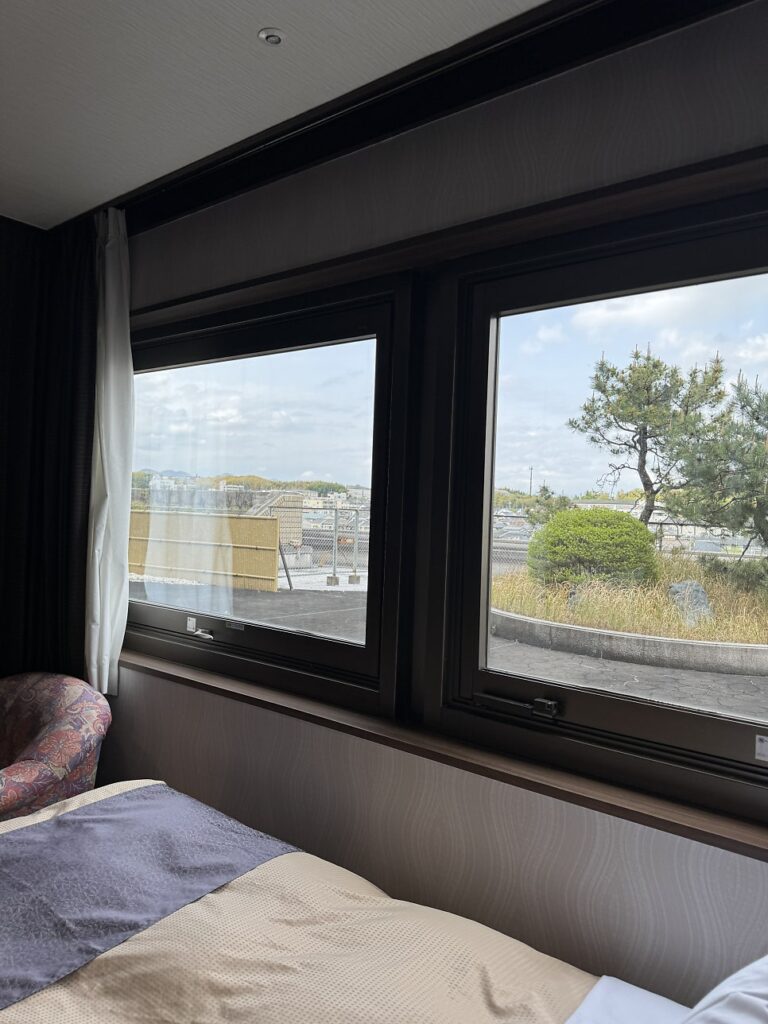
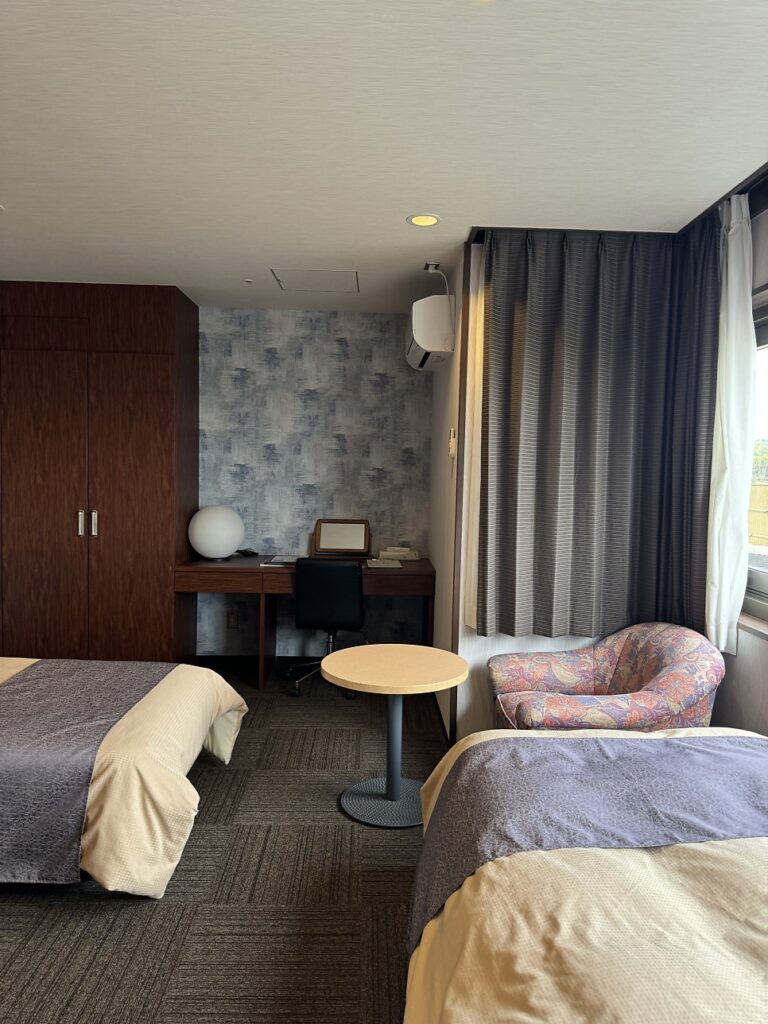
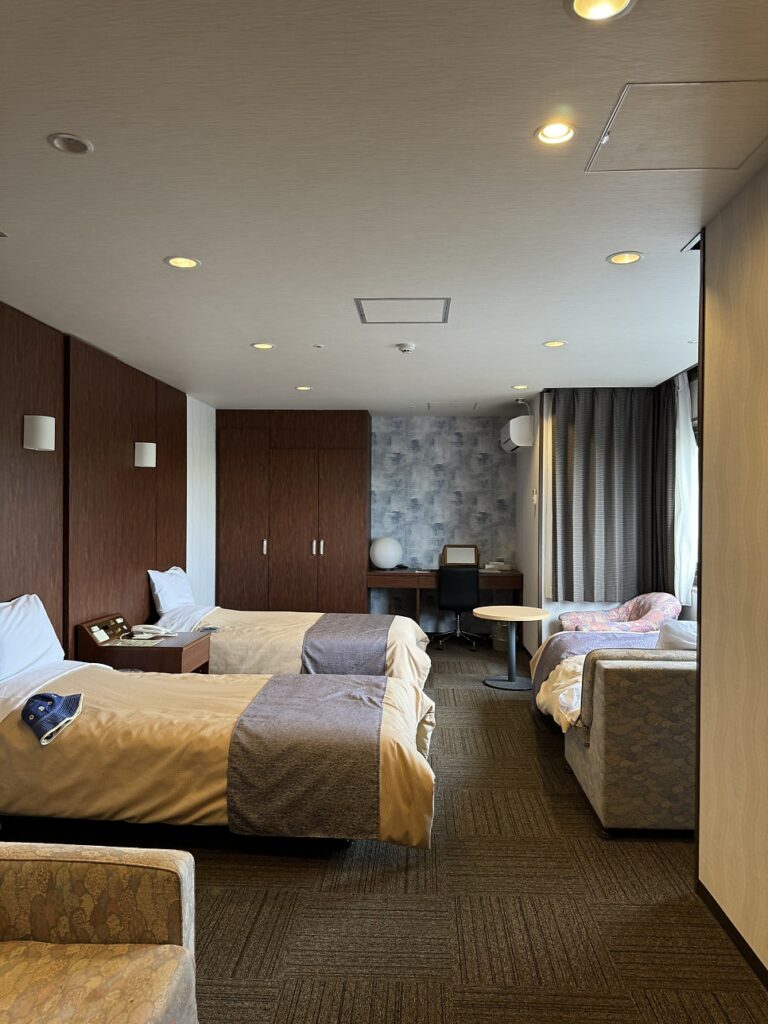
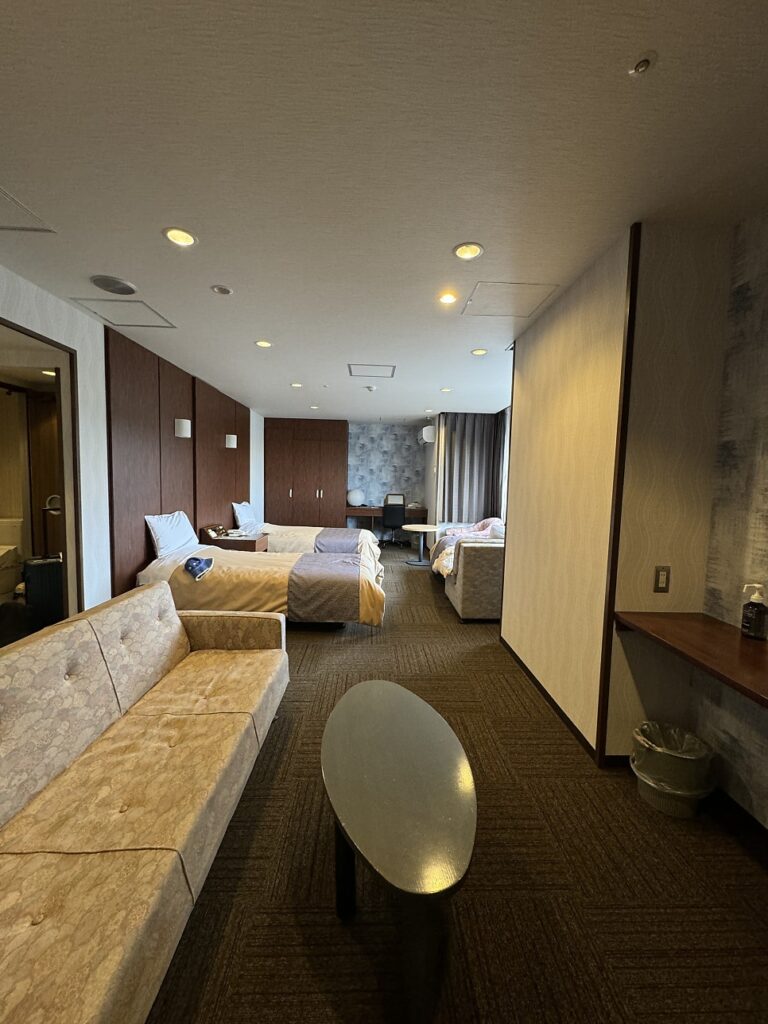
Plenty of closet space made it easy to store our clothes, and the room was perfect for a family of three.
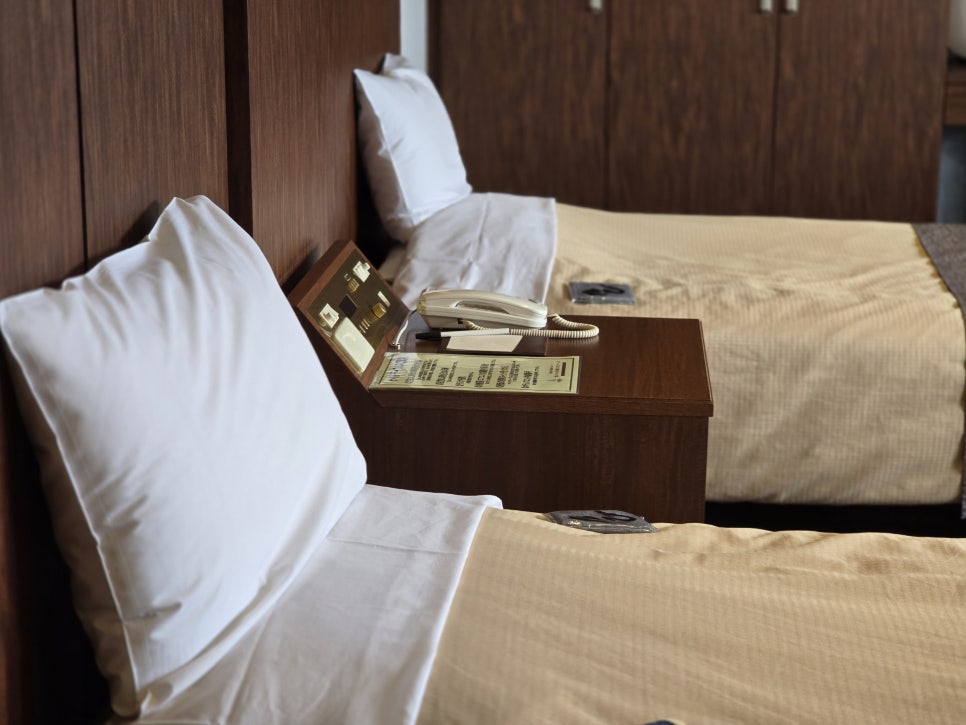
Best of all, the bathroom is as big as a small bathhouse, with a tub, and the sink, shower and toilet are separate, so it’s very clean and hygienic. Japanese hotels really care about cleanliness. Amenities are fully stocked, including separate skincare for men and women.
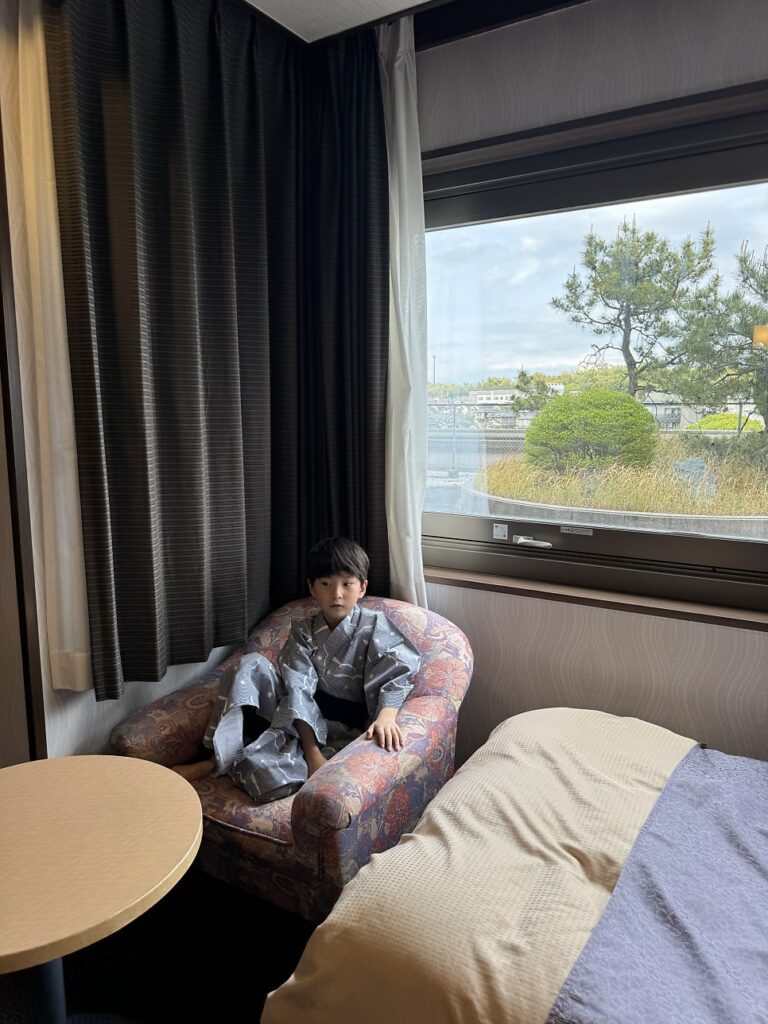
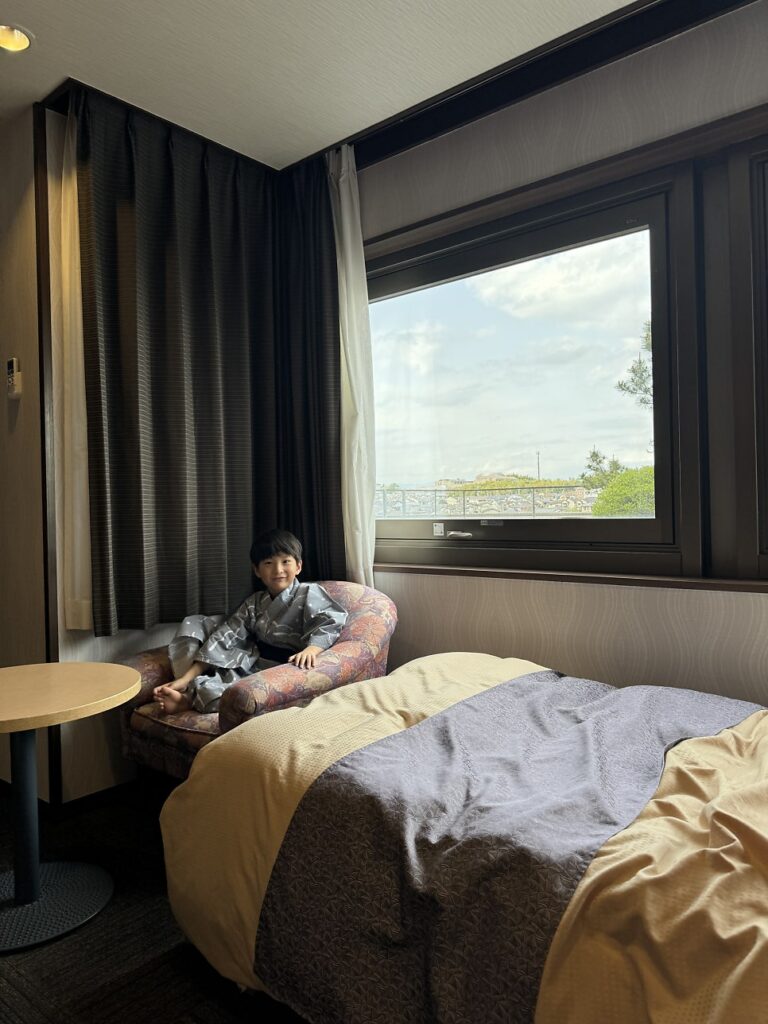
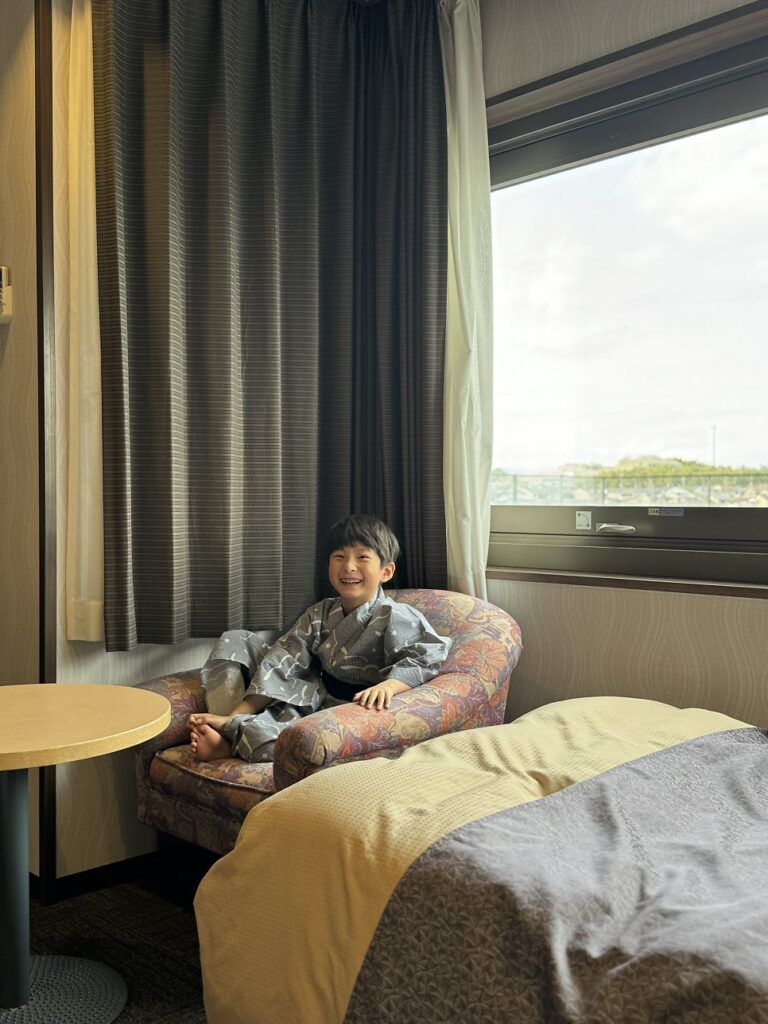
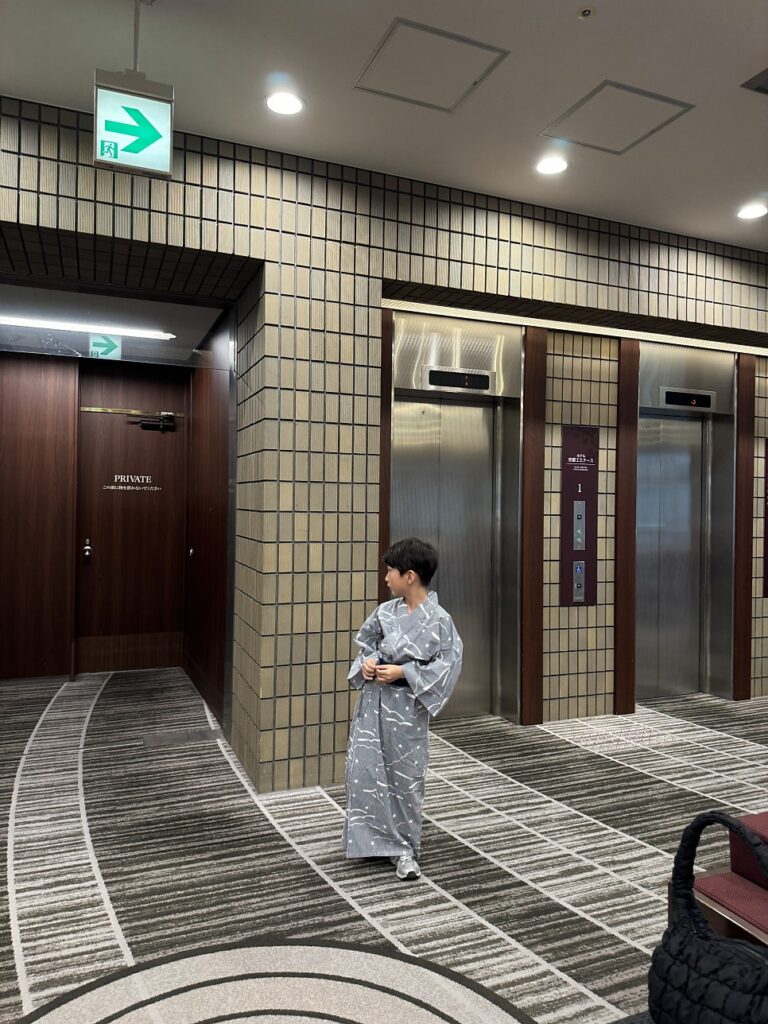
Yans changed into a yukata. Sizes seem split between preschool and elementary ages; I picked the second size, which was a little big on him.
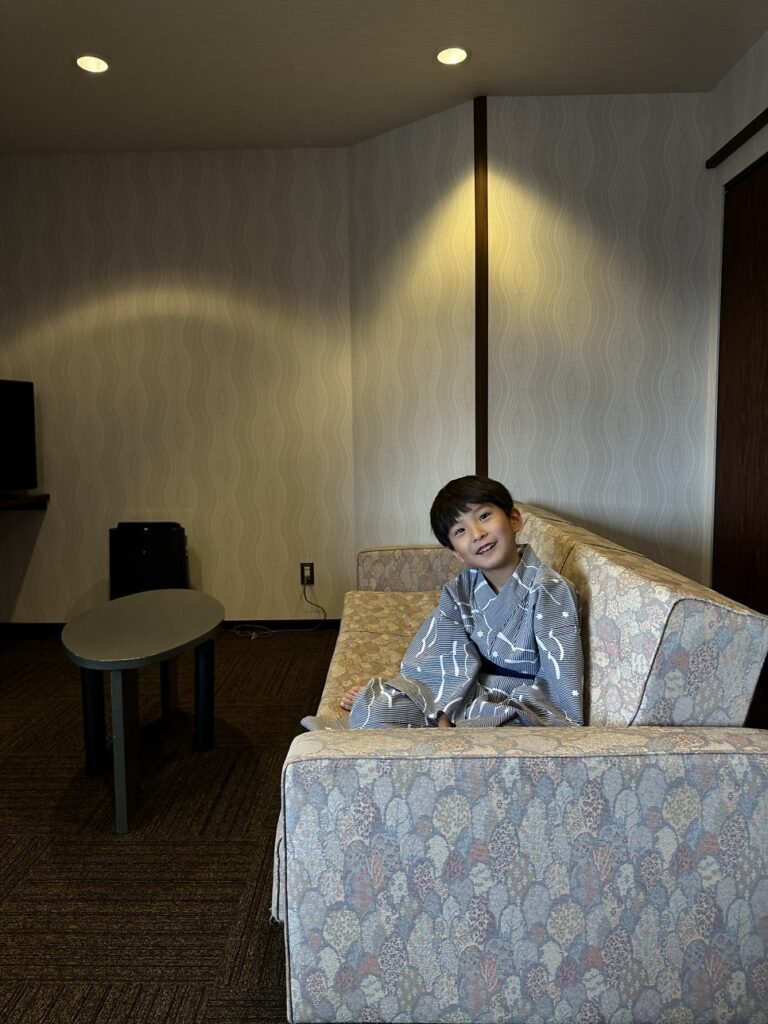
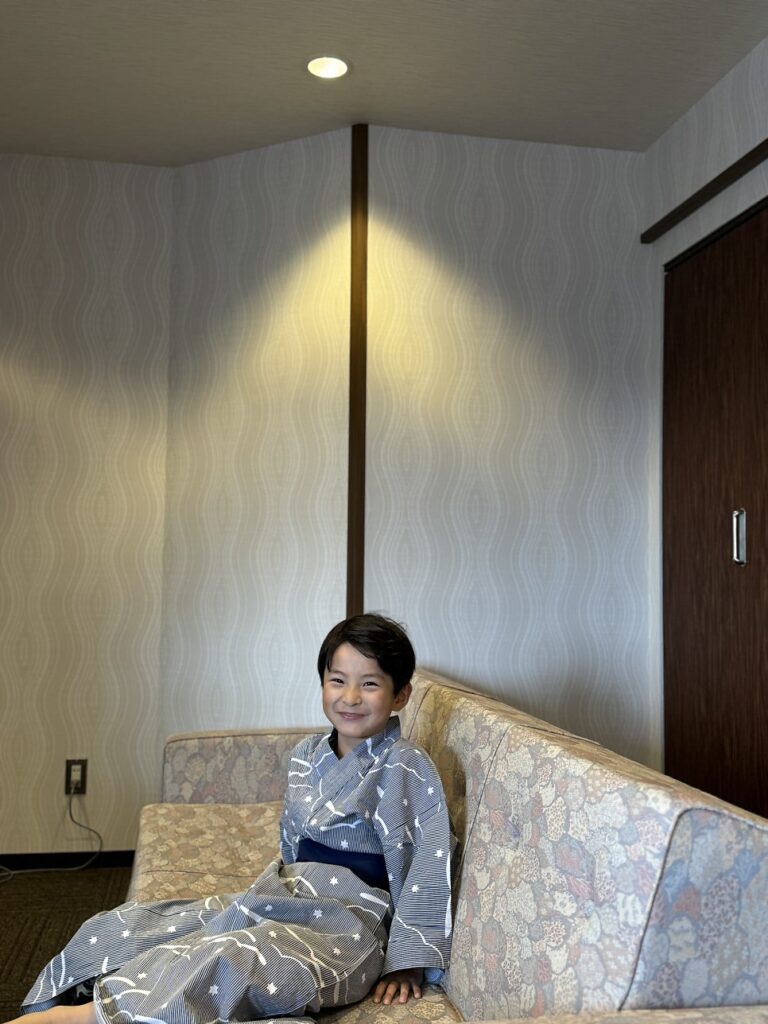
Besides Western rooms, there are traditional tatami rooms, and some rooms come with a jacuzzi, a lovely choice for a Japanese onsen trip.
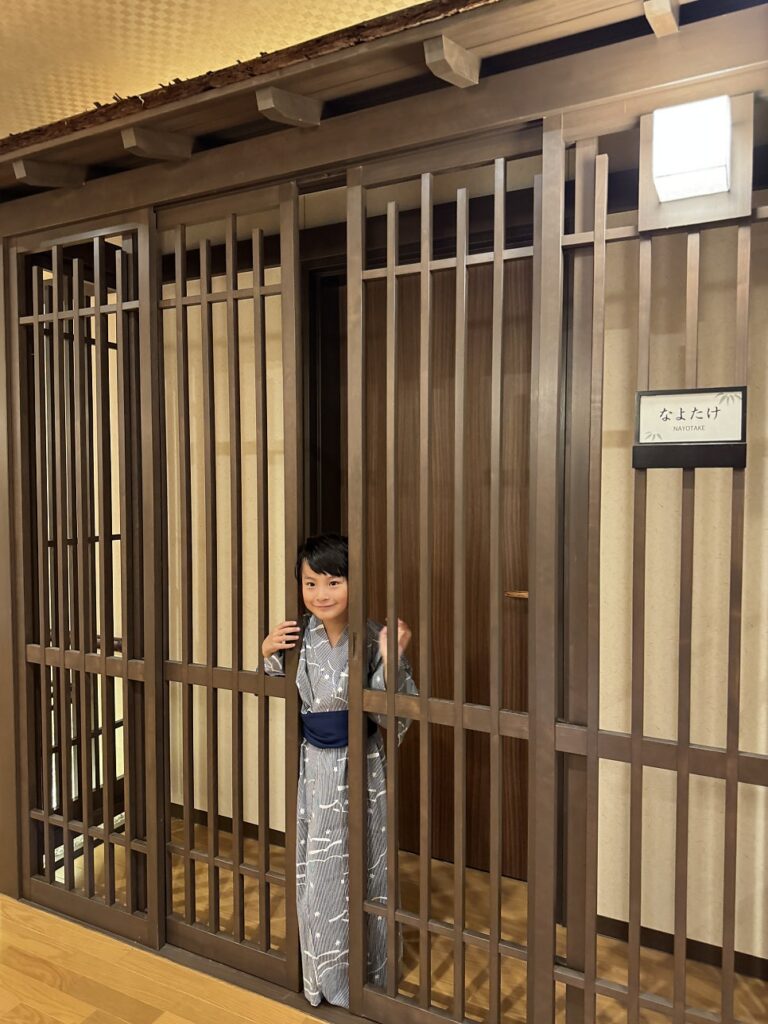
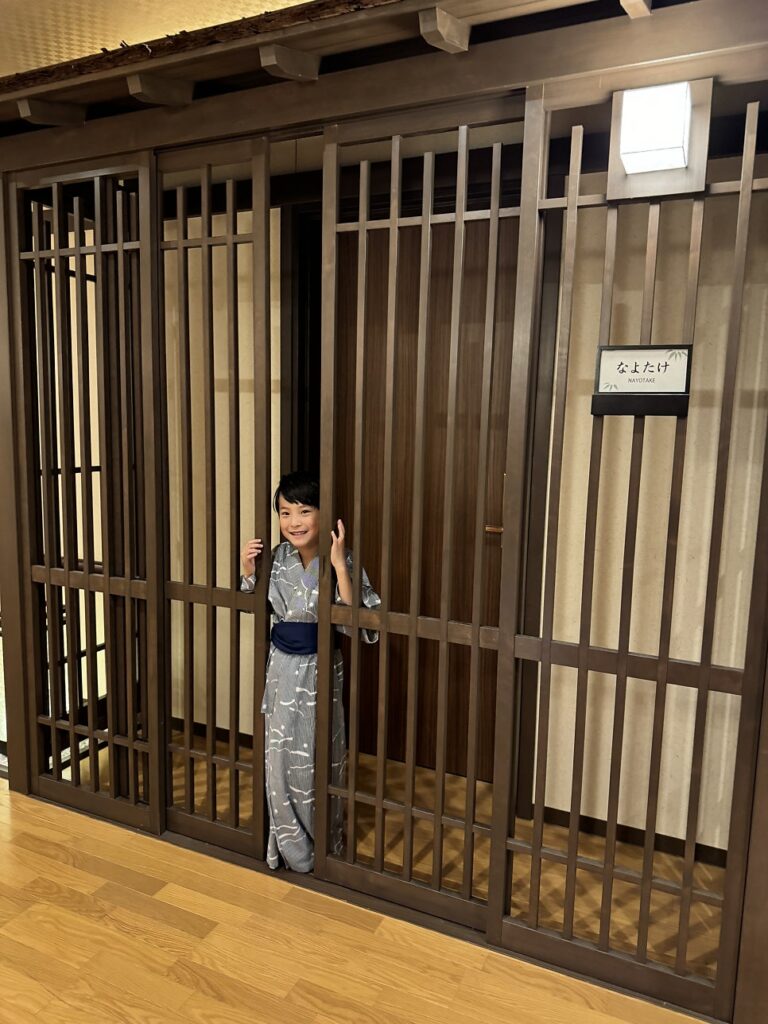
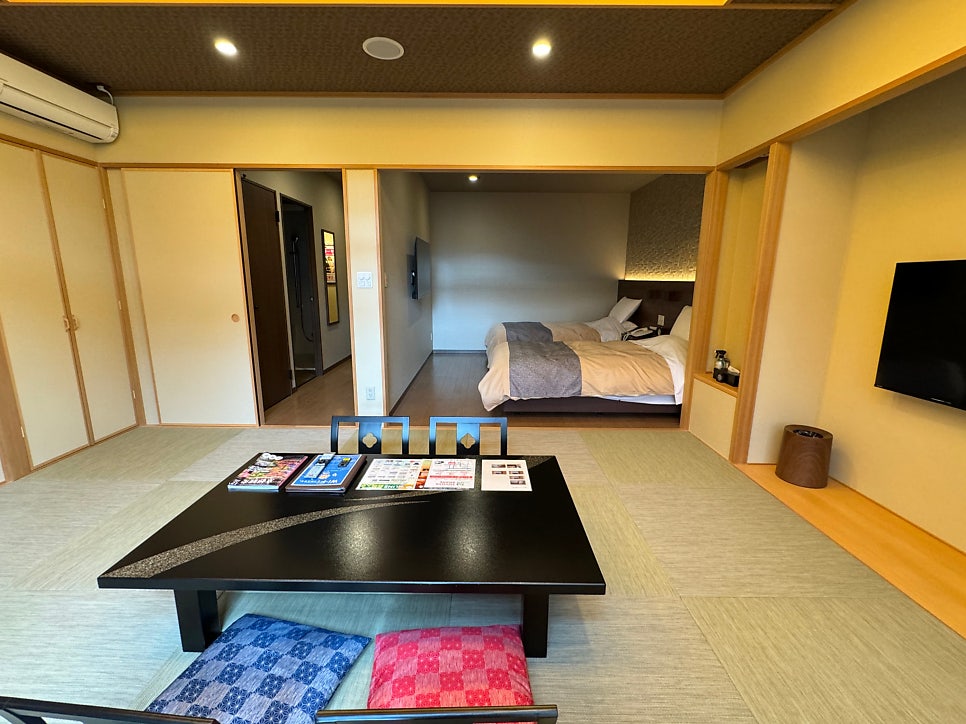
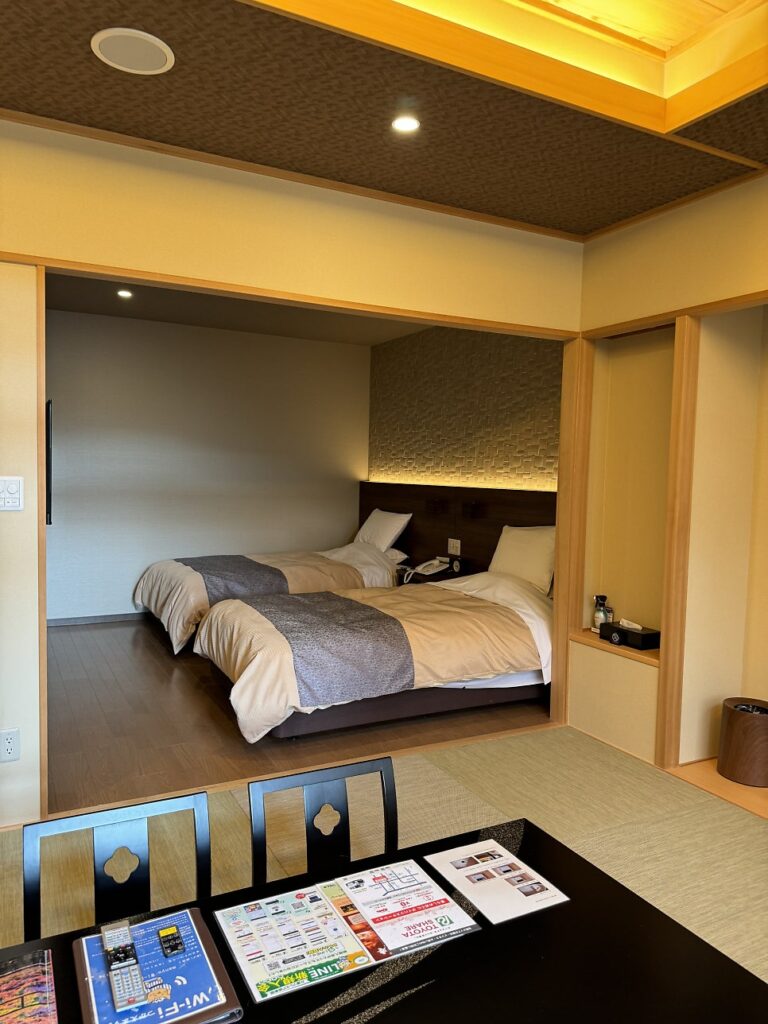
This is the traditional Japanese tatami-style room, also great for families.
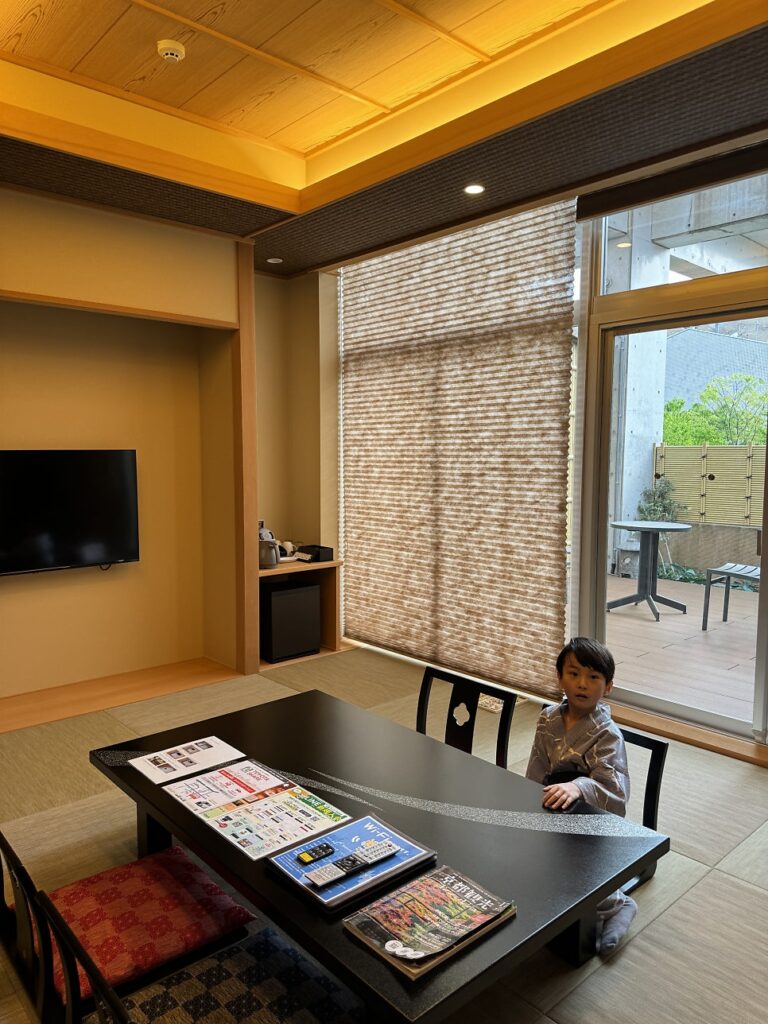
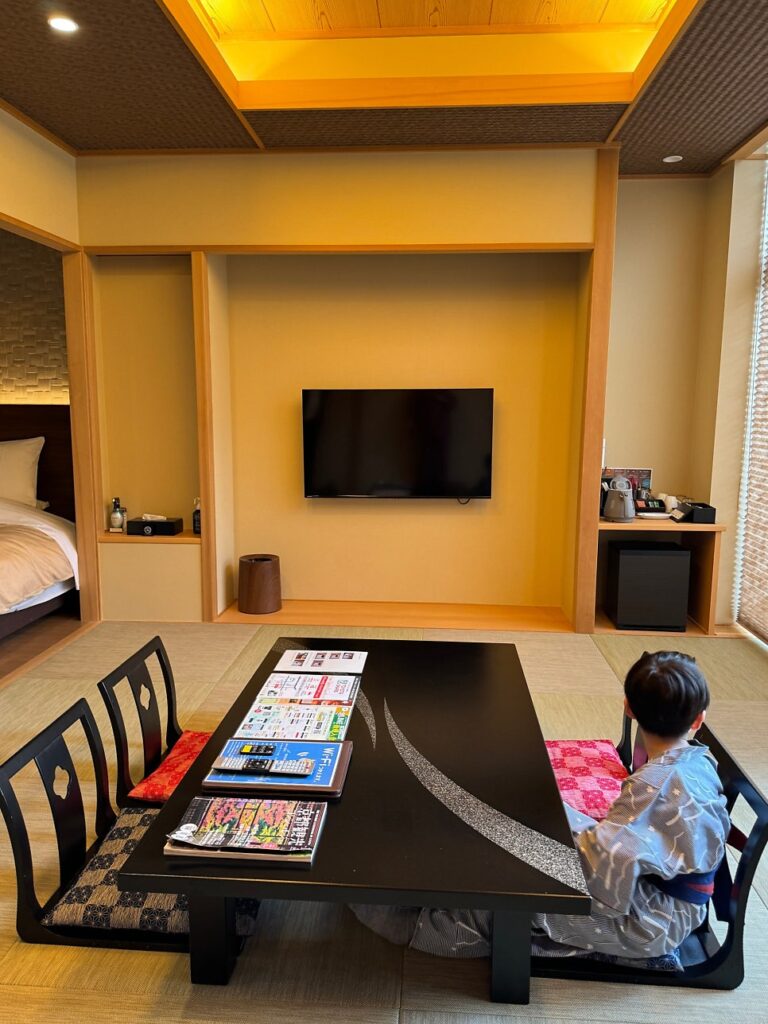
The floor seating suits a yukata even better. For a true Kyoto ryokan feel, I recommend a tatami room. There’s also an outdoor jacuzzi.
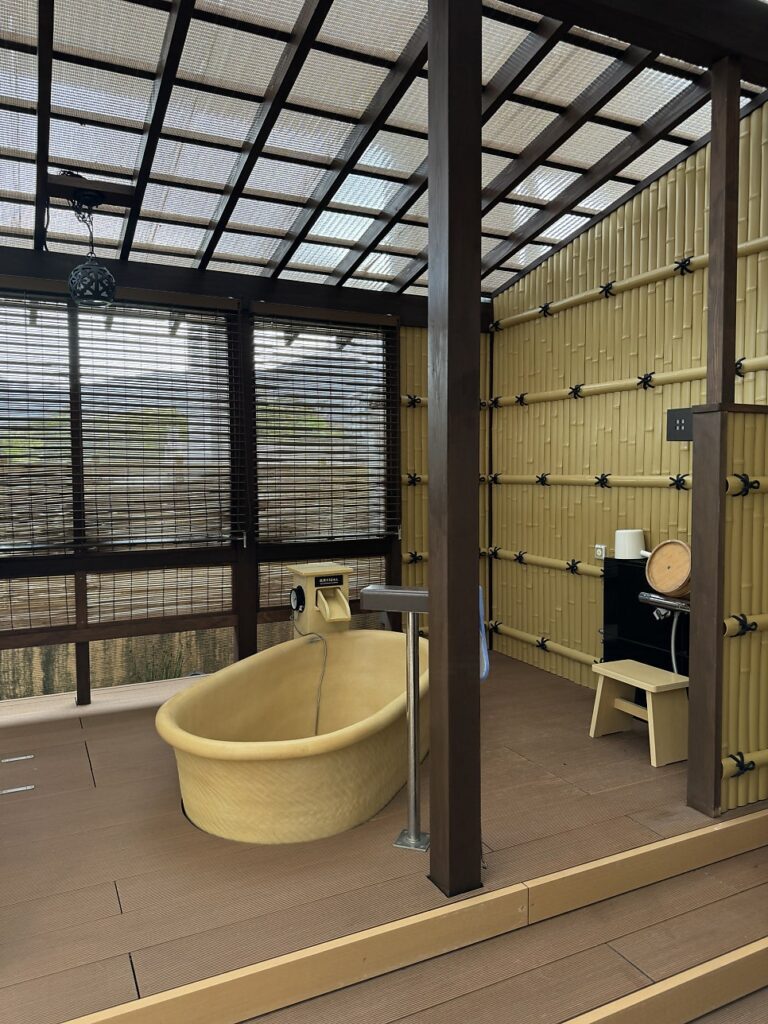
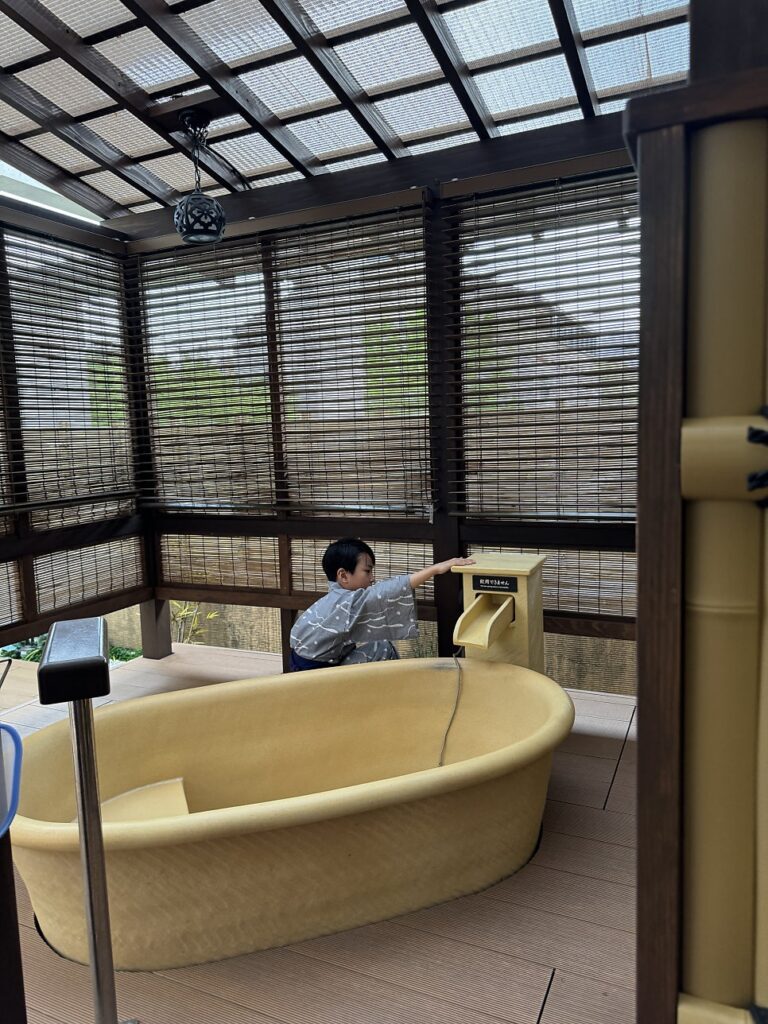
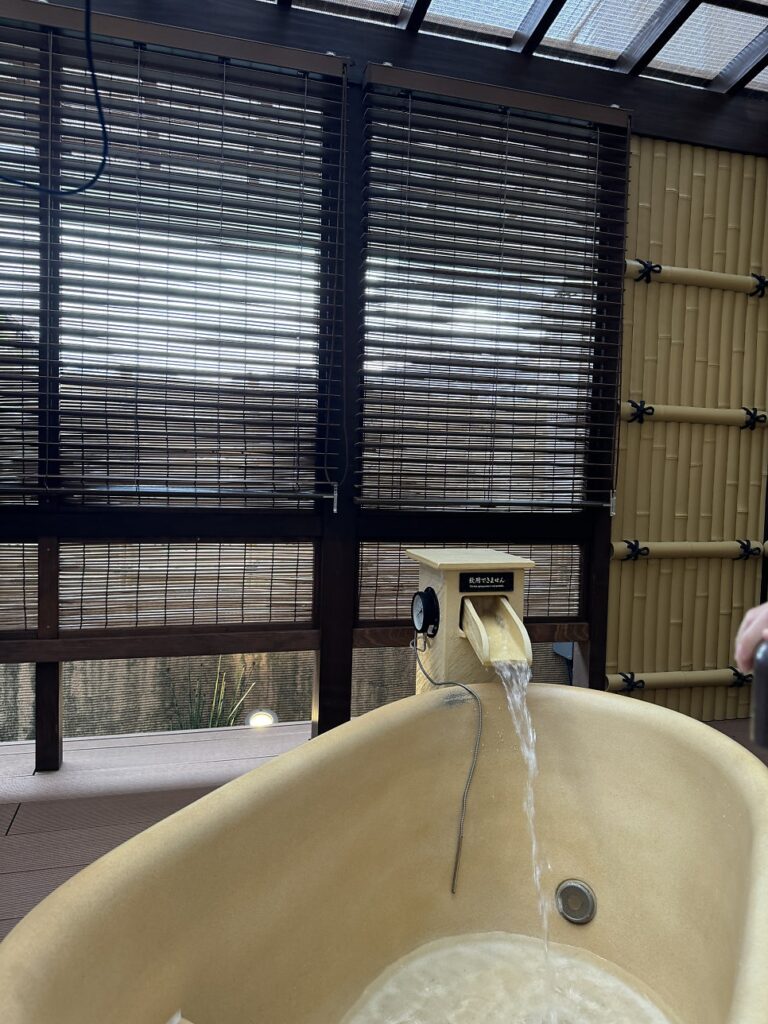
It’s filled with warm hot-spring water, and the bamboo design feels very Japanese. Soaking outdoors while taking in the view must be wonderful. For a family trip, a room with a private family bath is a great option.
3. How to Use the Large Baths and Open-Air Baths
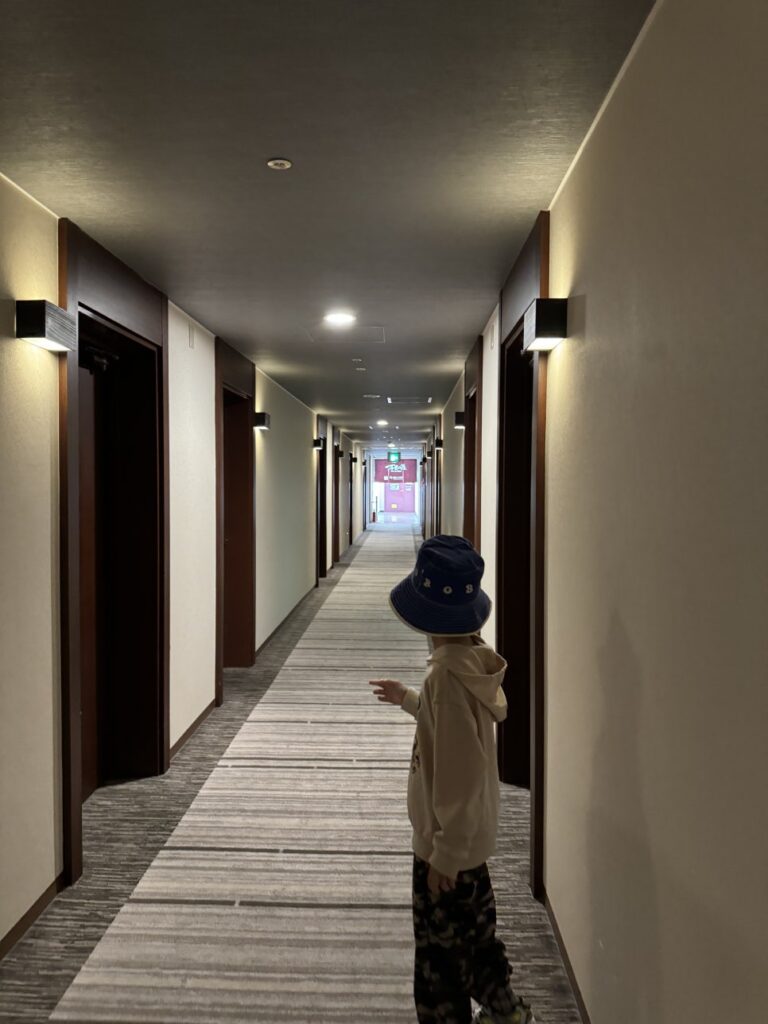
Hotel guests can use a corridor on the fourth floor that leads to the onsen.
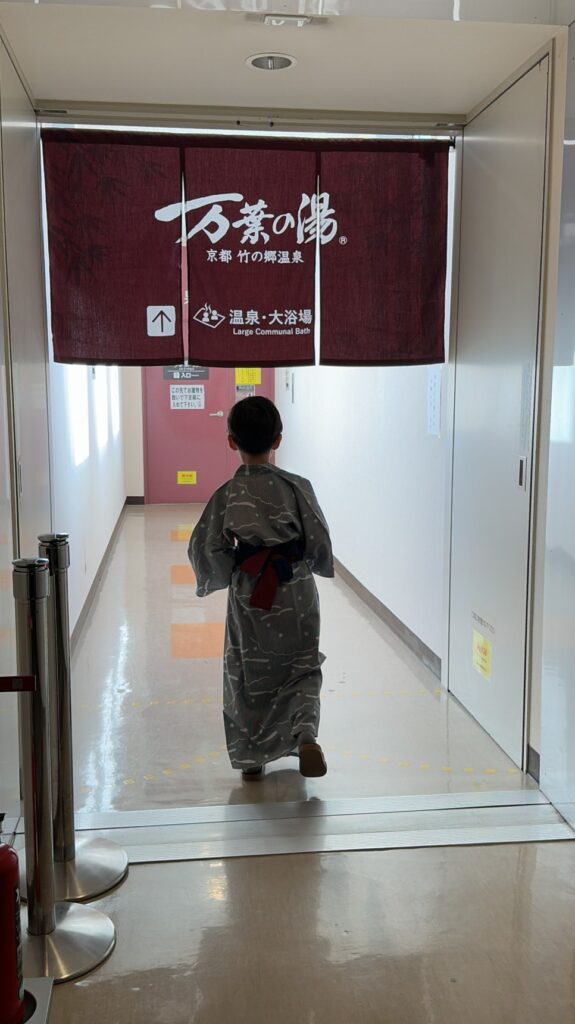
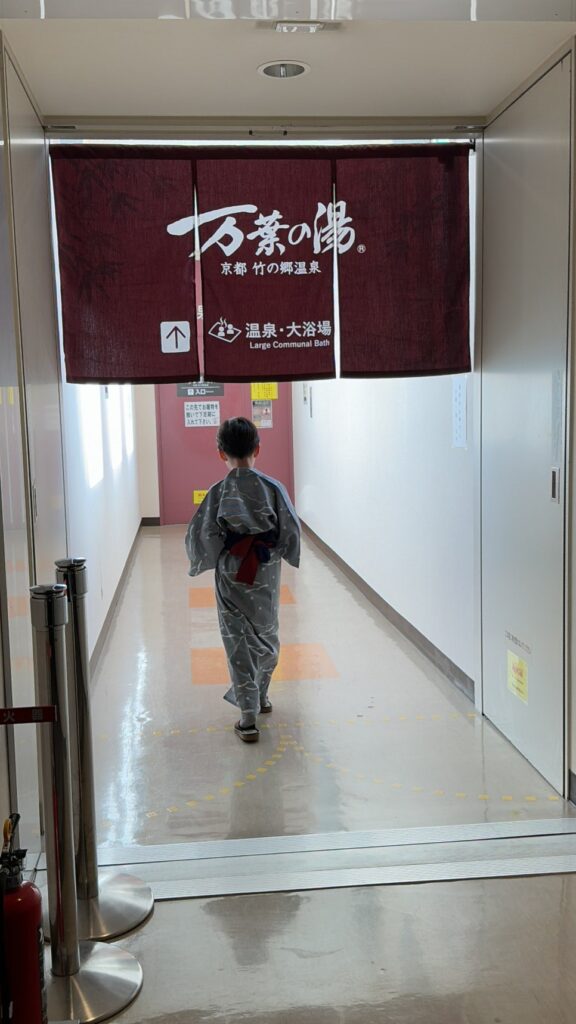
Go through the corridor and open the red door to reach the shoe area.
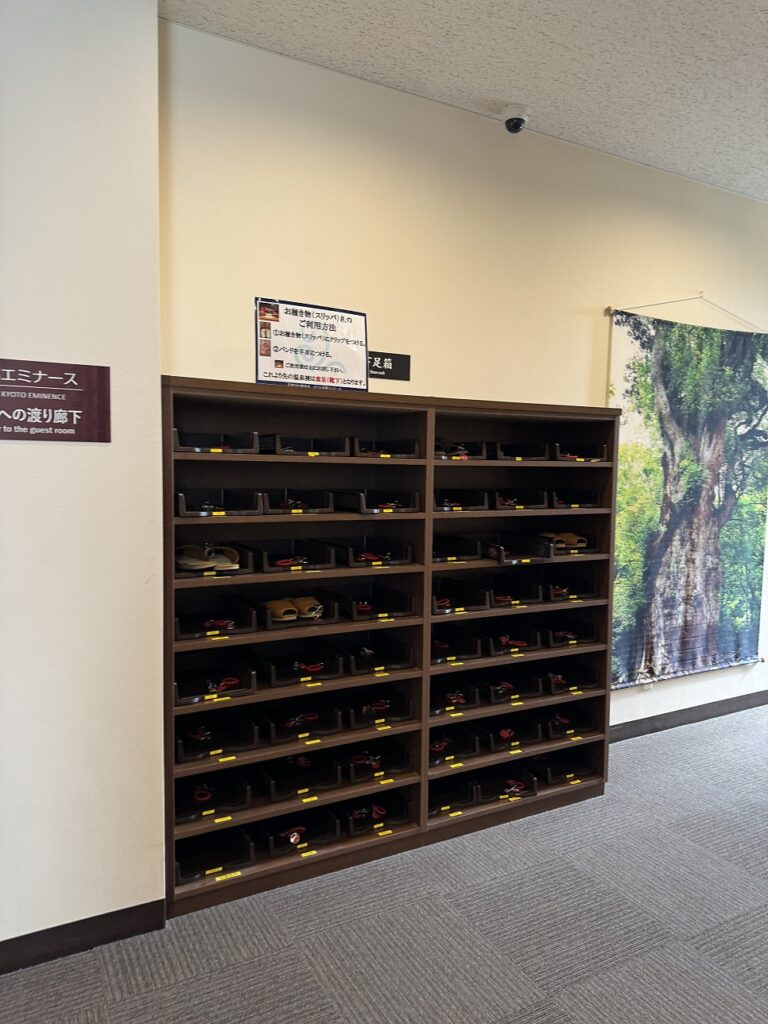
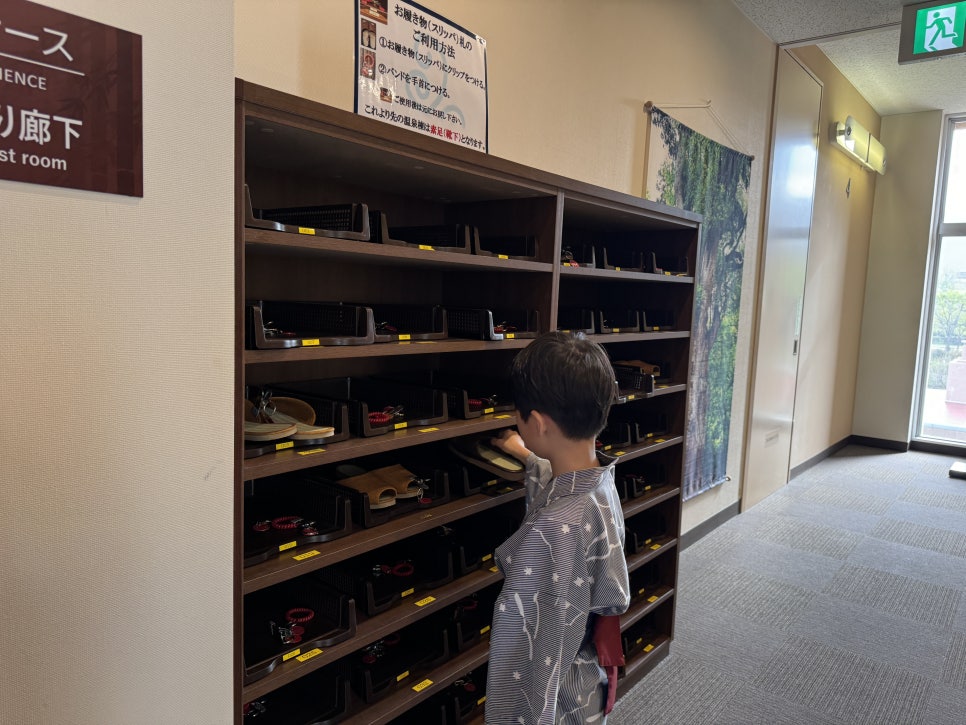
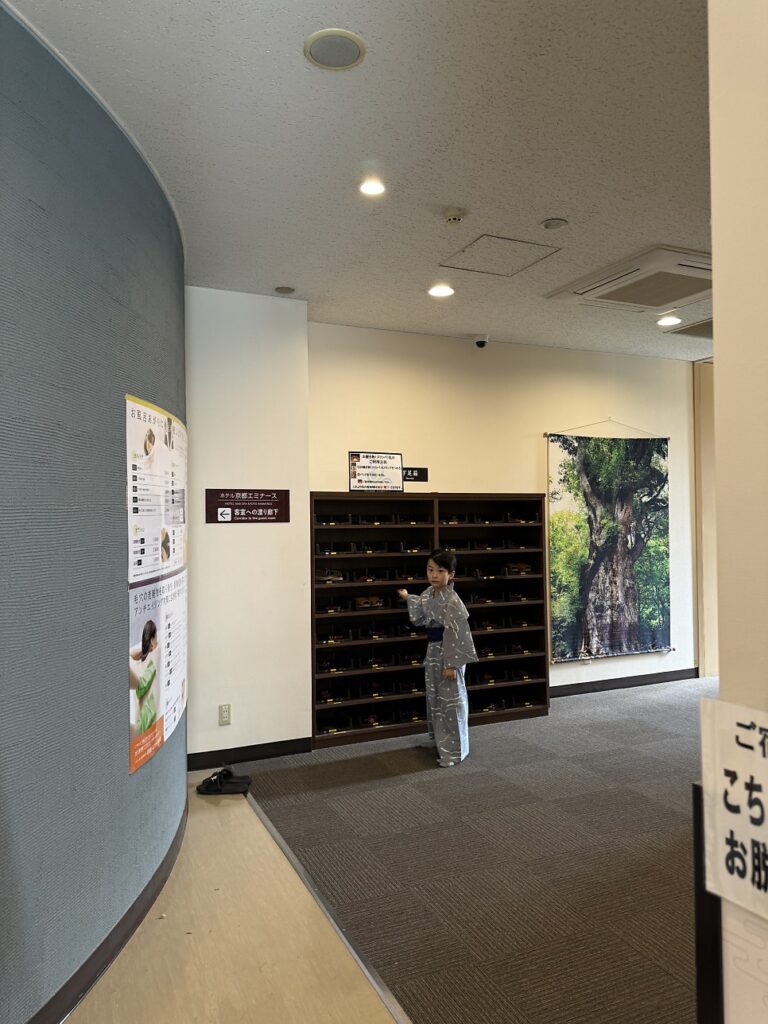
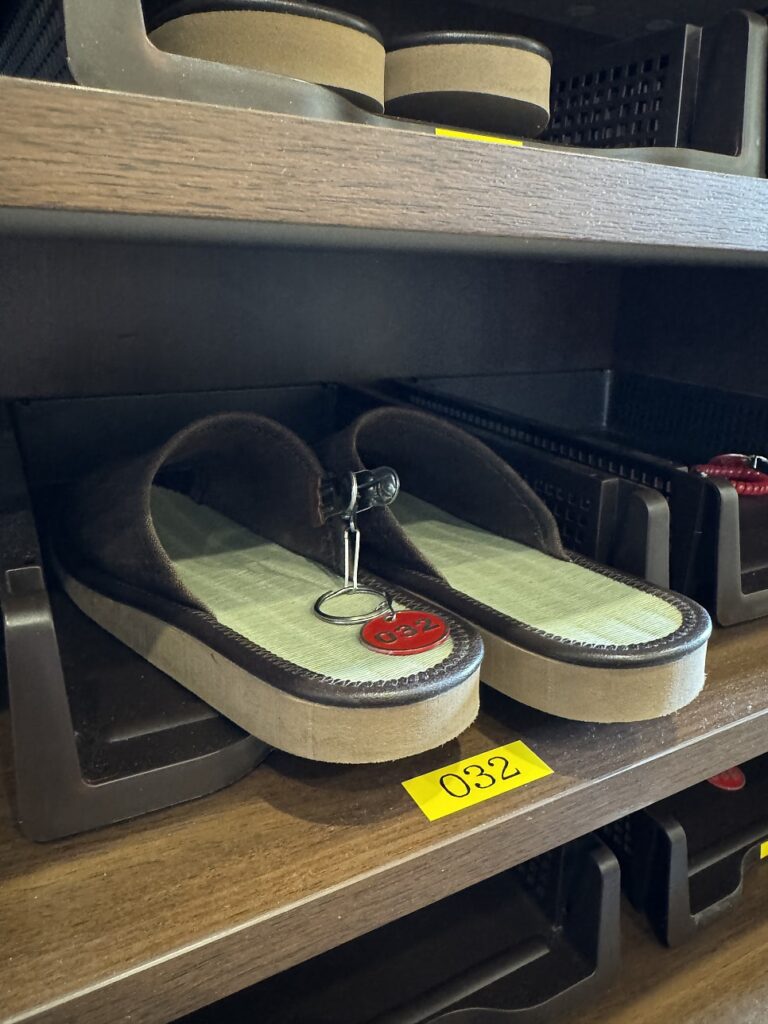
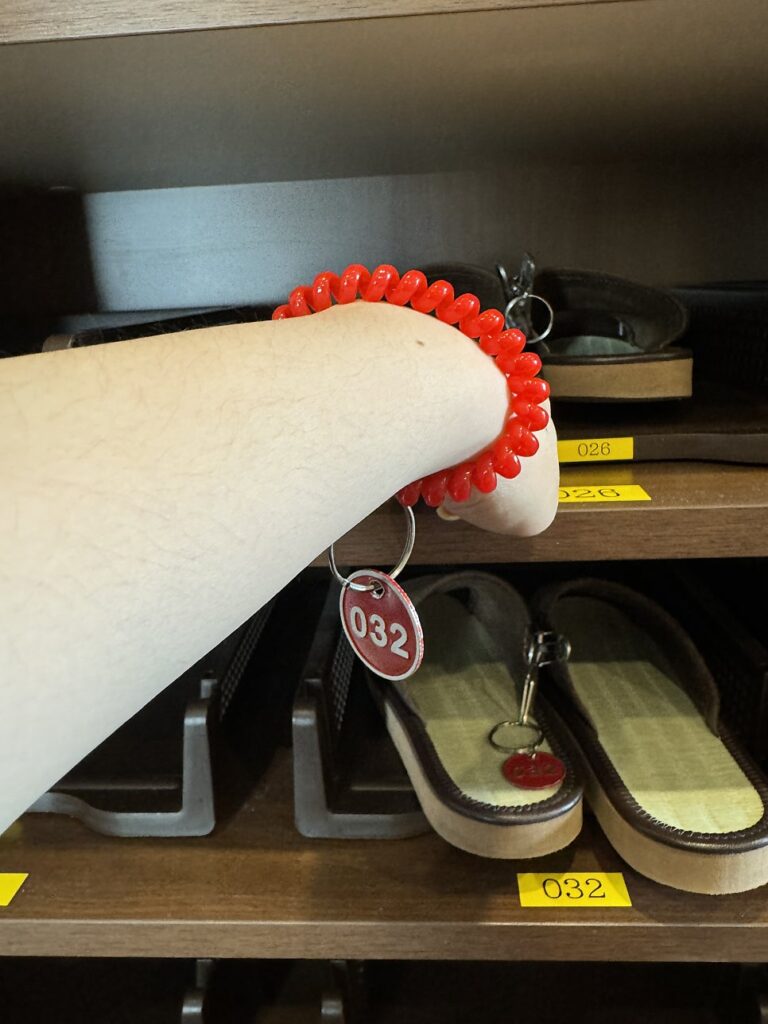
Inside the ryokan area, you walk in socks; room slippers aren’t allowed. To avoid mix-ups, you clip a numbered tag to your shoes and wear a wristband with the same number. Take the elevator down to the first floor to reach the ryokan entrance.
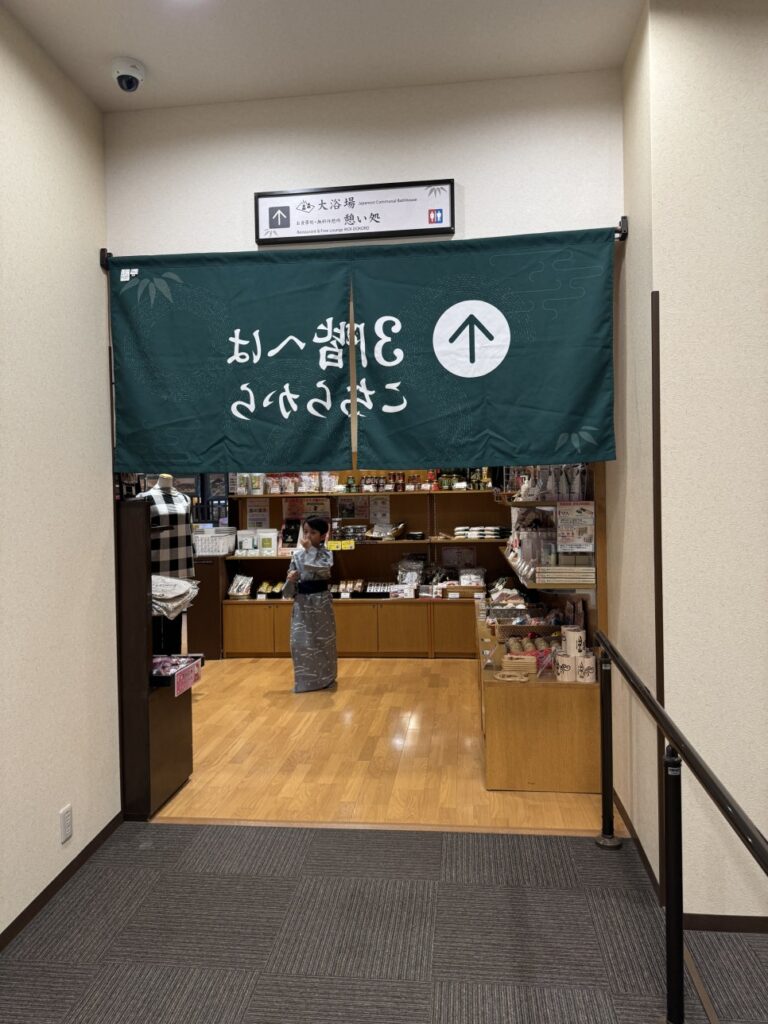
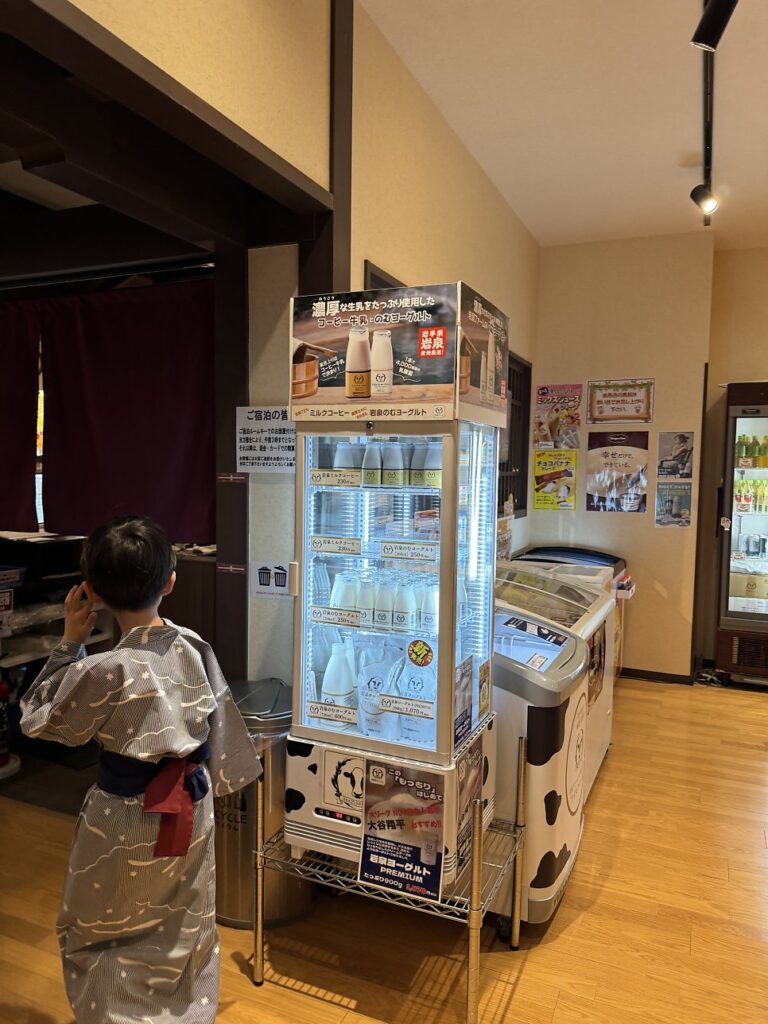
This is the shop, which day-use visitors can also use. It’s great for a snack after bathing, with local Kyoto yogurt, milk and desserts.
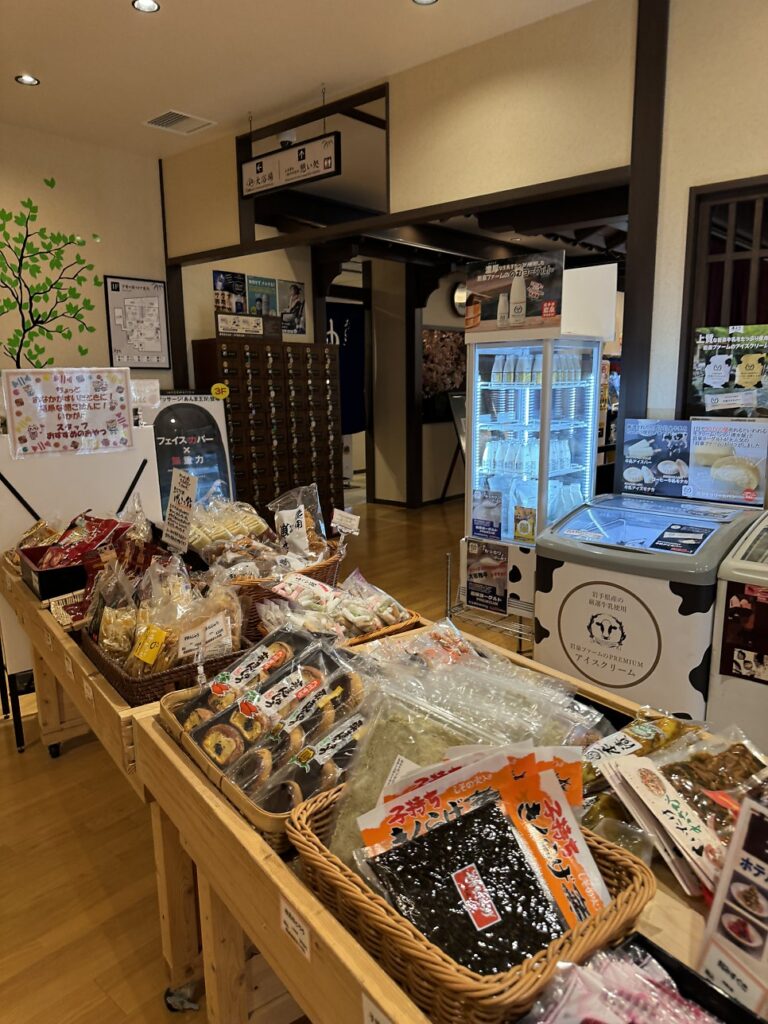
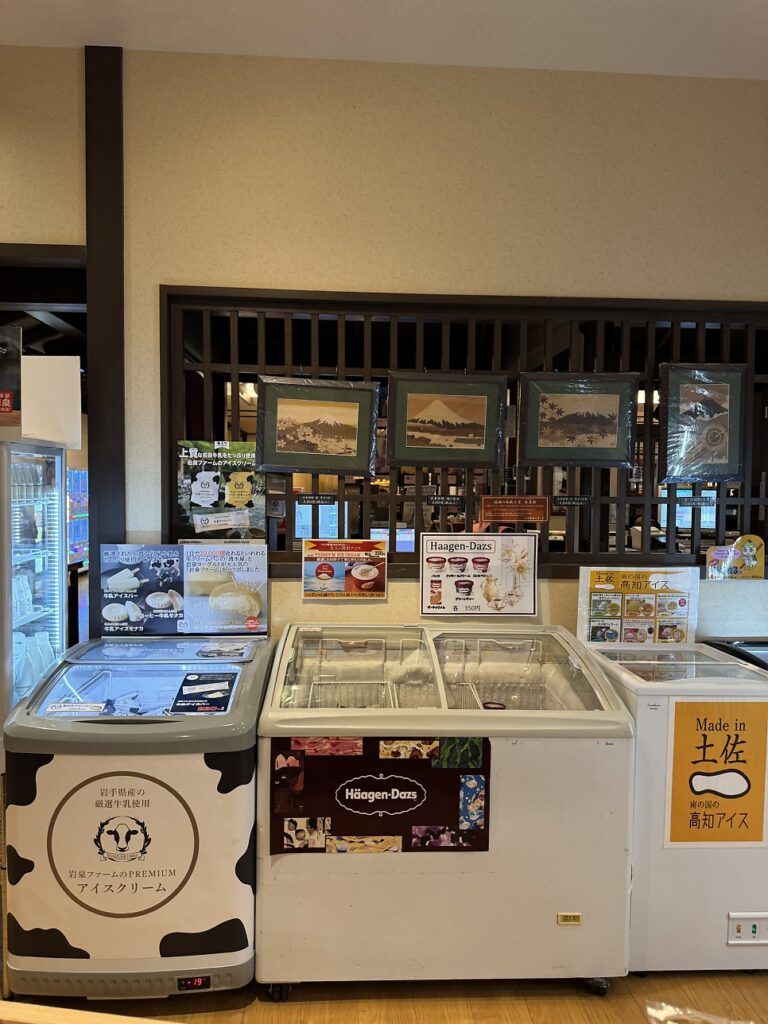
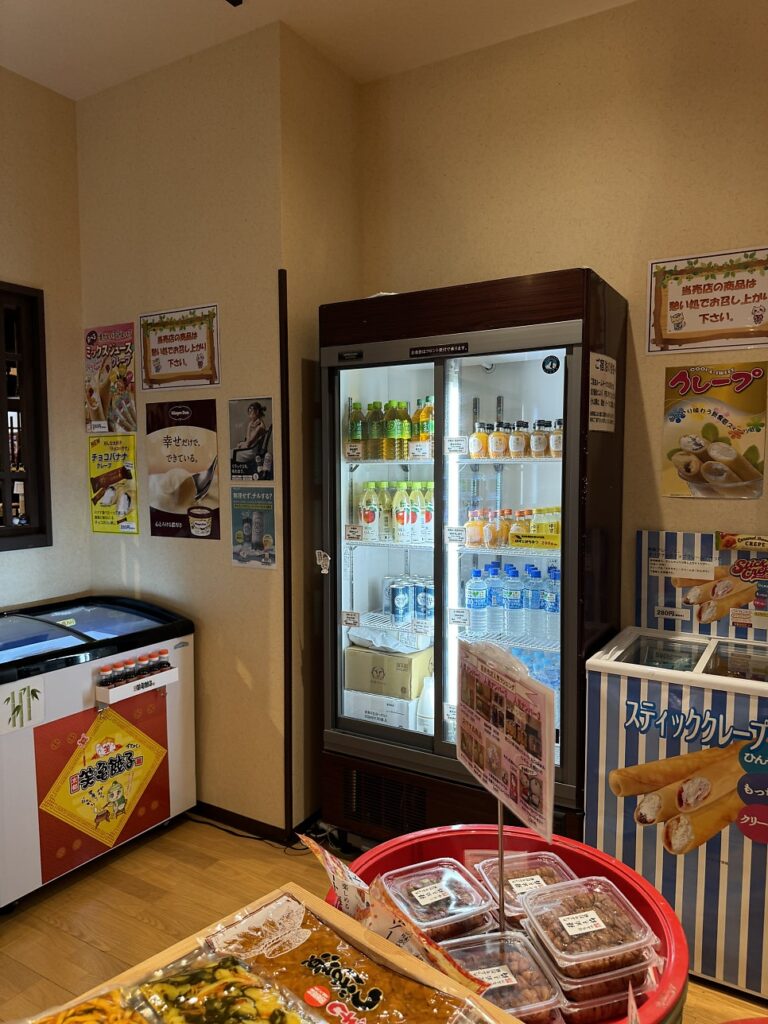
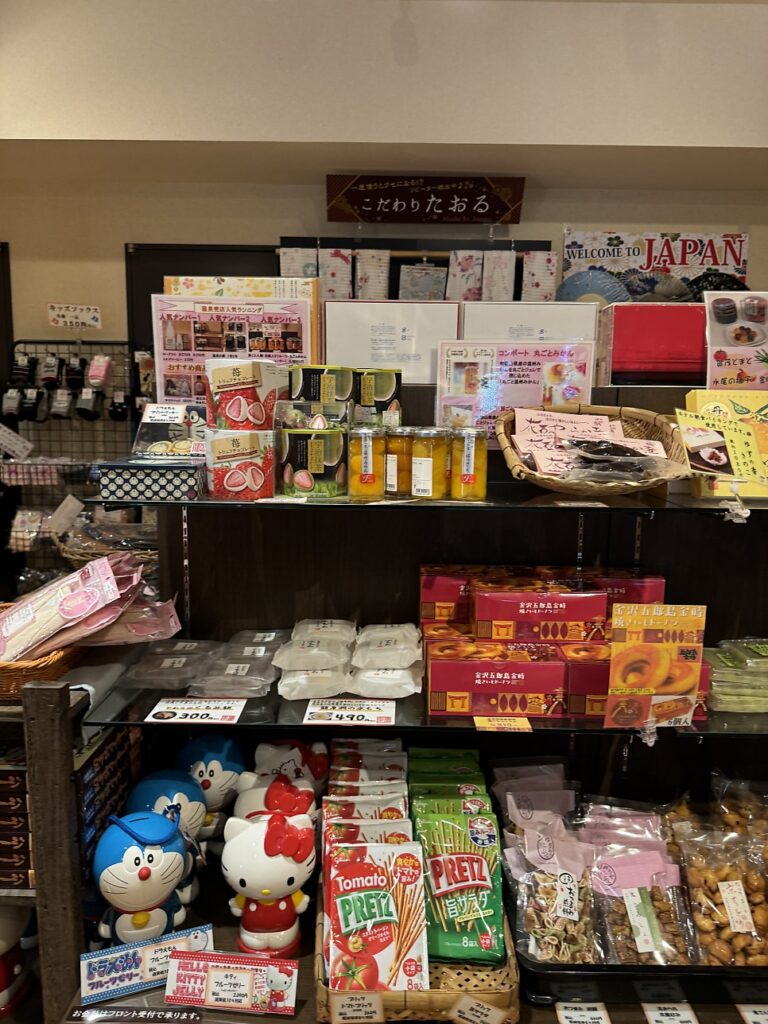
This is the main entrance to Takenosato Onsen Manyo-no-yu. We came in through the guest and shuttle-bus entrance, while this one is for day-use visitors.
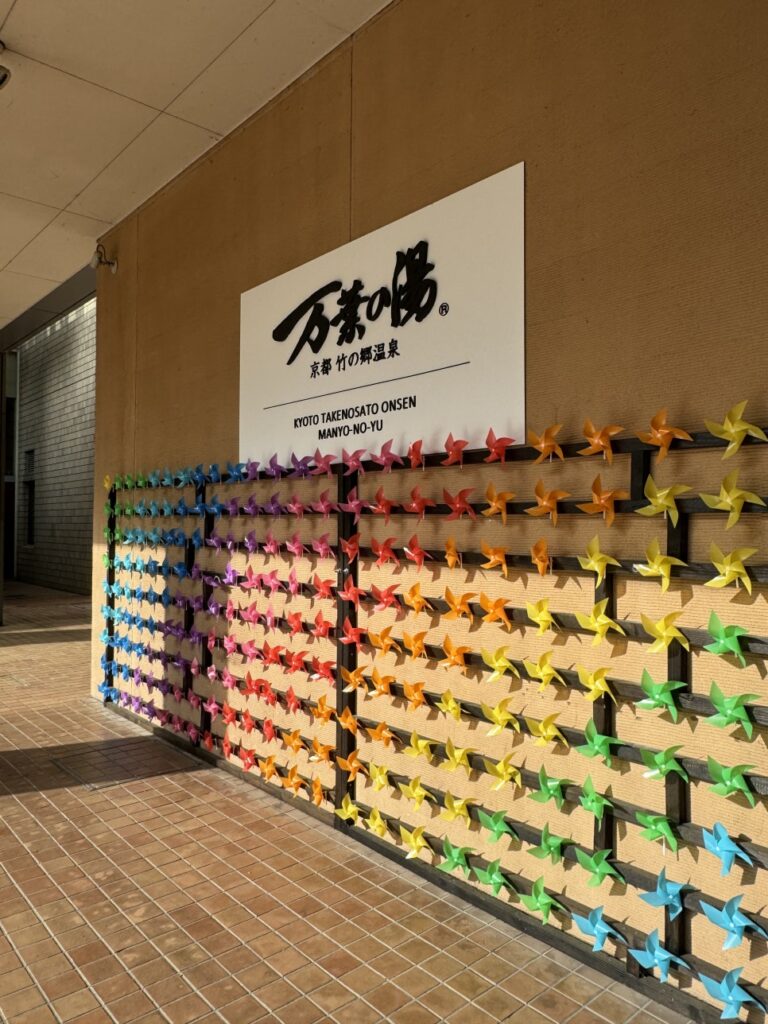
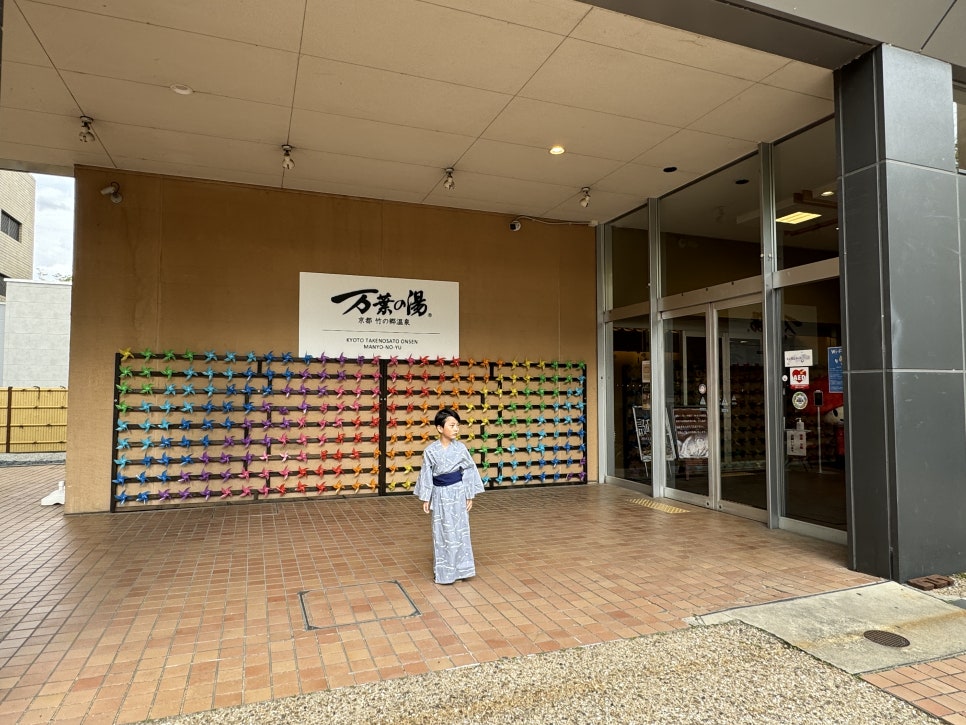
The entrance feels grander. The door on the right leads to the ryokan, and the left leads to the hotel lobby where we checked in.
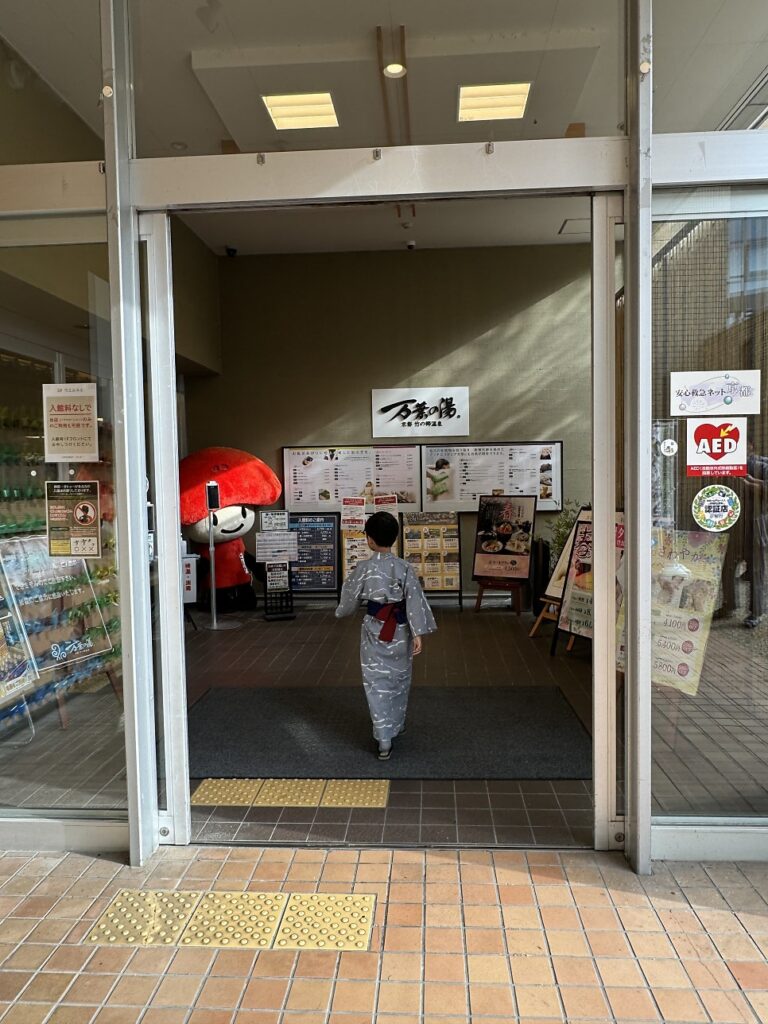
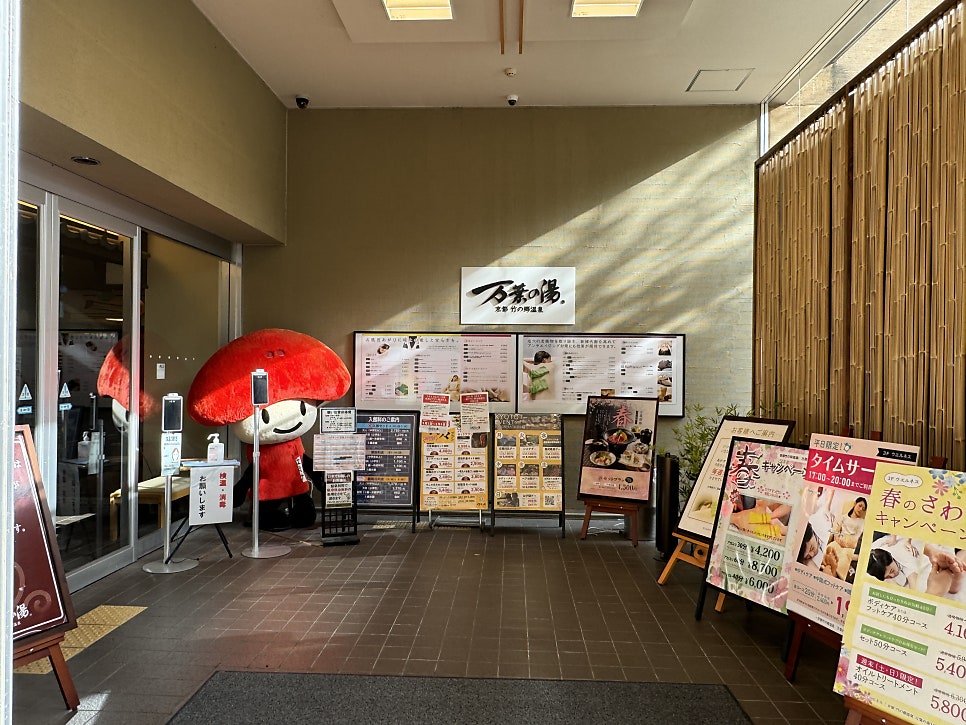
If you’re visiting for a day-use soak, come in this way.
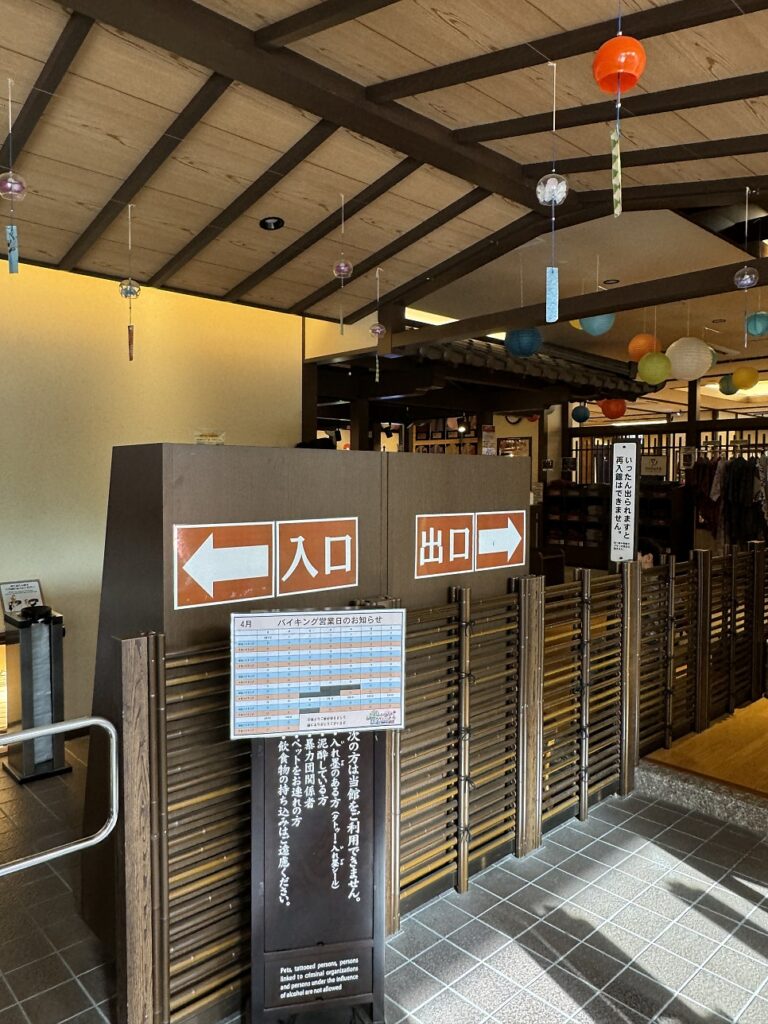
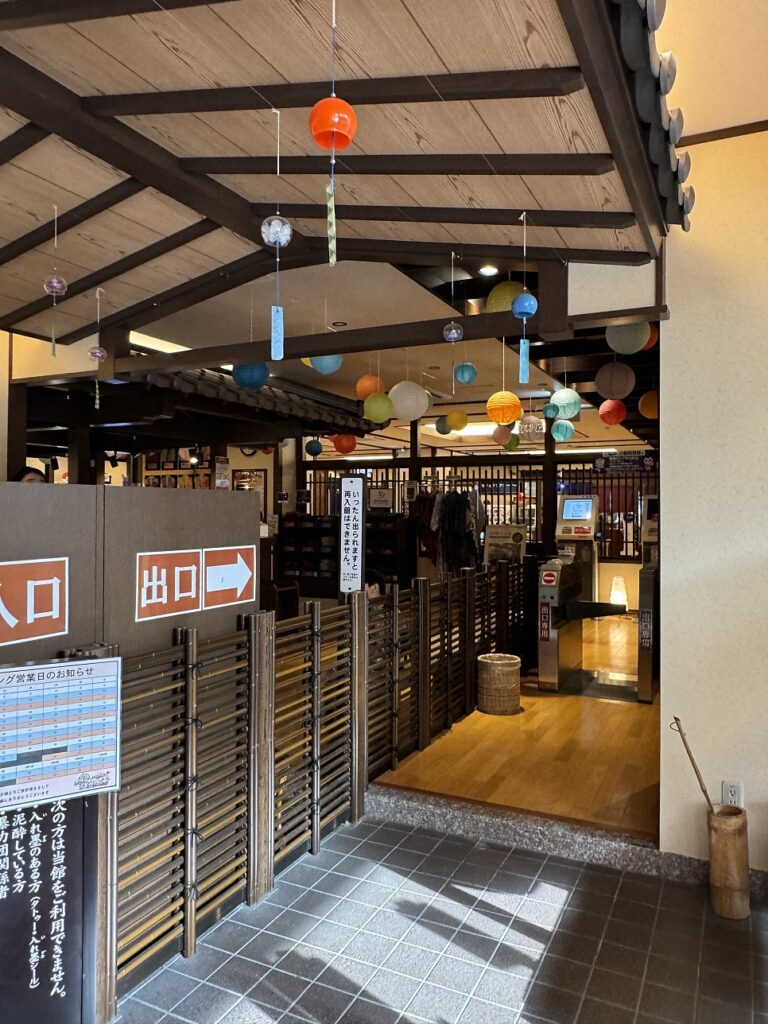
Change your shoes here. You can borrow a yukata in the hotel lobby or inside the ryokan area.
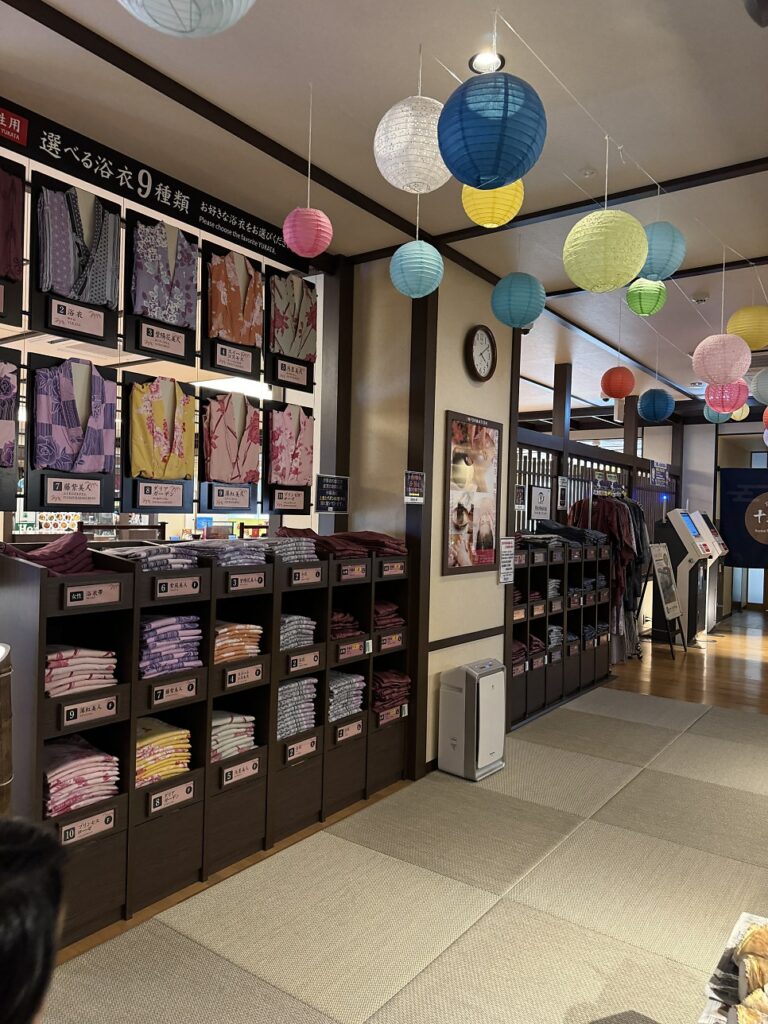
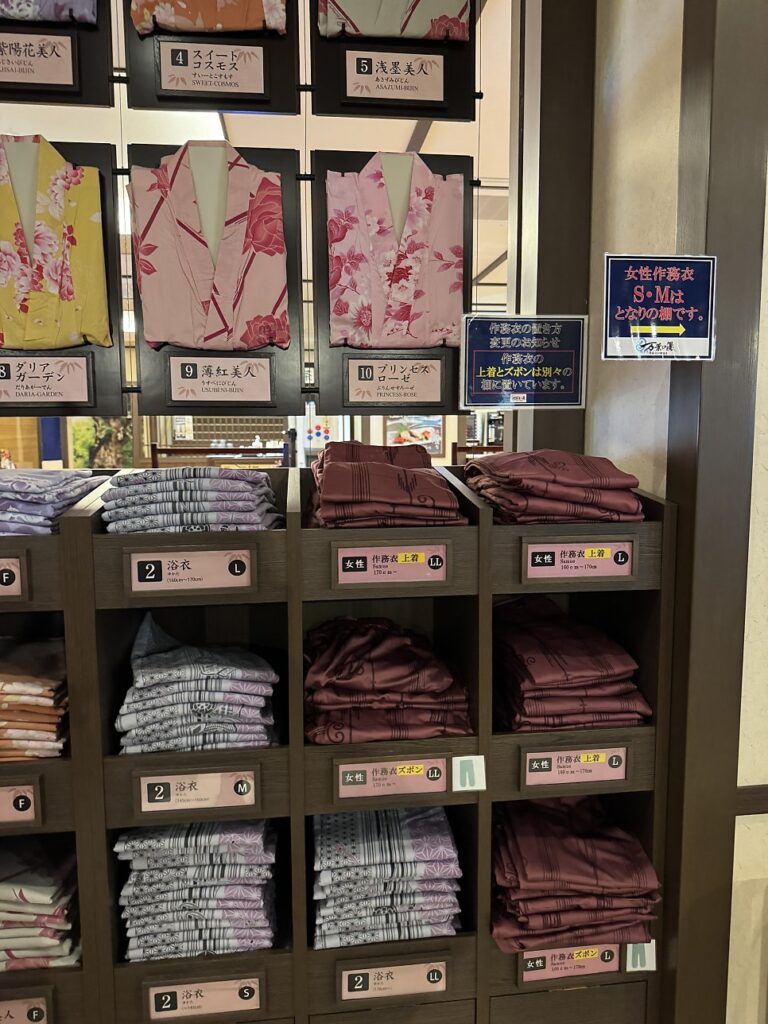
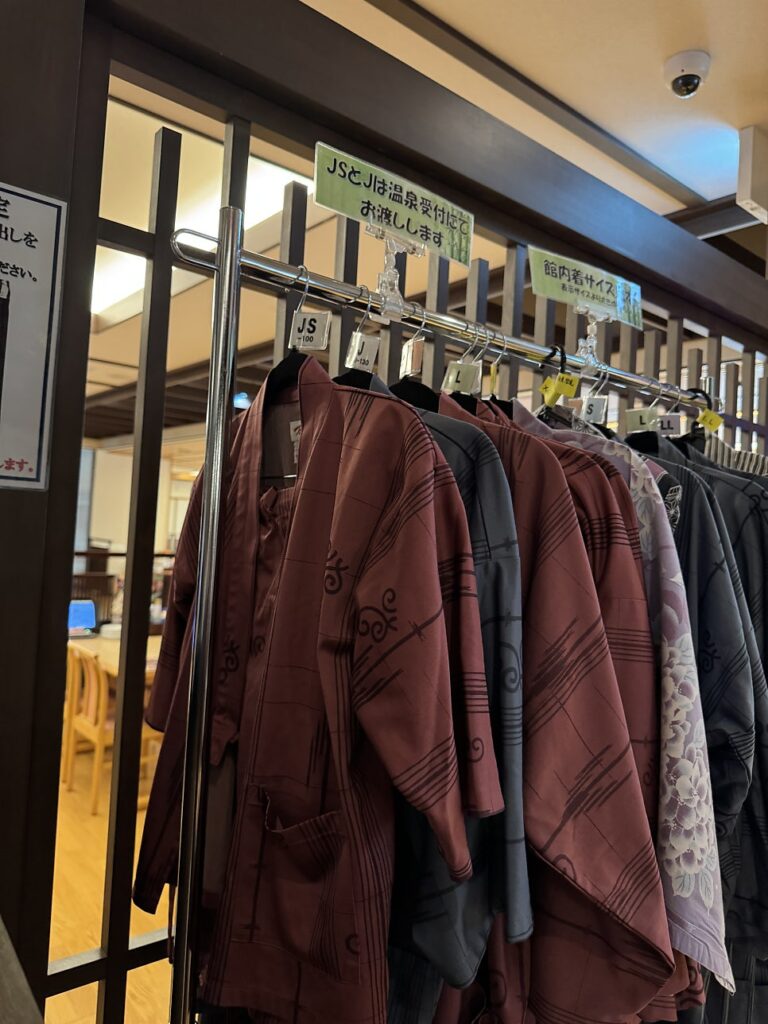
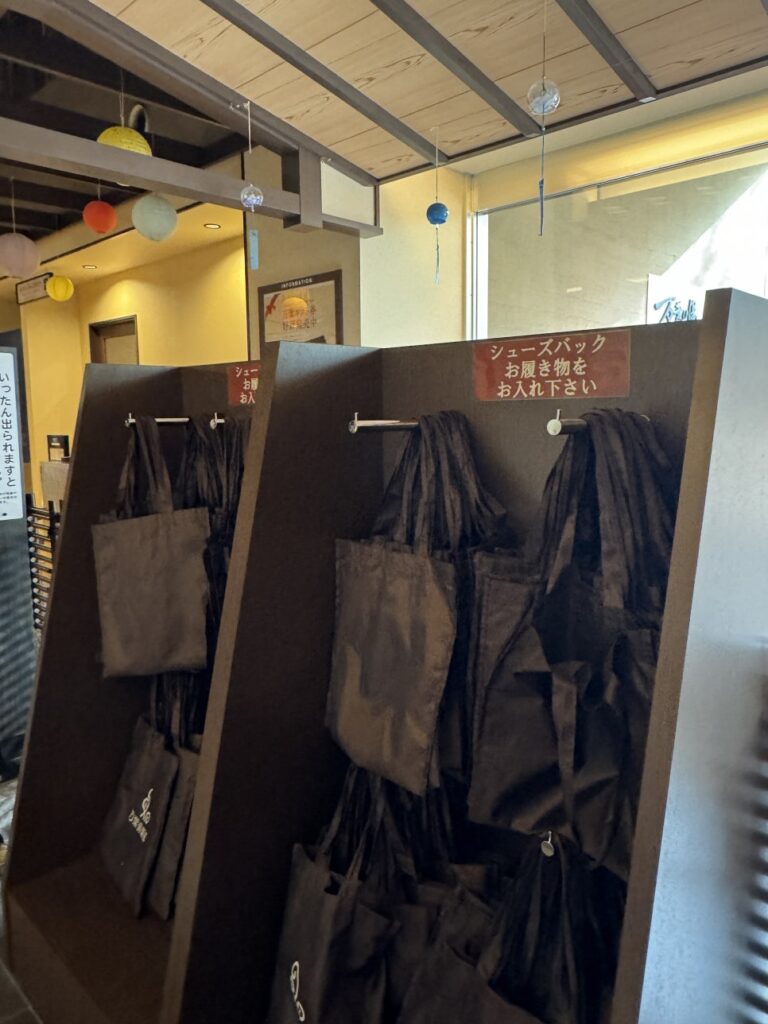
There are bags for storing your belongings.
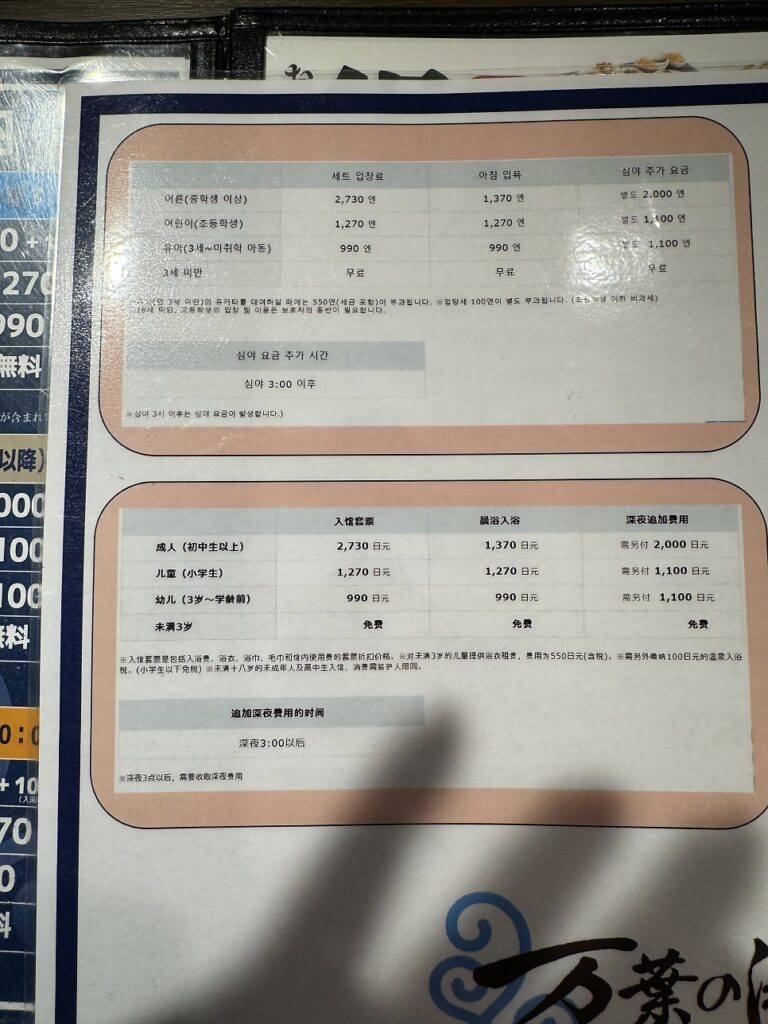
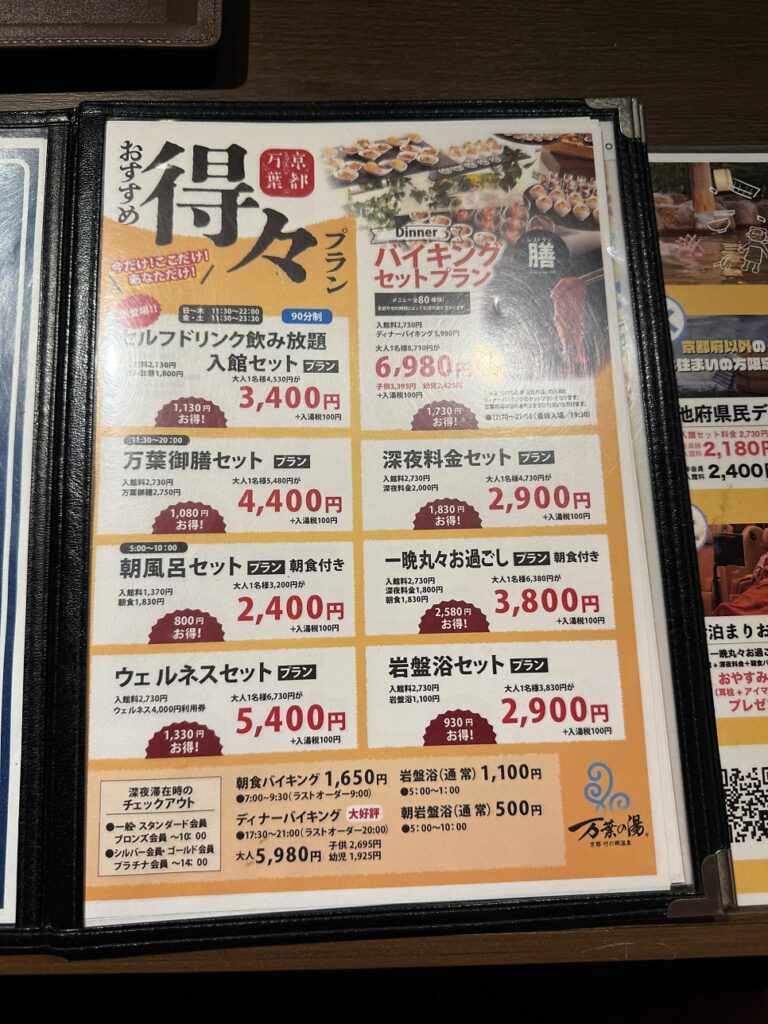
There’s even a price board in Korean. As of 2024, day use cost about 2,800 yen, and the set including the bedrock sauna was about 2,900 yen. Spending the night in a relaxation room cost about 3,400 yen, so if you’re traveling solo in Osaka and want a night in Kyoto, you can save on lodging and still enjoy the onsen. With so many facilities, it’s excellent value. Arriving in the afternoon, staying into the evening and adding breakfast the next morning came to about 4,400 yen. If I ever travel to Kyoto alone, I’d happily skip a hotel and relax at Manyo-no-yu instead, thanks to its relaxation rooms.
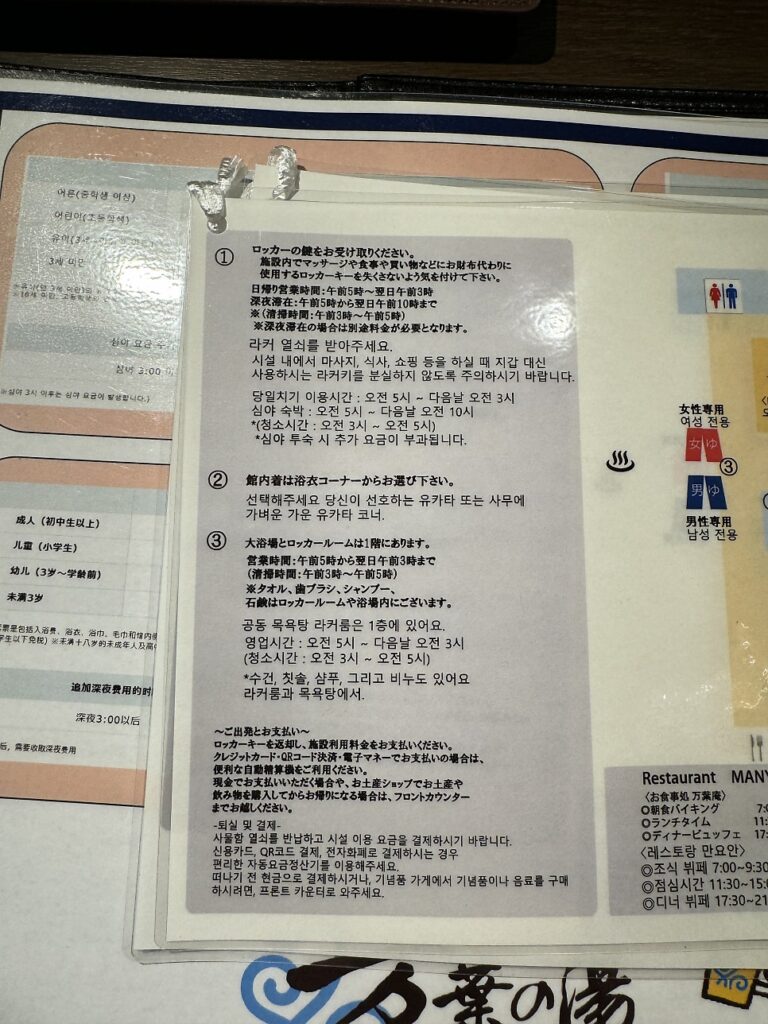
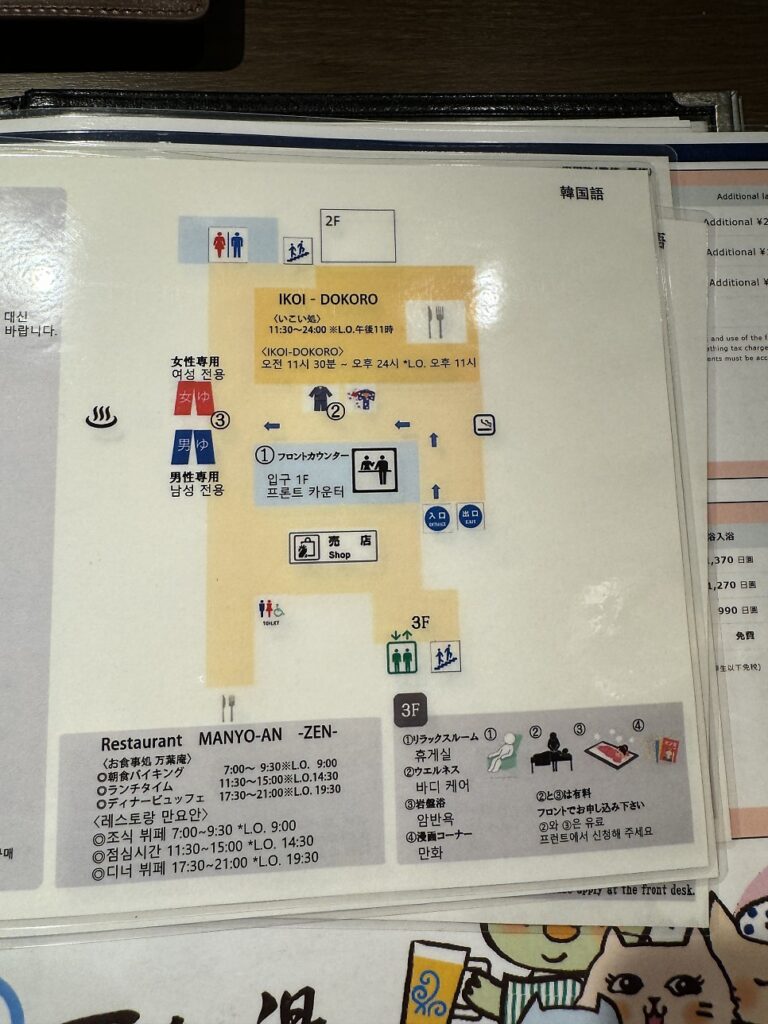
Photos aren’t allowed inside the baths. You can arrive empty-handed: towels, toothbrushes, shampoo and soap are all provided at every washing station. You’ll be amazed at how good a Japanese onsen can be, and it’s worth every yen.
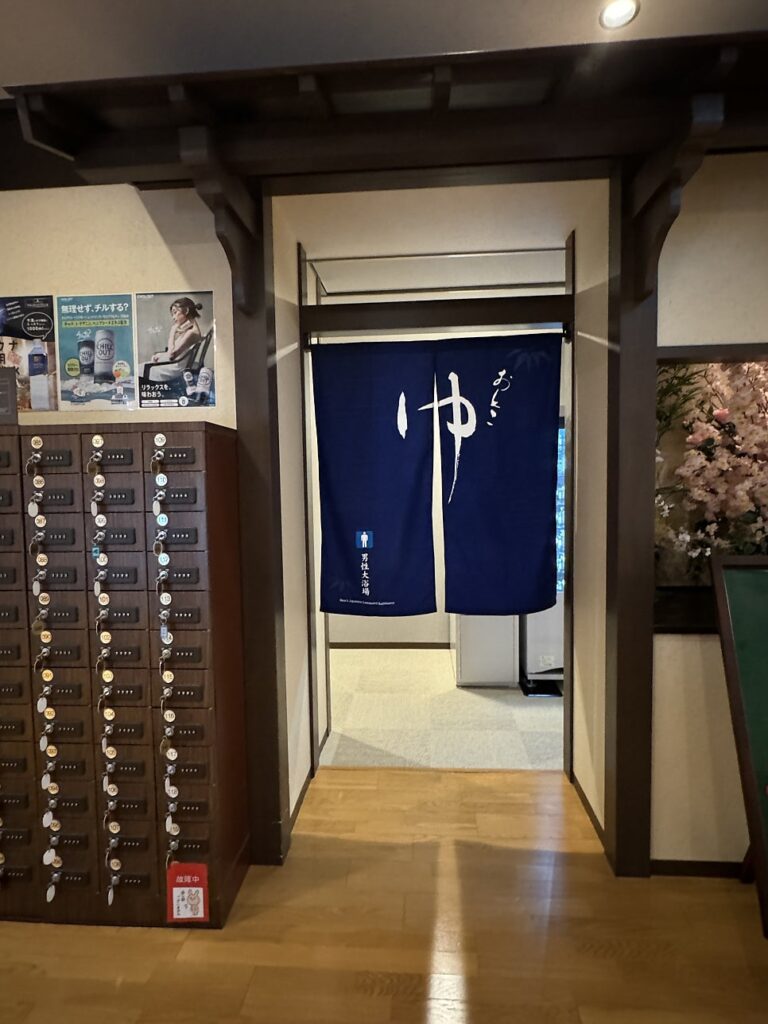
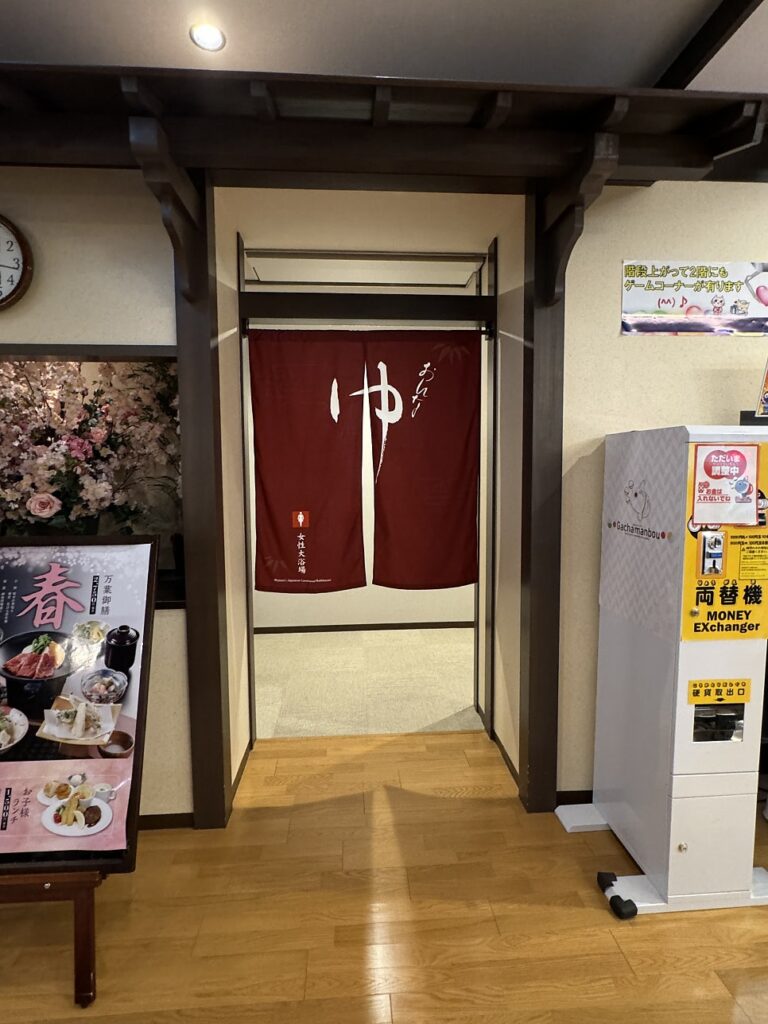
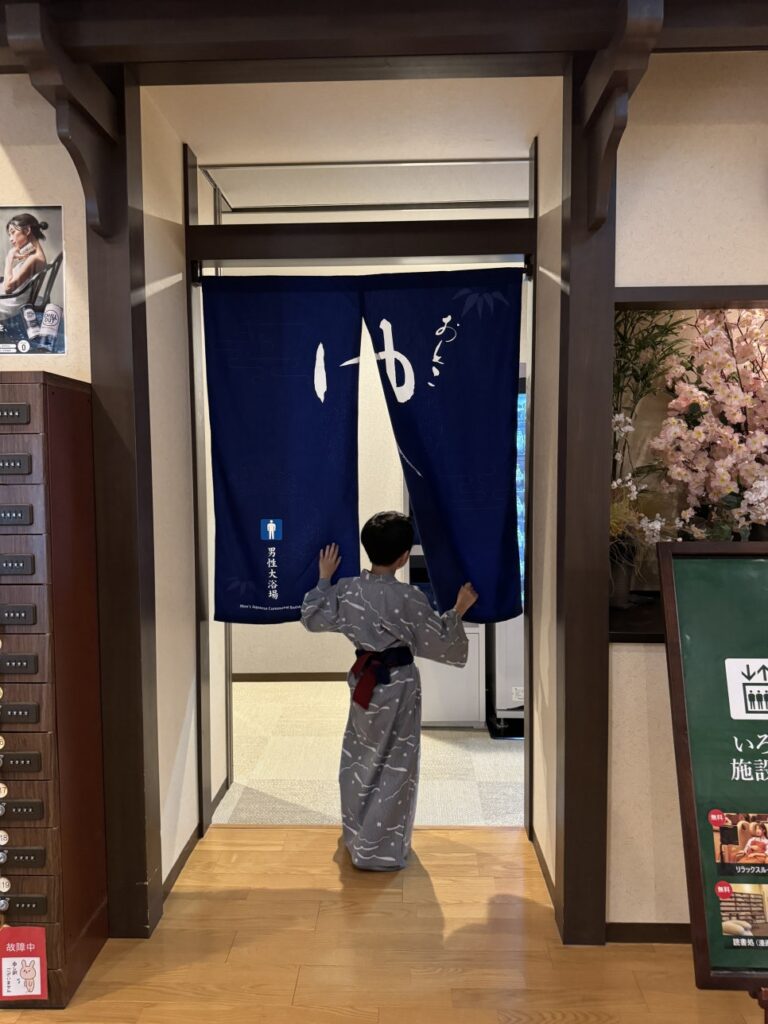
Yans went to the men’s bath with his dad, and I went to the women’s bath alone. The layout is like a typical public bath, with an indoor bath and two outdoor baths. There’s a simple hot spring and a sodium bicarbonate spring, both said to be good for the skin, and my skin felt silky afterward.
4. Facilities: Bedrock Sauna
Manyo-no-yu has a wide range of facilities. The bedrock sauna, similar to a Korean jjimjilbang, is available for an extra fee or as part of the 2,900-yen set.
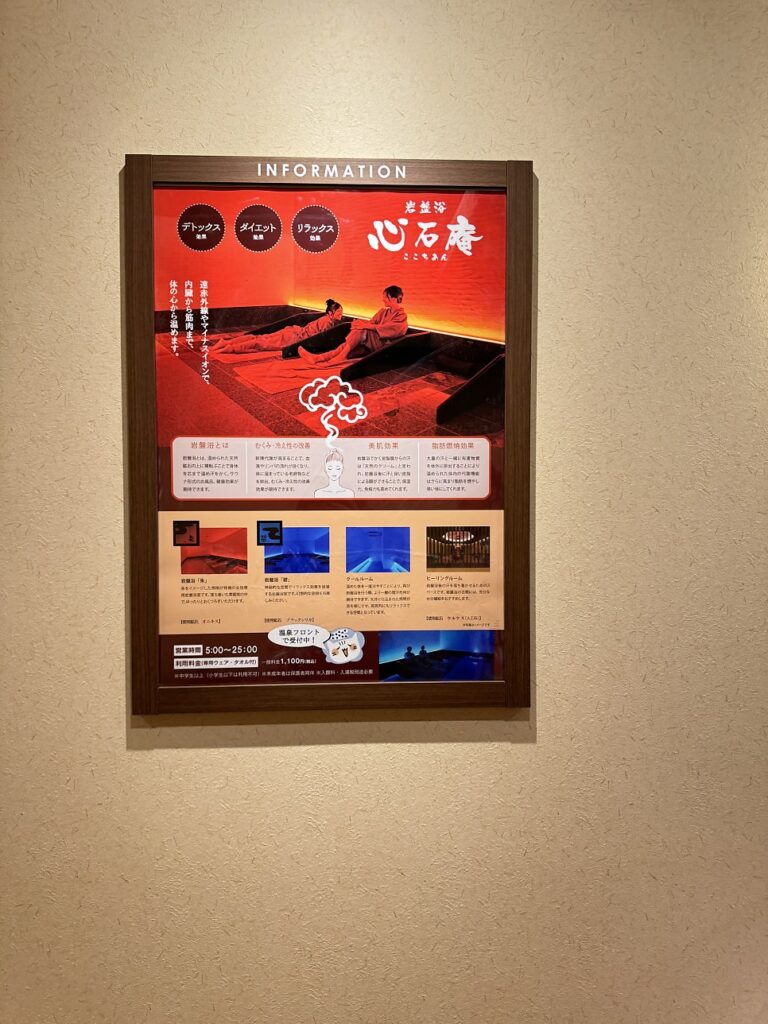
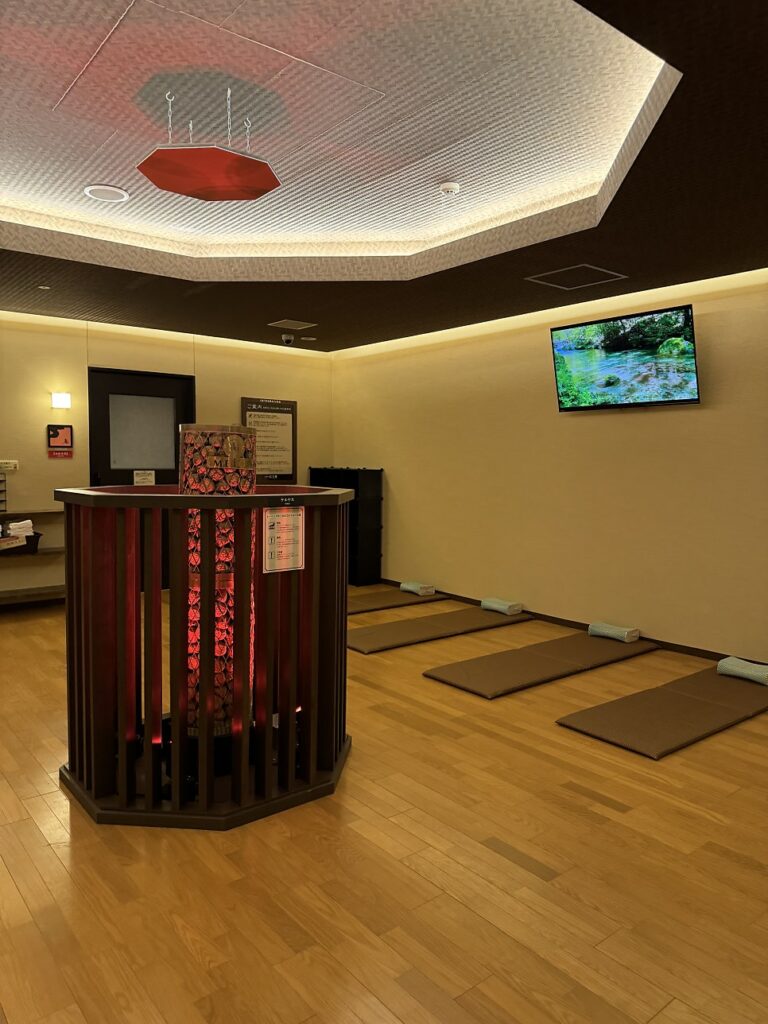
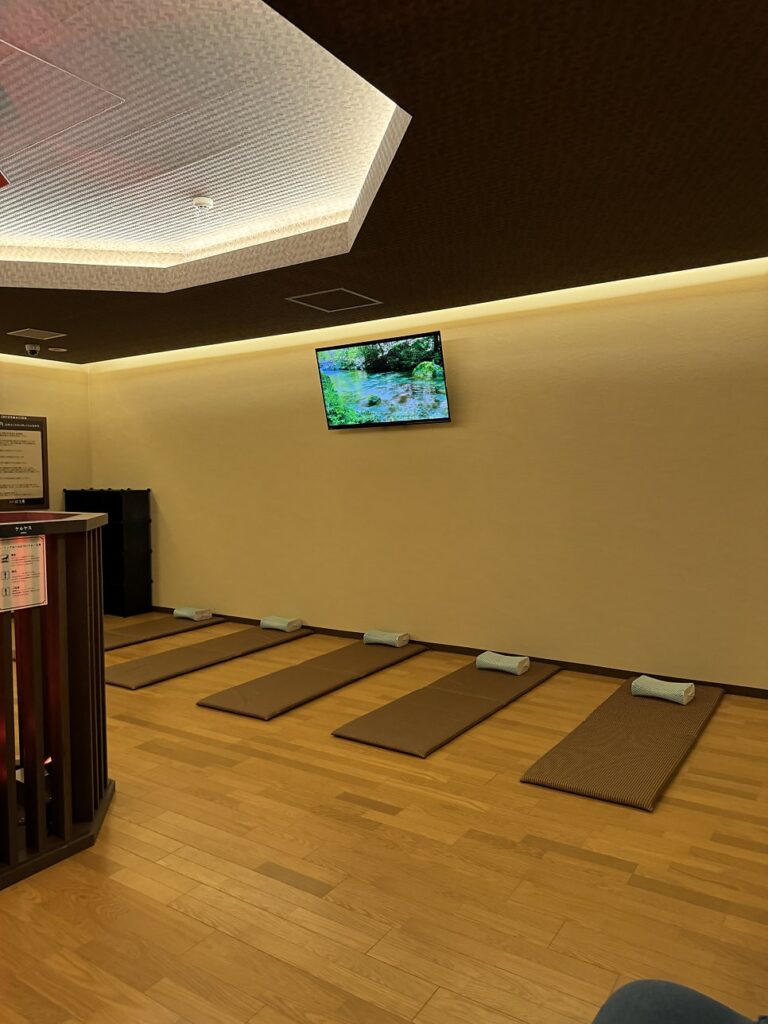
Because there’s an extra charge, it wasn’t crowded, so I had a peaceful rest all to myself. One side has a cool room for bringing your body temperature down between hot sessions.
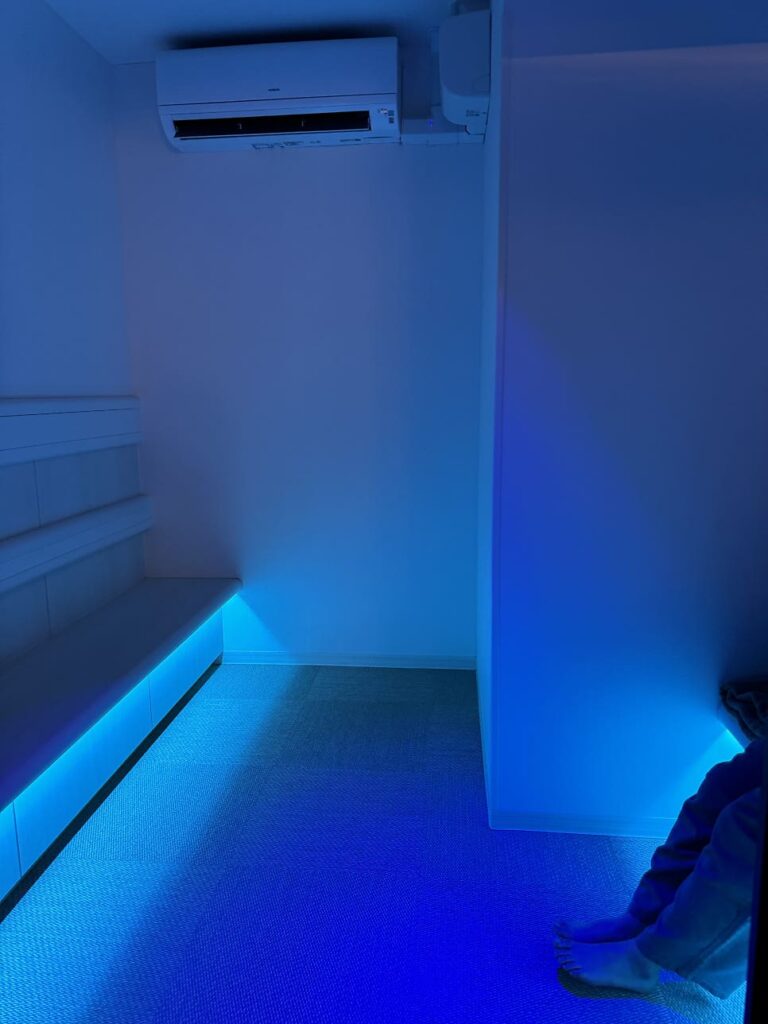
The bedrock sauna rooms are color-coded: blue is mixed-gender, and red is women only.
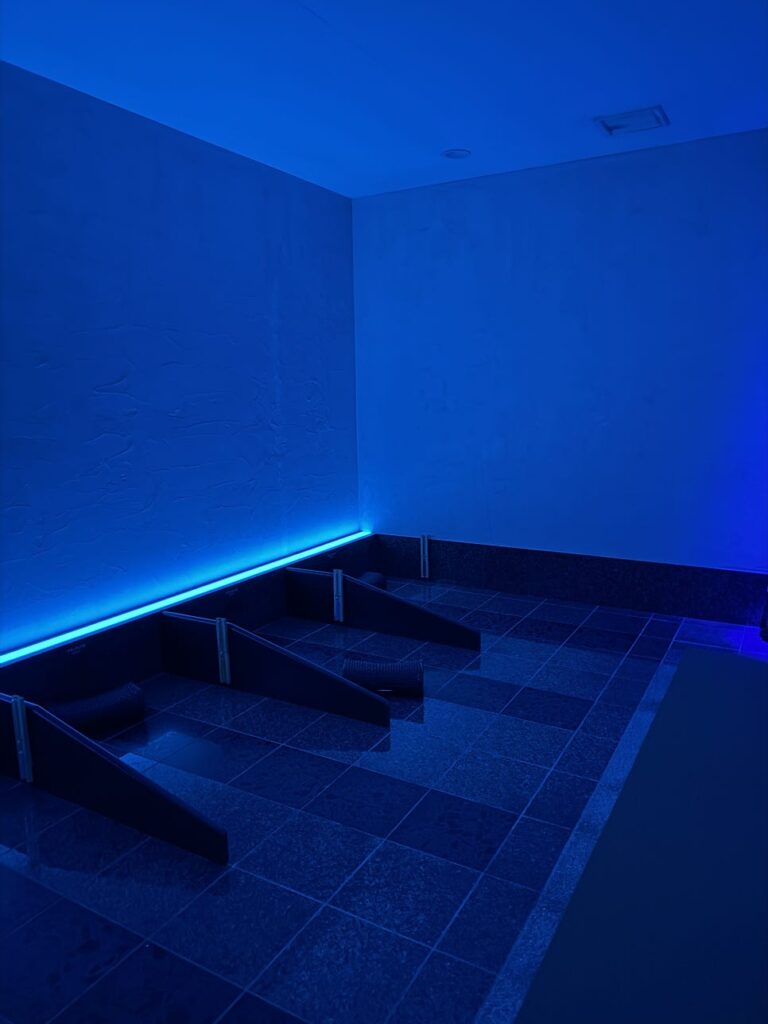
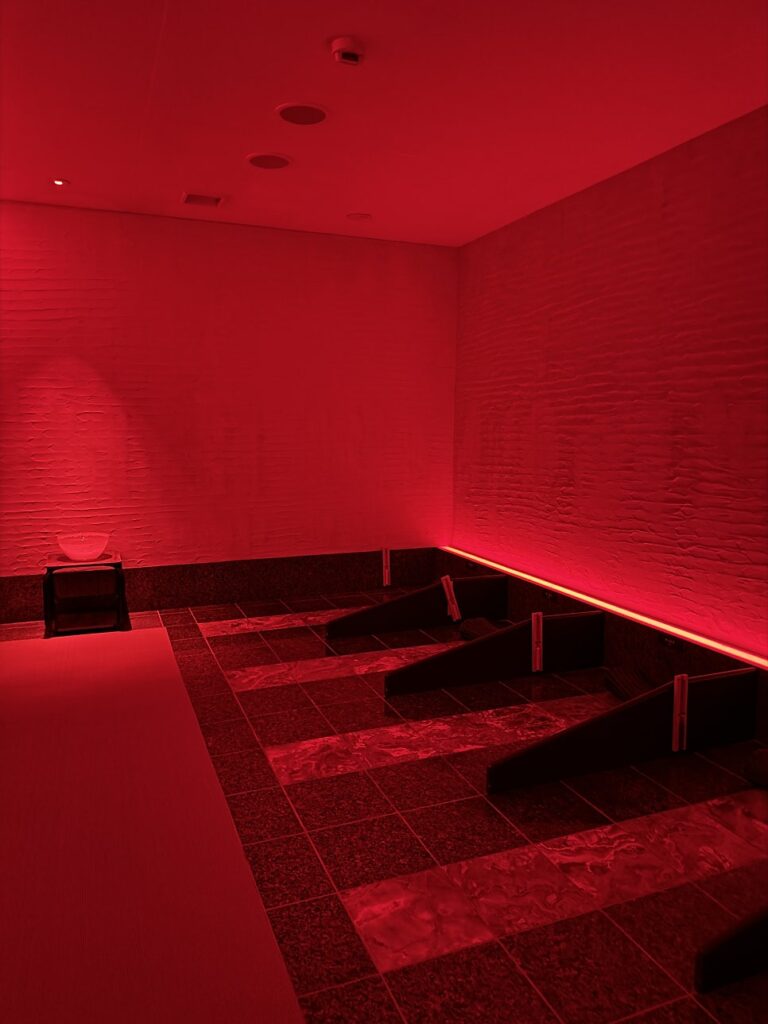
Sweating it out and resting melted away my fatigue. It was day seven of our Osaka trip, and all the accumulated tiredness disappeared.
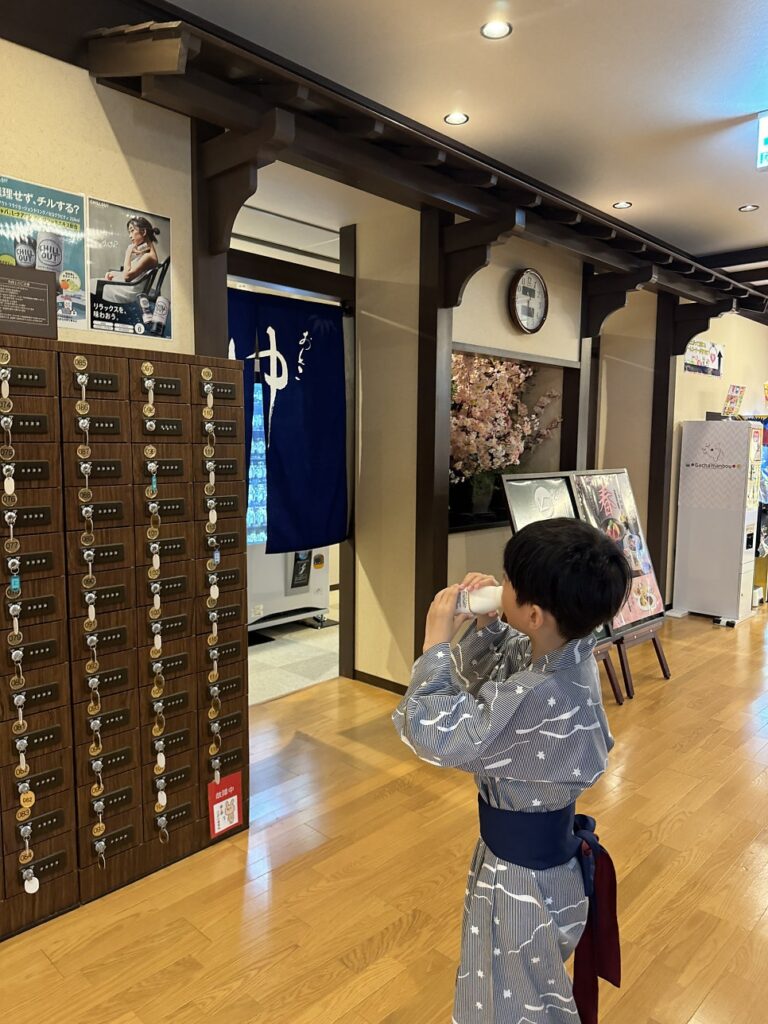
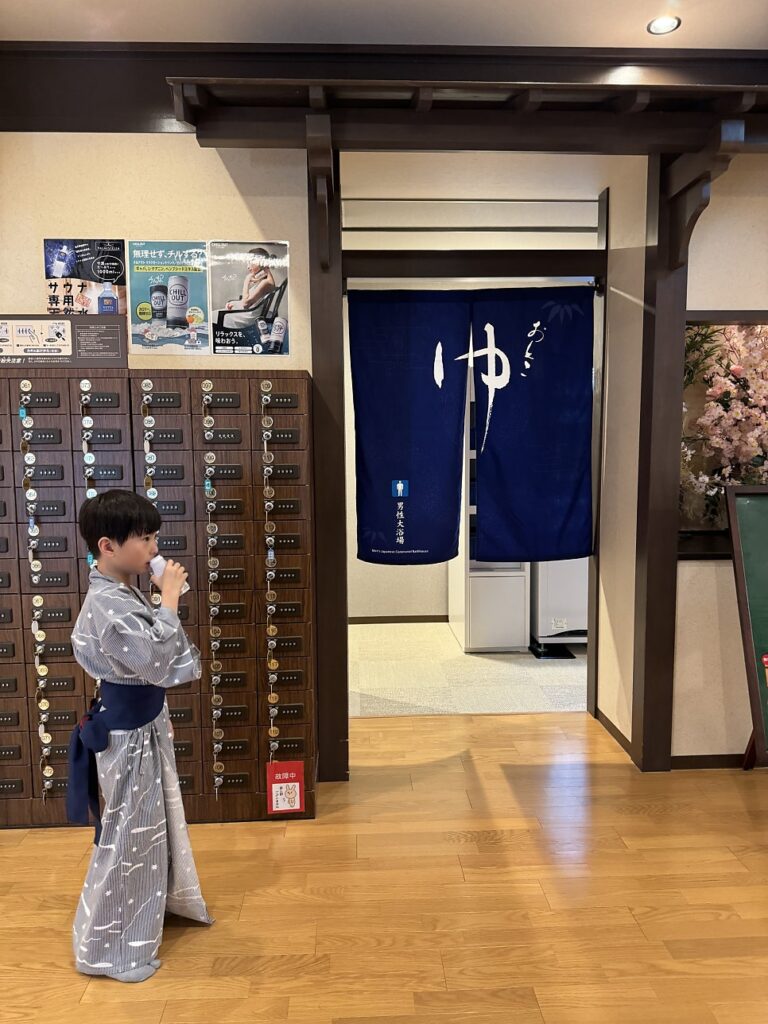
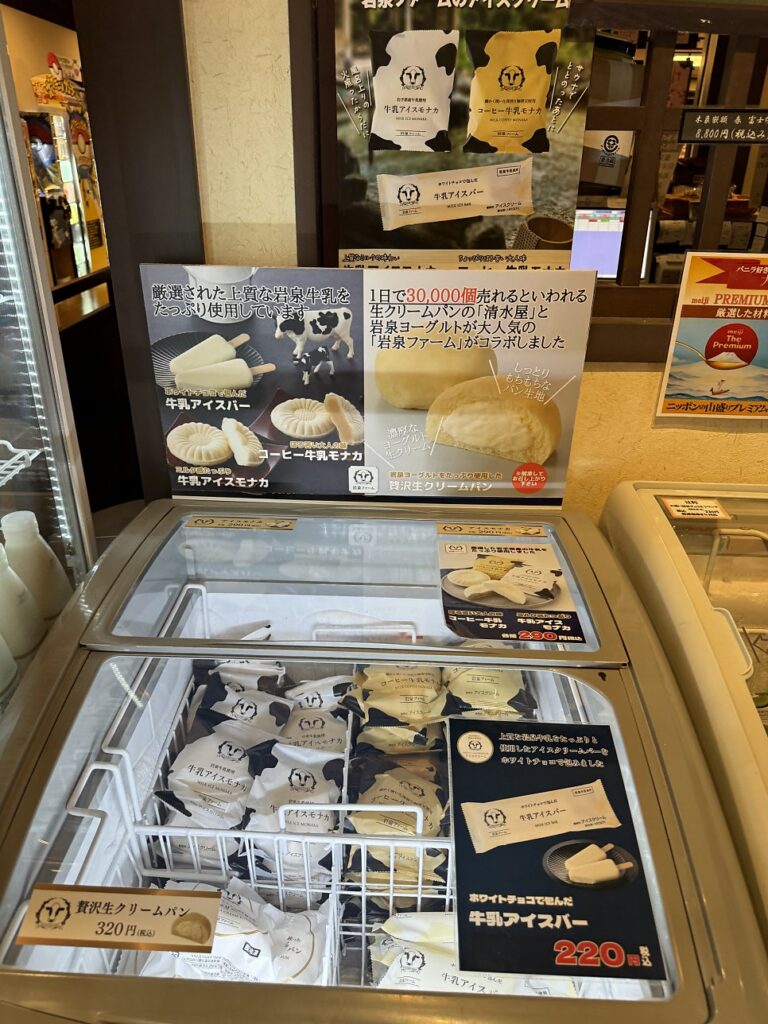
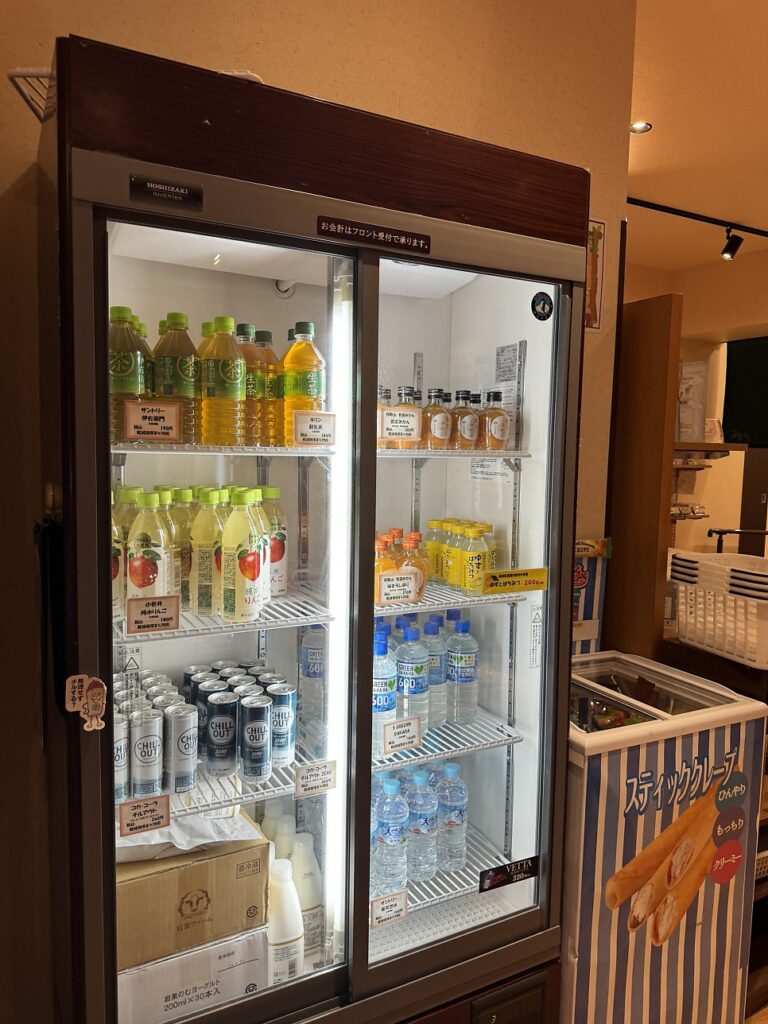
Yans came out of the bath and immediately asked for milk. The milk and yogurt sold only here are rich and delicious, so try them after your soak.
Game Corner
The hotel’s game corner isn’t an arcade but a spot for claw machines and prize games.
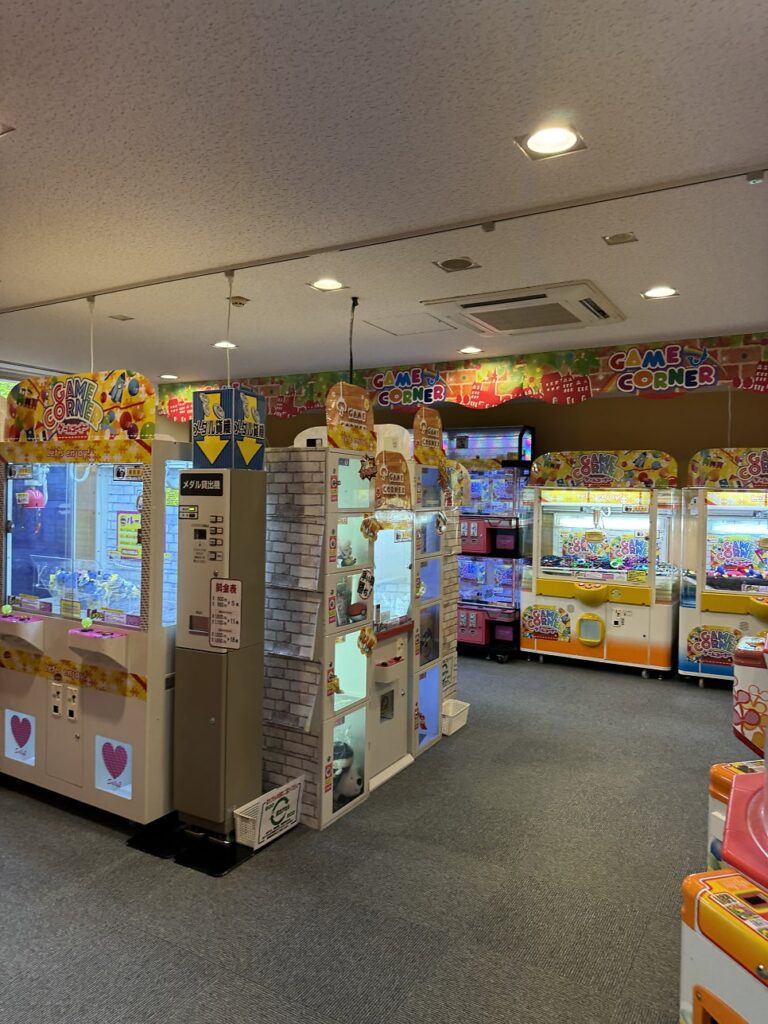
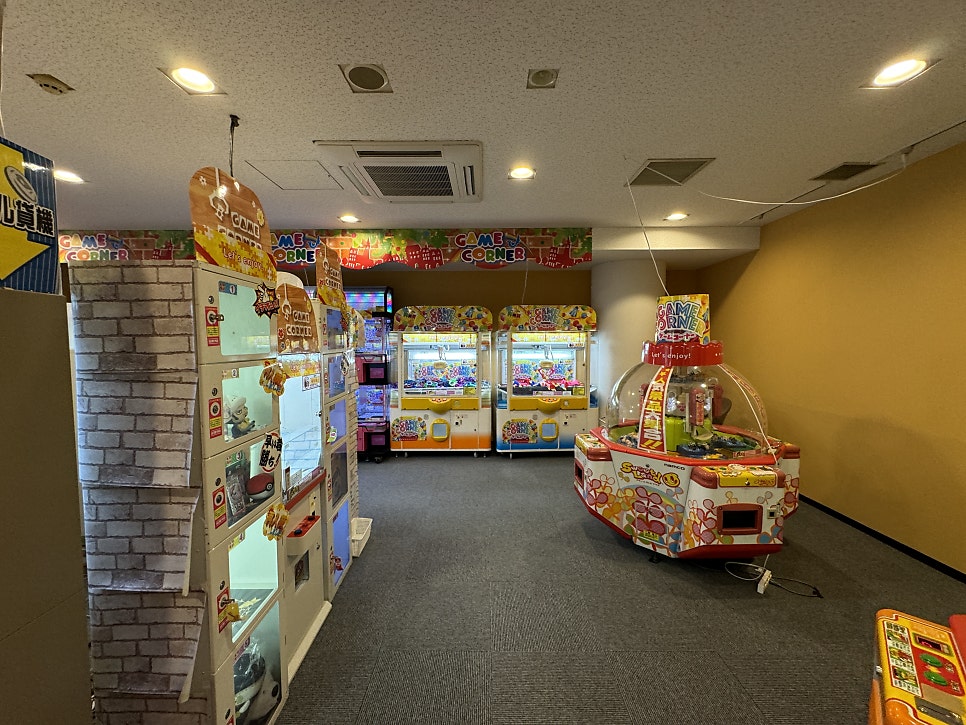
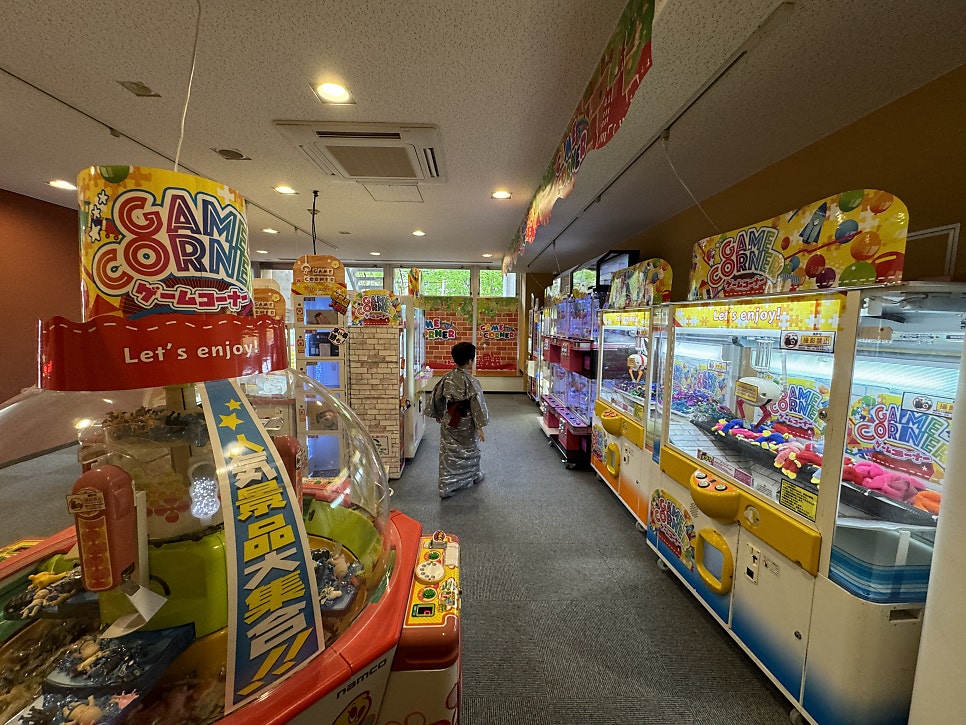
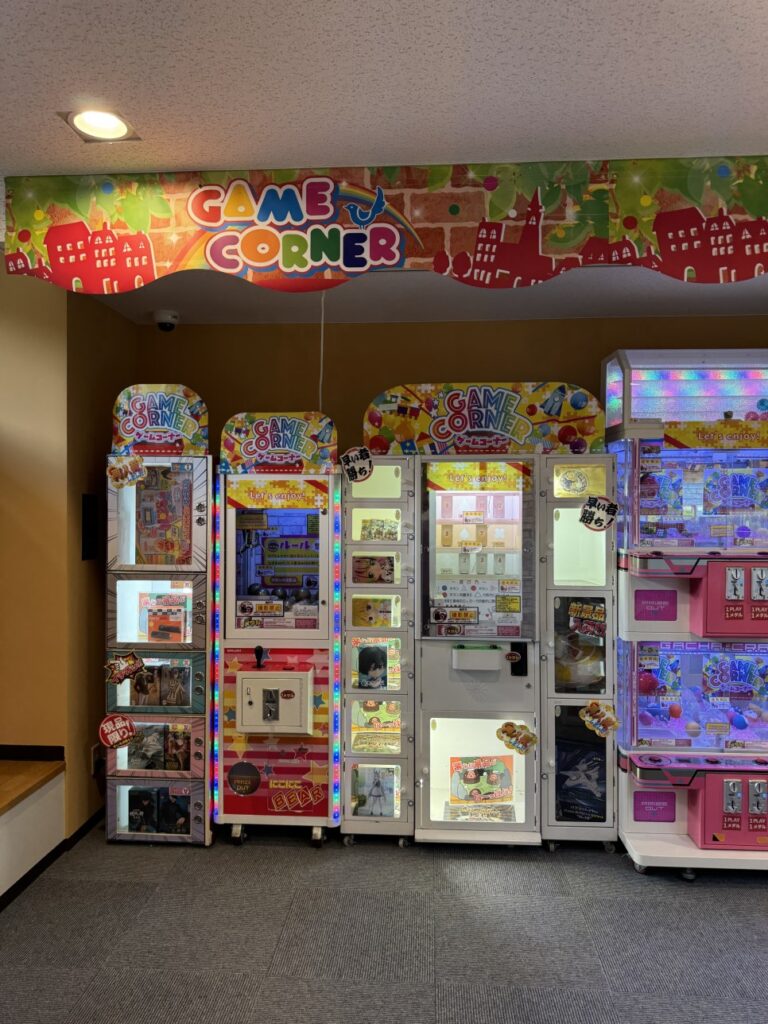
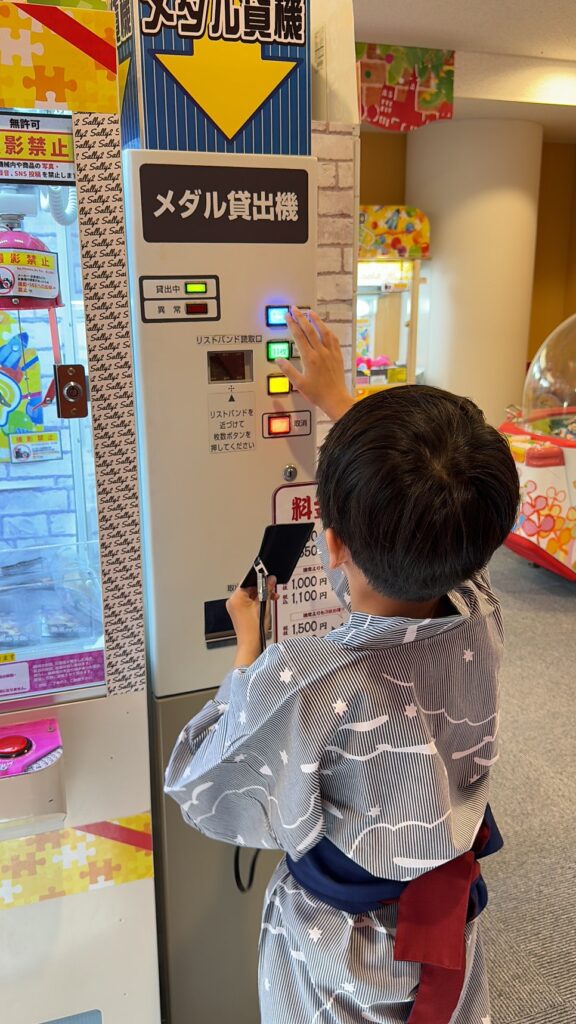
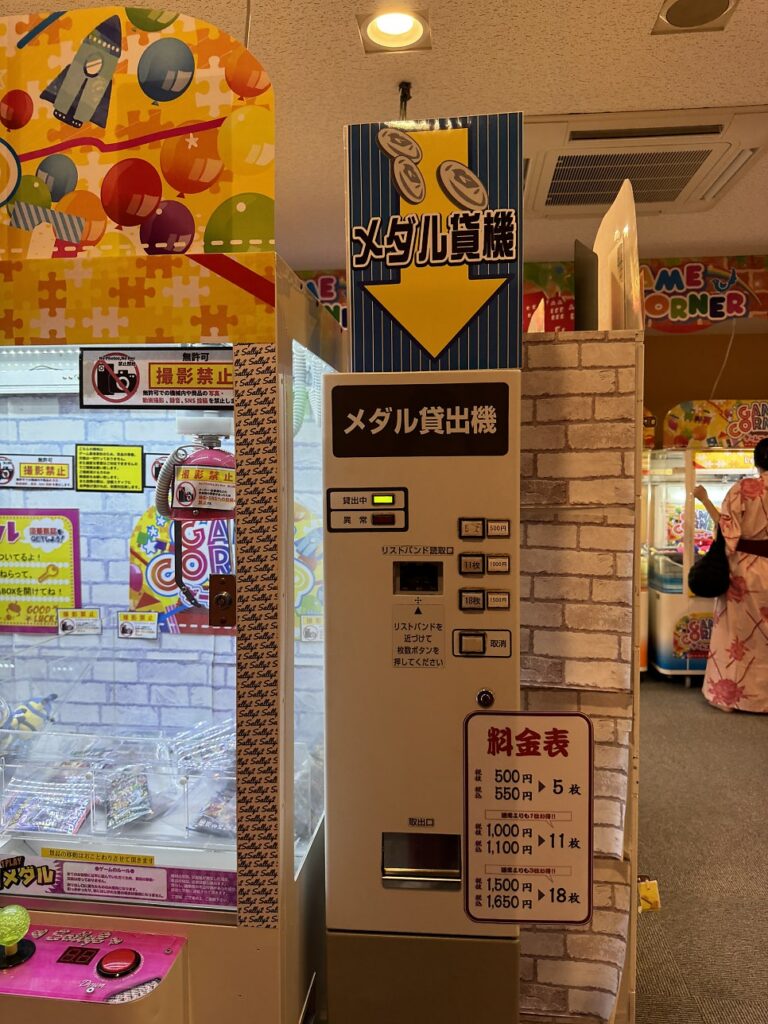
You get coins by tapping your room key. With cash you stop when it runs out, but charging to your room makes it easy to overspend.
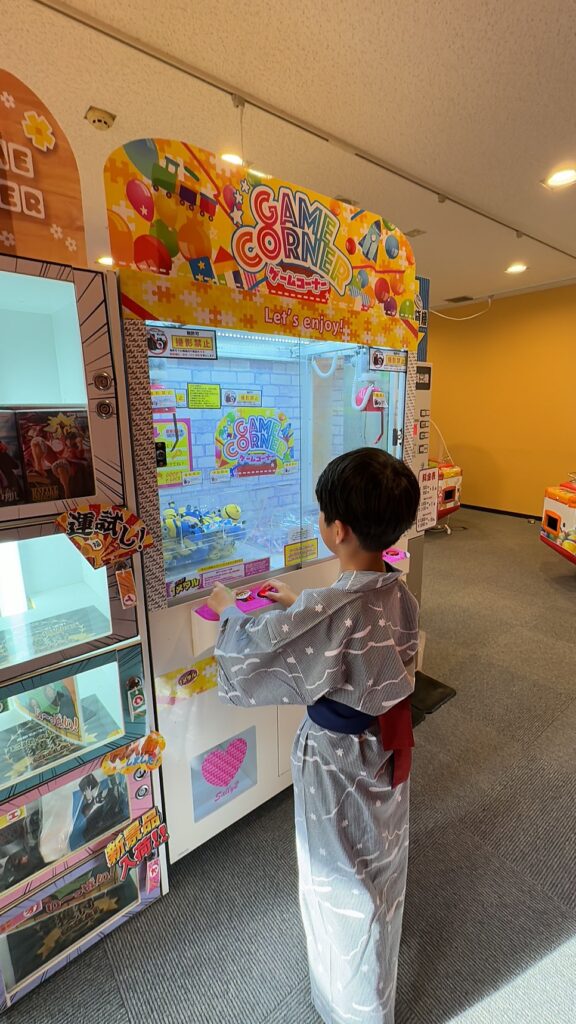
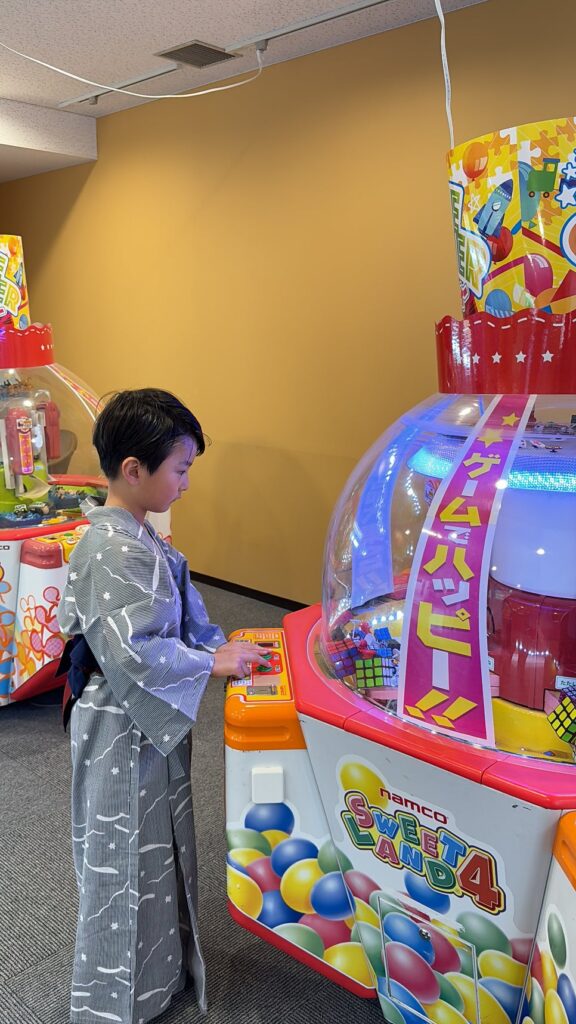
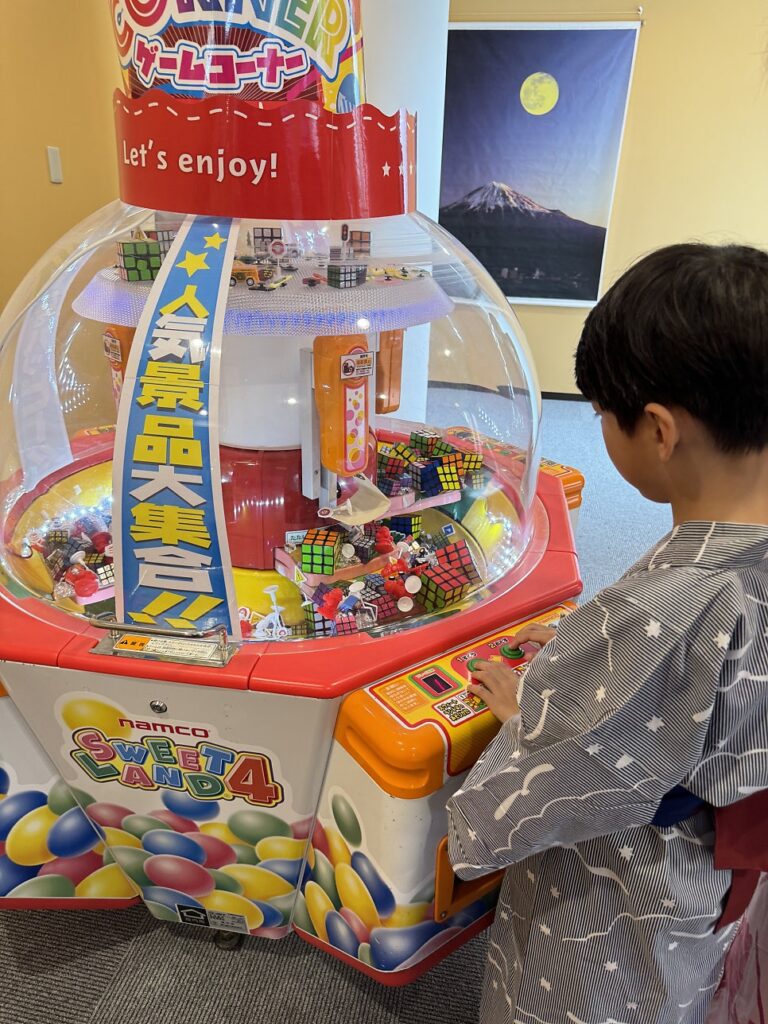
Yans gave it his all, but he spent 500 yen without winning anything. Claw machines are tough for an 8-year-old.
Library and Manga Corner
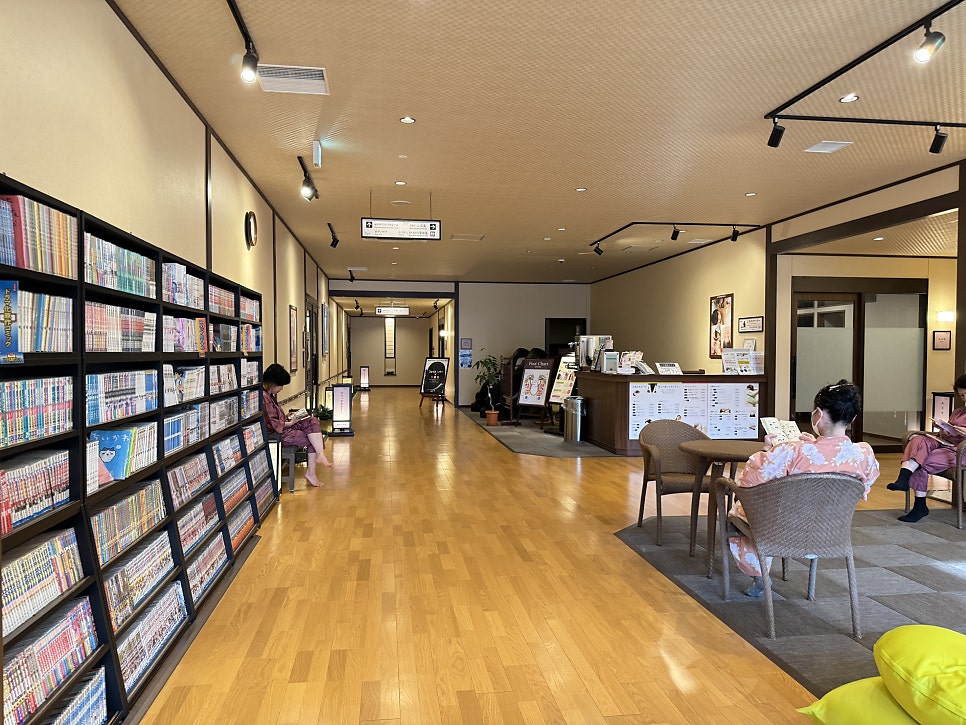
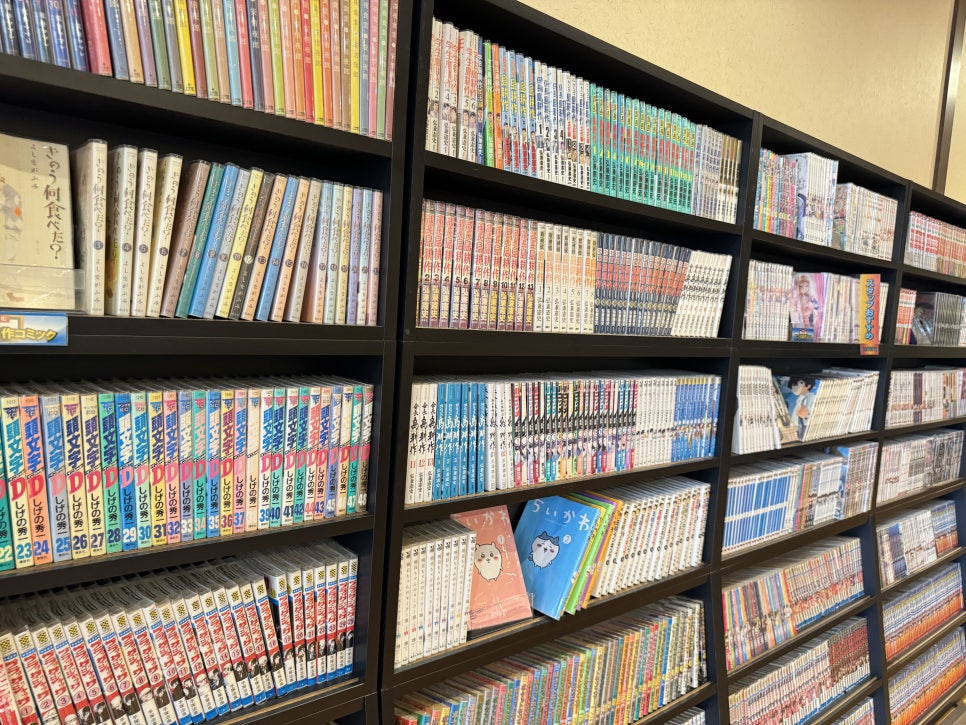
If you read Japanese, the manga corner is worth a visit. Like a large spa complex, the facilities are huge, with tons of popular titles like Slam Dunk and plenty of new releases.
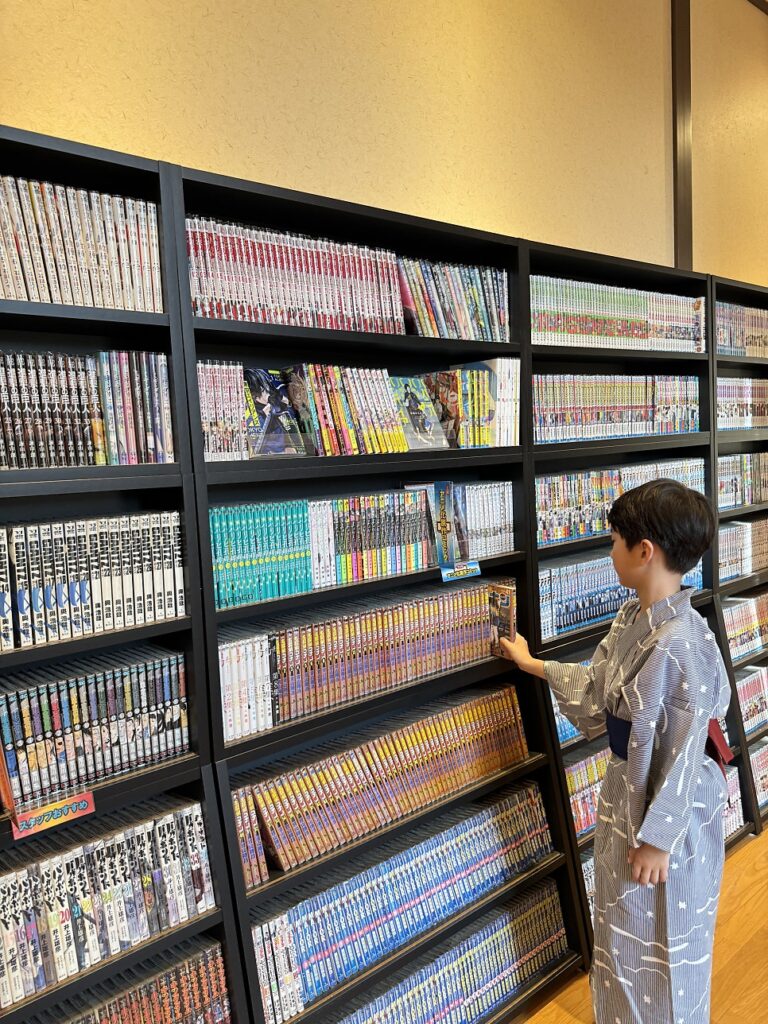
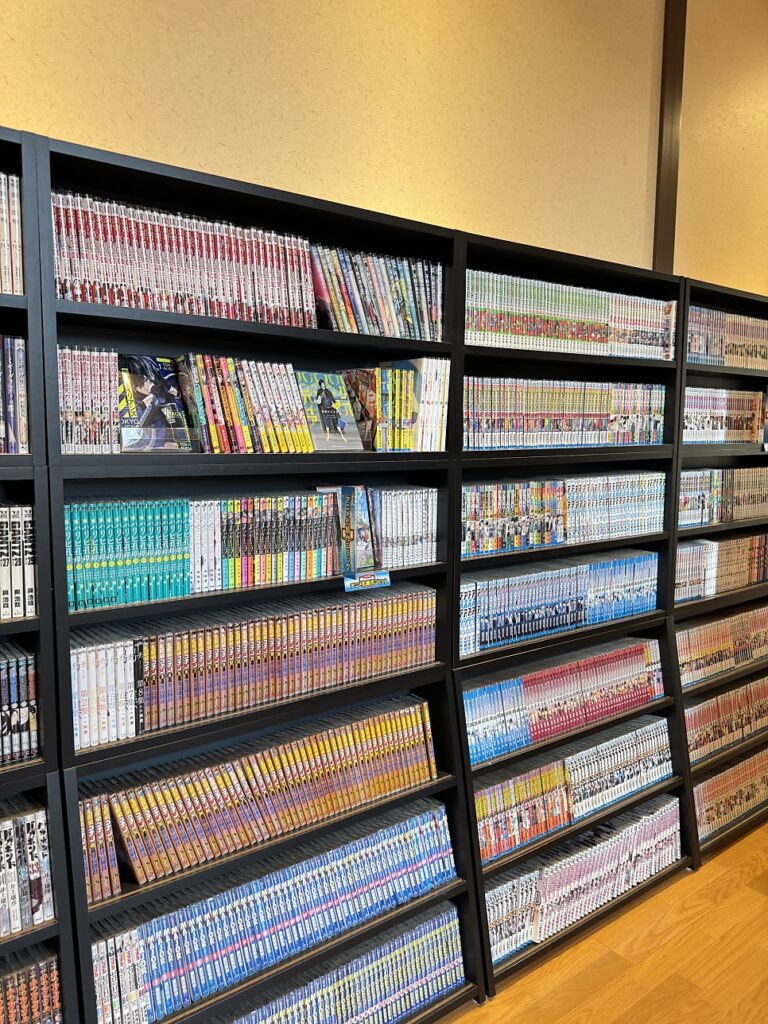
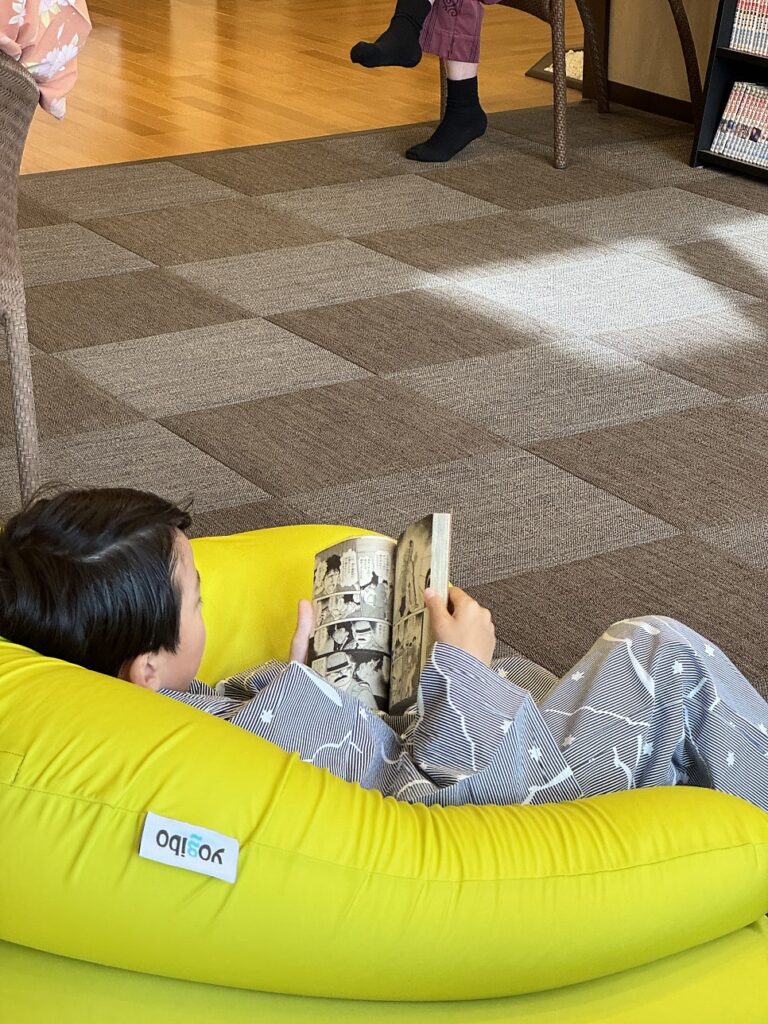
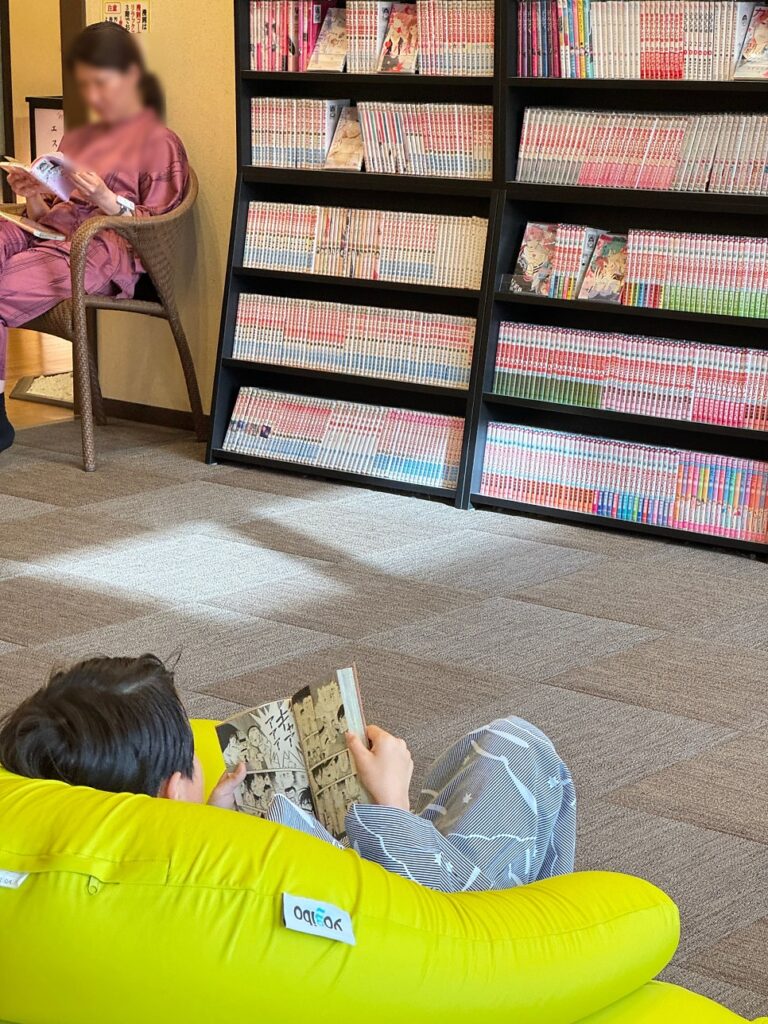
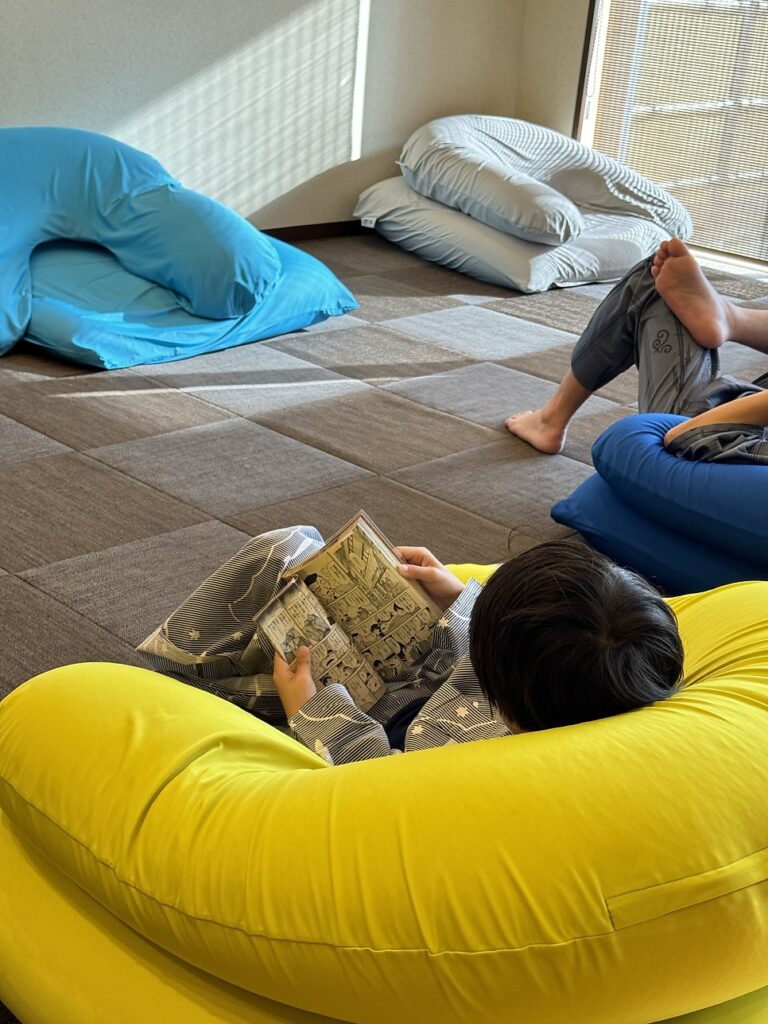
You can lie back on bean bag chairs and read.
Relaxation Rooms
The relaxation rooms are why I’d consider staying here instead of a hotel when traveling solo. They’re well equipped with reclining chairs.
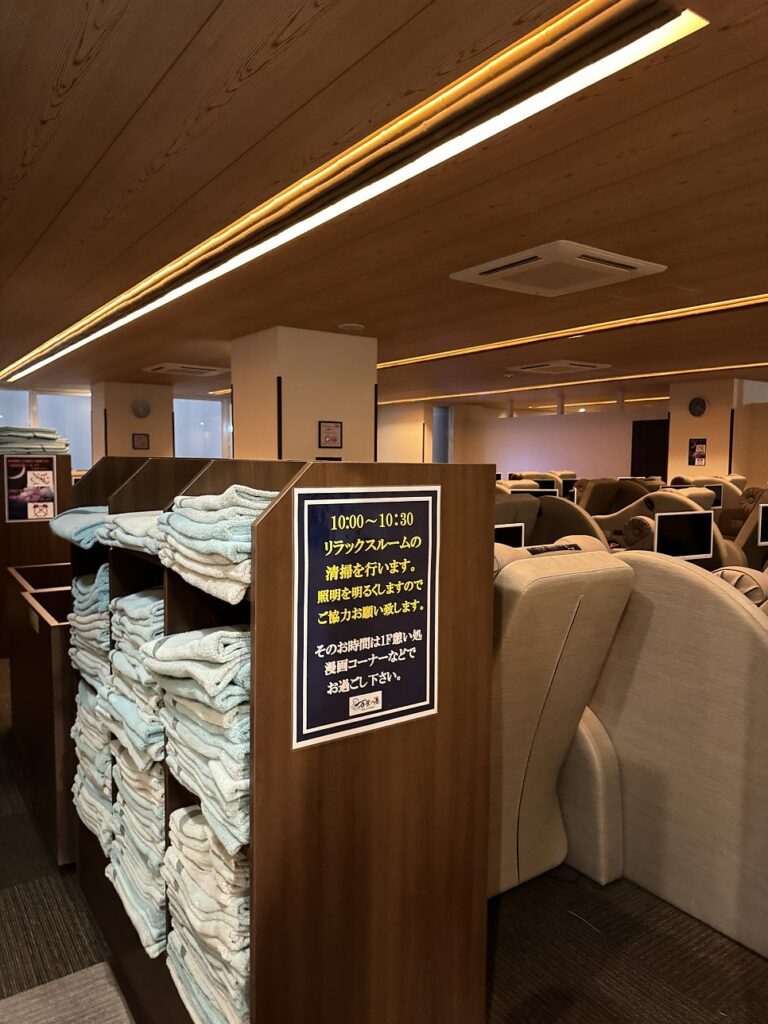
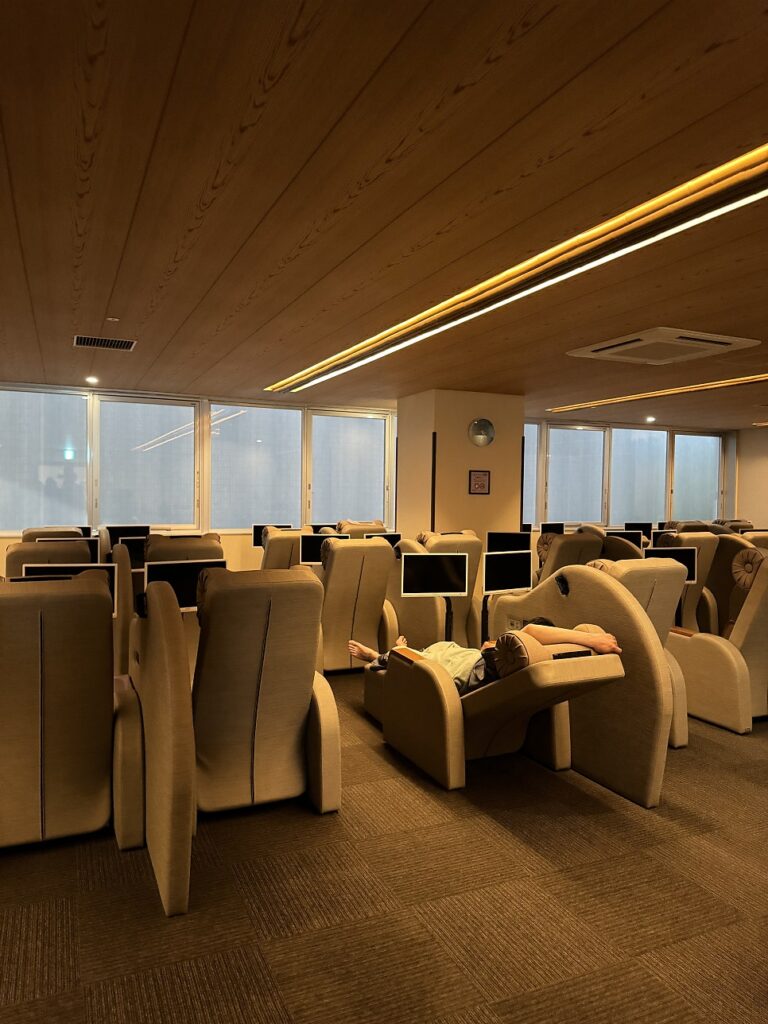
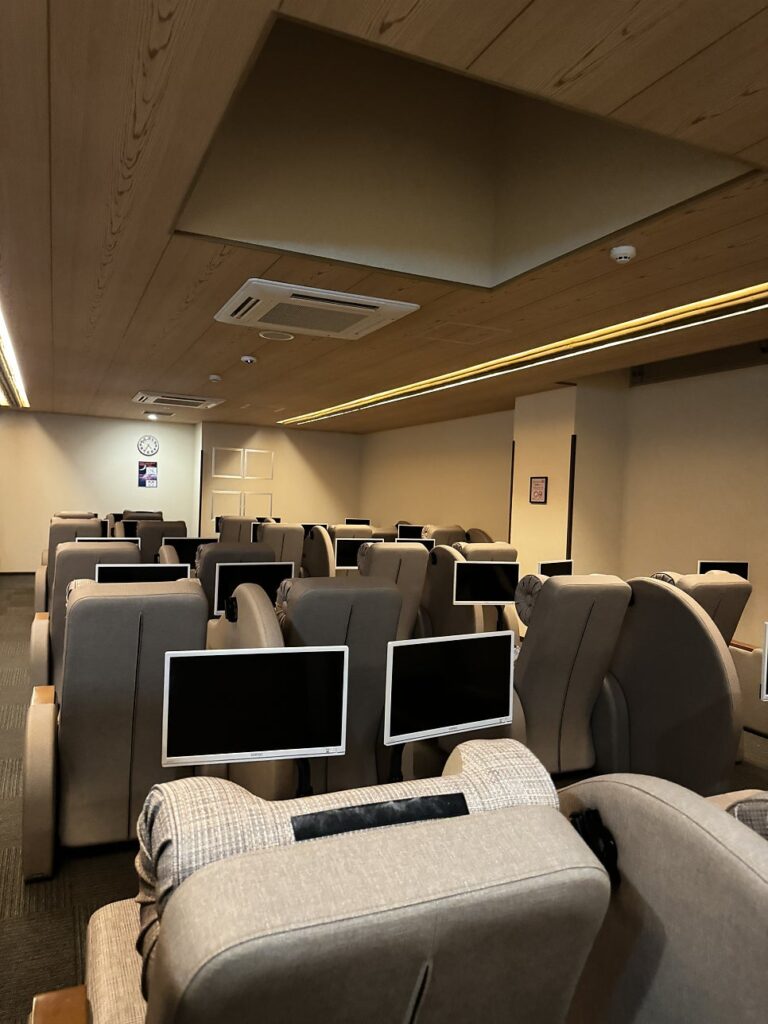
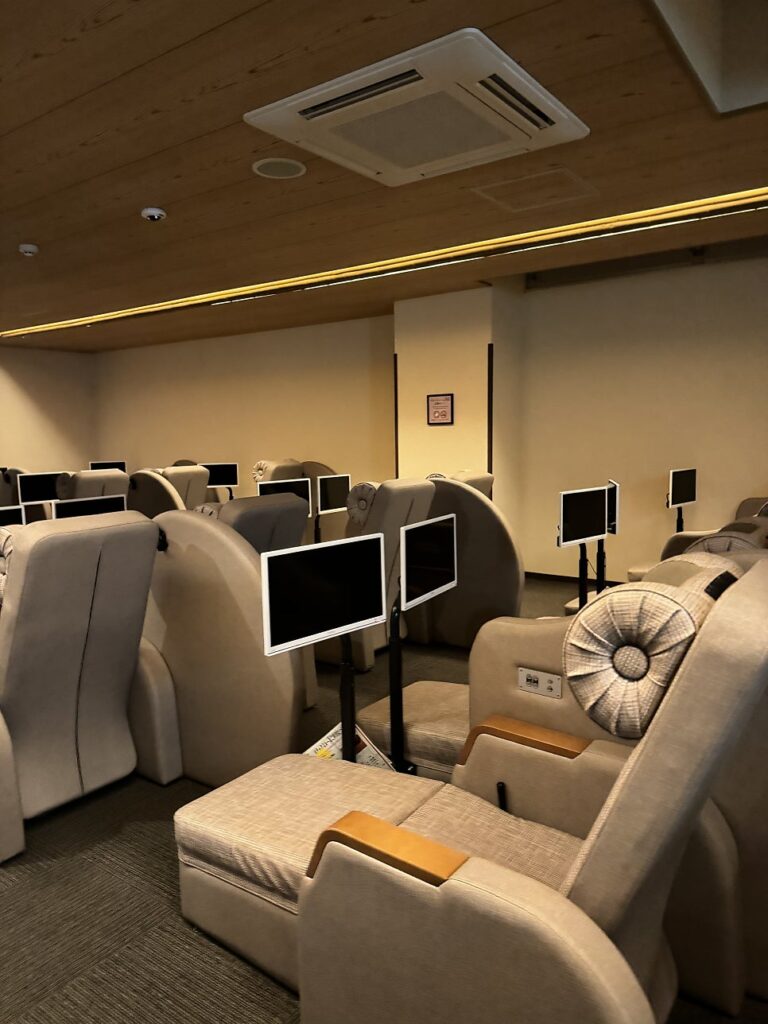
There are separate rooms for men and women as well as mixed rooms. It would be lovely for a couple to spend a day soaking and resting here.
Massage Shop
You can book massages in advance. I wanted one, but they were fully booked.
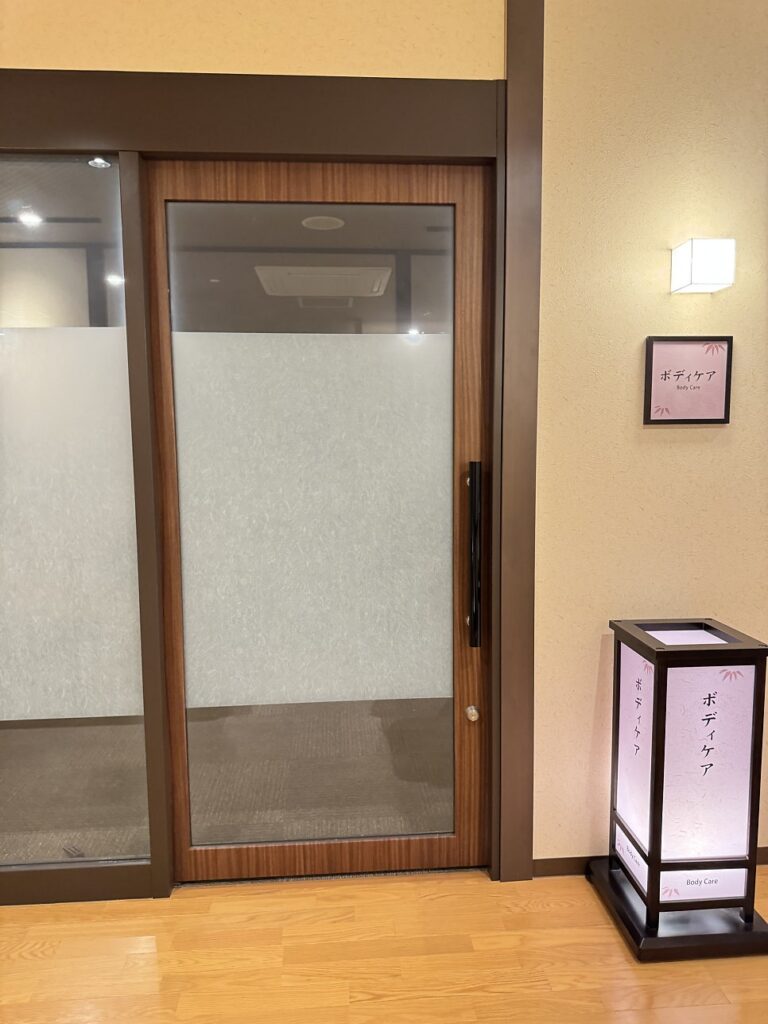
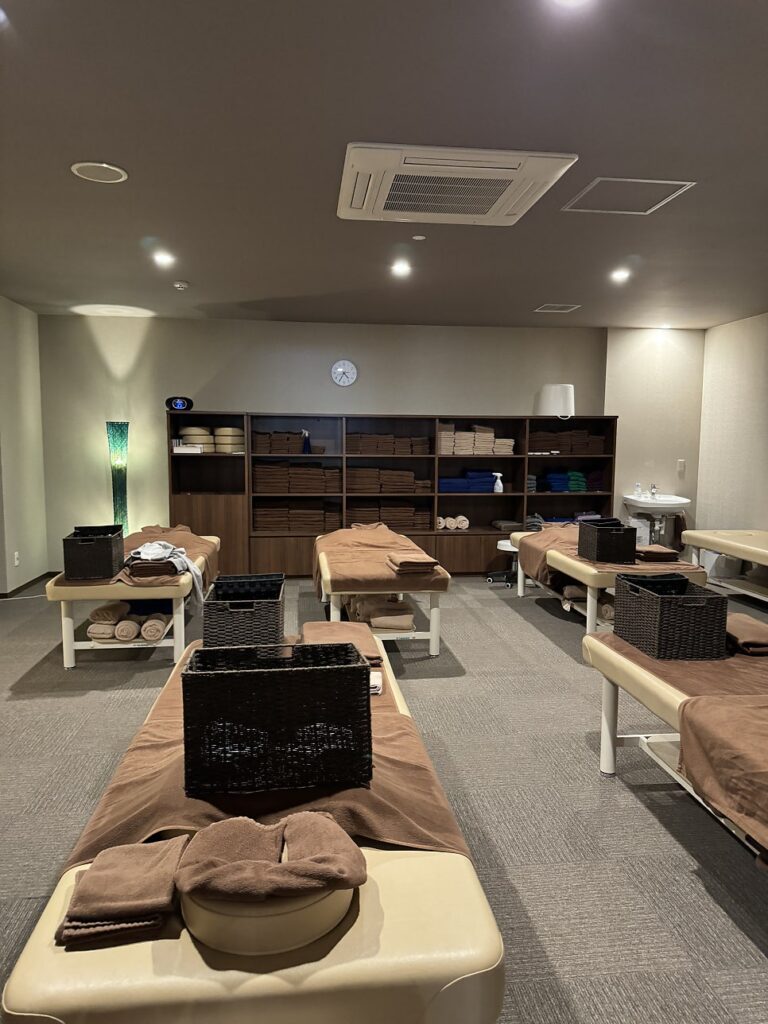
There’s a range of massages, from basic to specialty treatments.
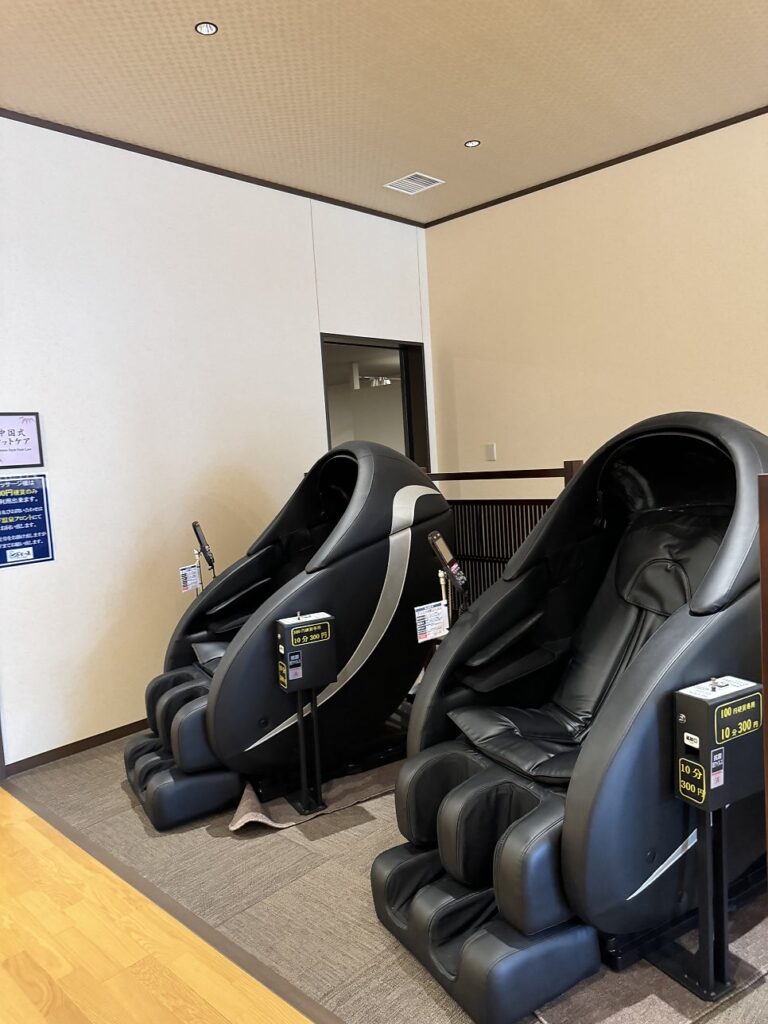
As of 2024, massage chairs cost 300 yen for 10 minutes.
5. Dining at Manyo-no-yu
This restaurant serves breakfast, lunch and dinner, and I really wanted to share it. The menu is huge; you can try most of Japan’s favorite foods here. We came for dinner.
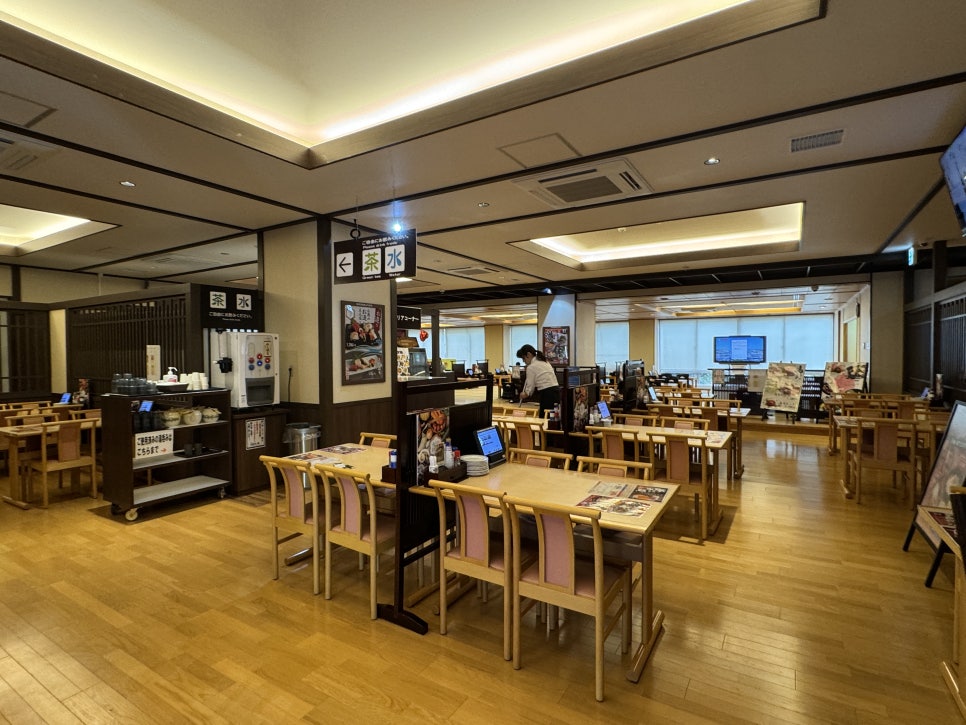
The restaurant is large, with standing-height tables and floor seating. With kids you can sit on the floor, but we took the tables.
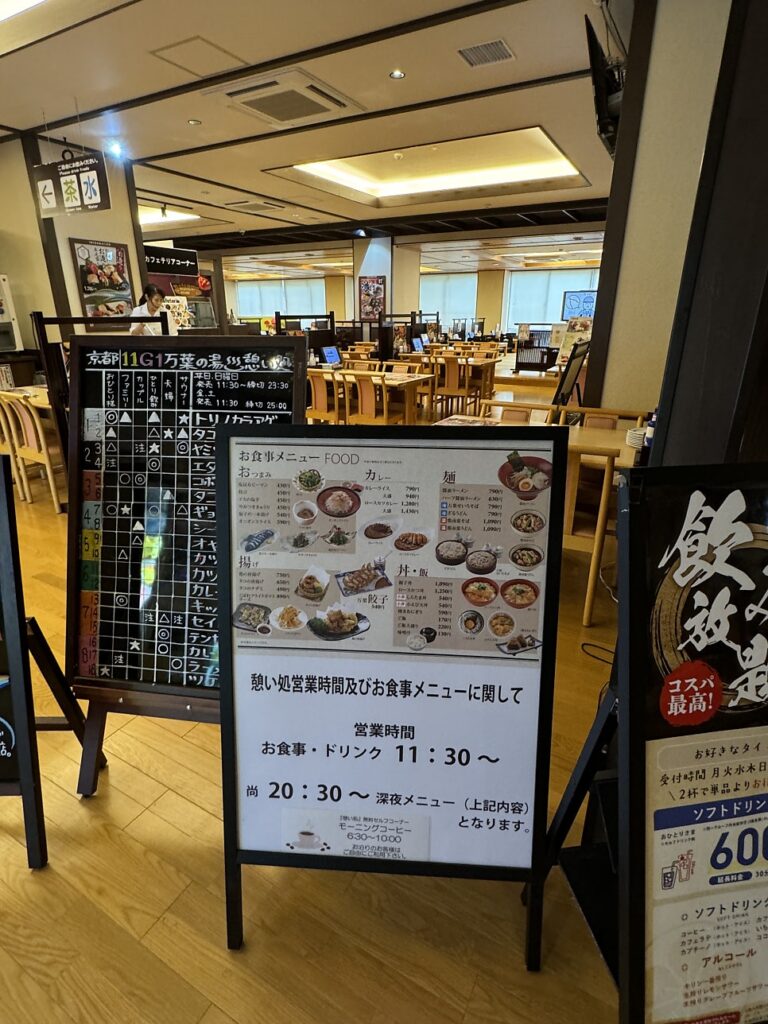
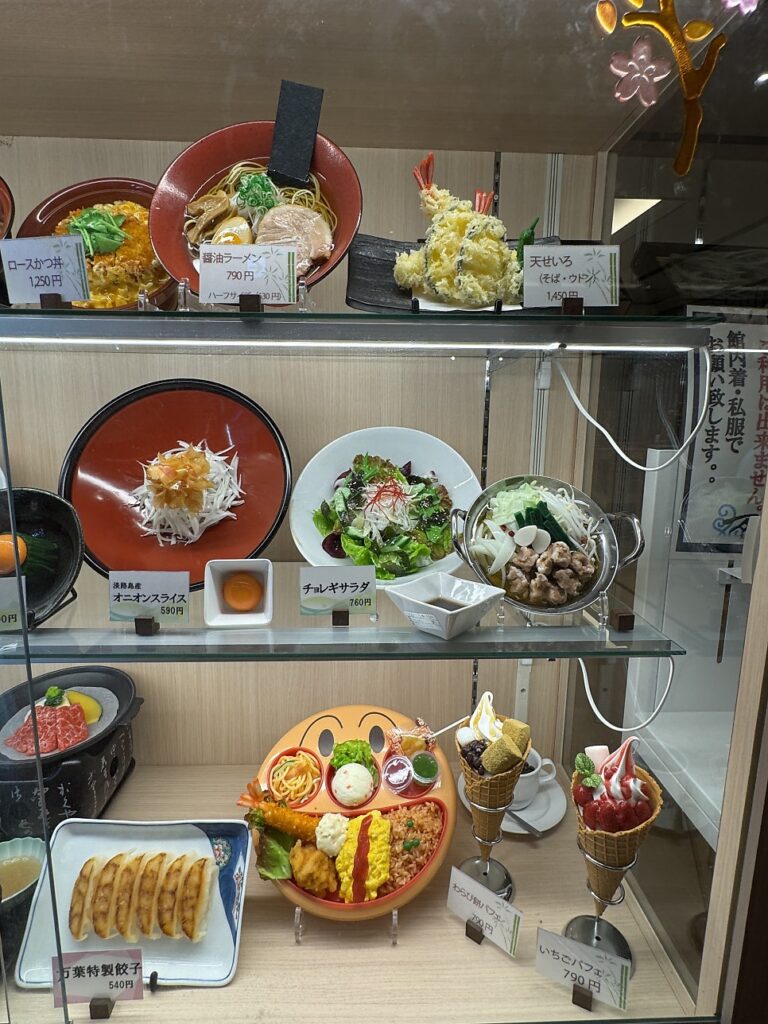
The kids’ menu comes on an Anpanman tray, and Yans insisted we order it.
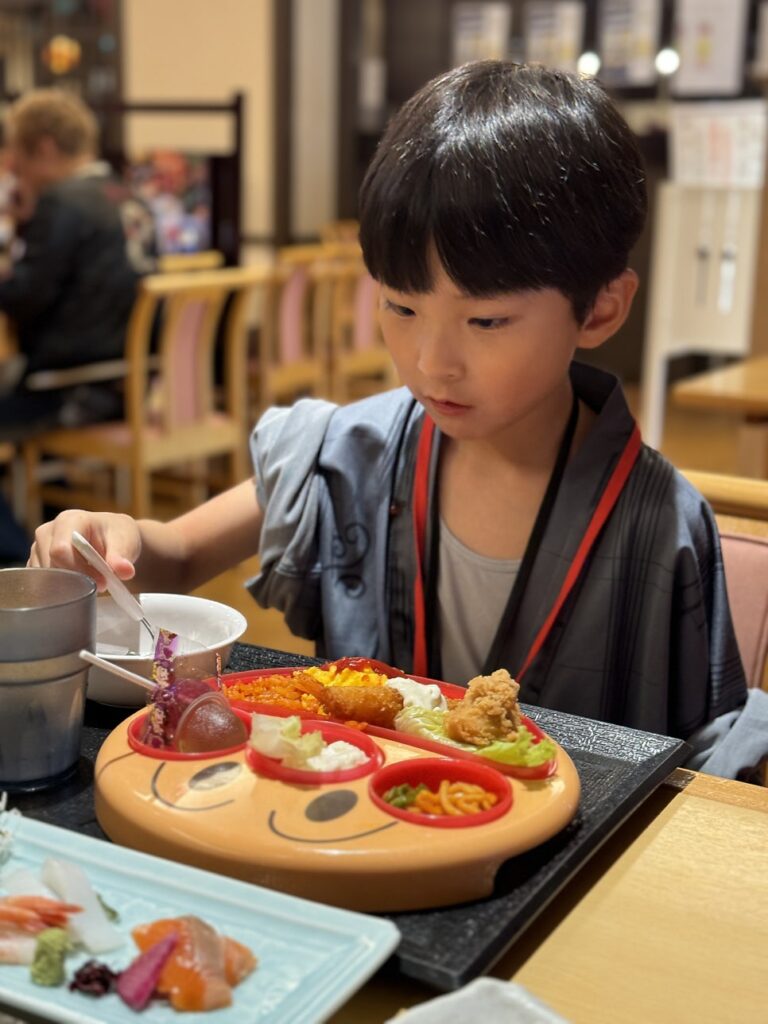
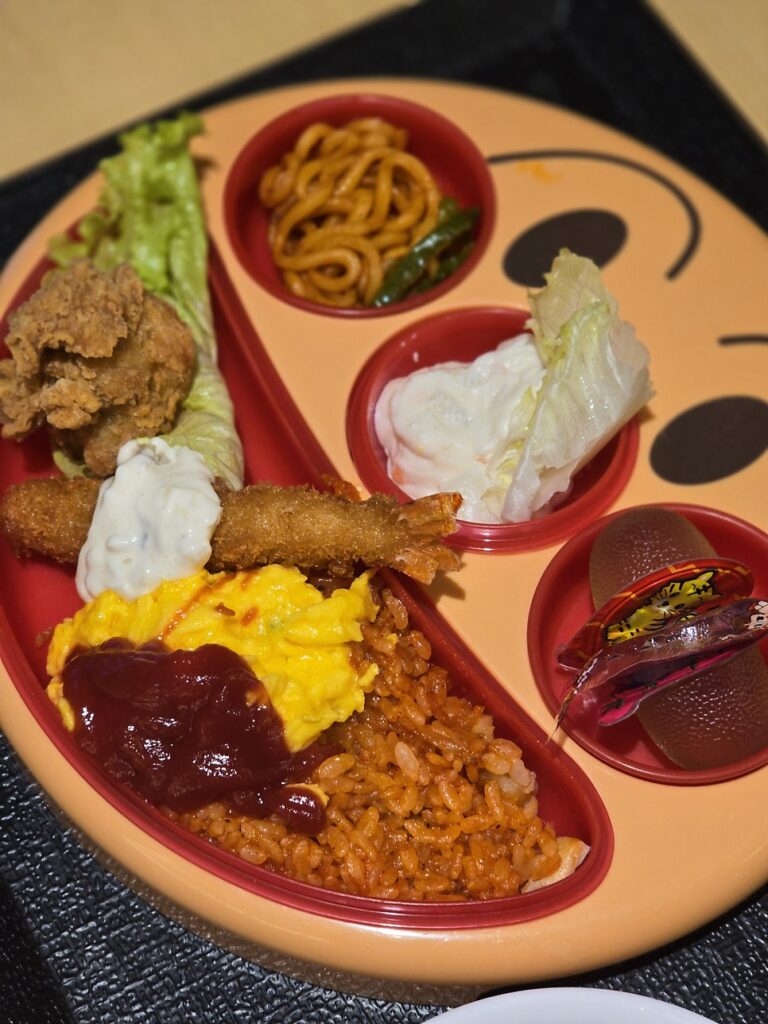
Here’s the Anpanman kids’ meal: fried rice, fried shrimp, yakisoba and jelly, all kid favorites.
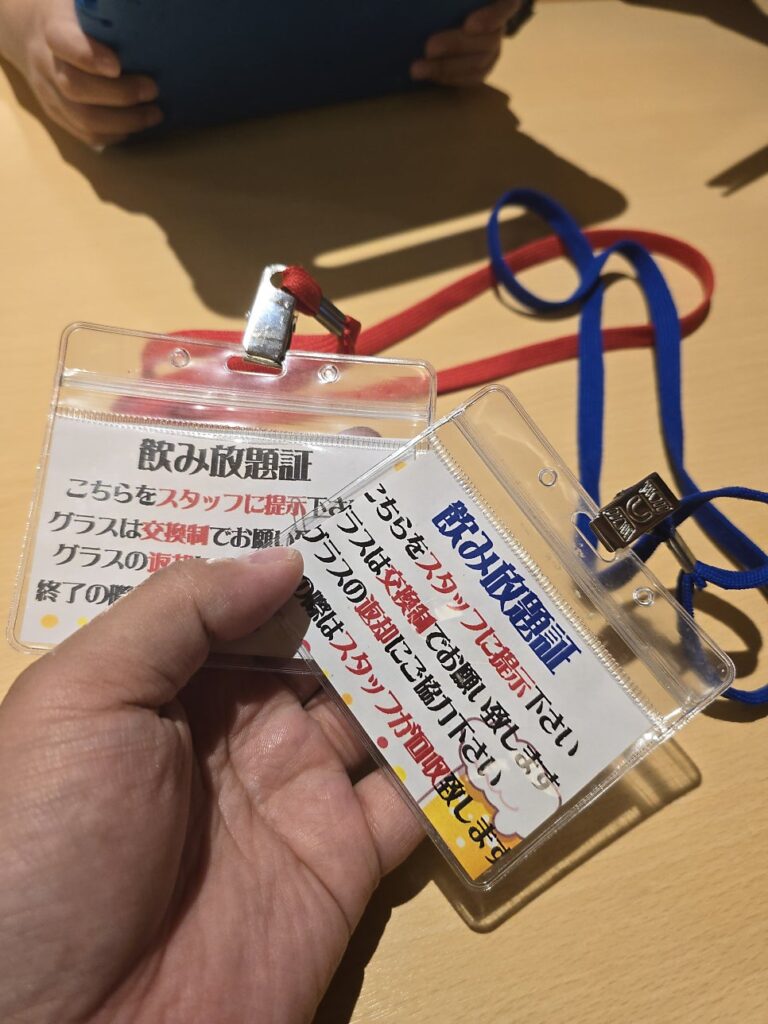
You can choose all-you-can-drink options, either soft drinks only or including alcohol. The automatic beer-pouring machine was fun to watch.
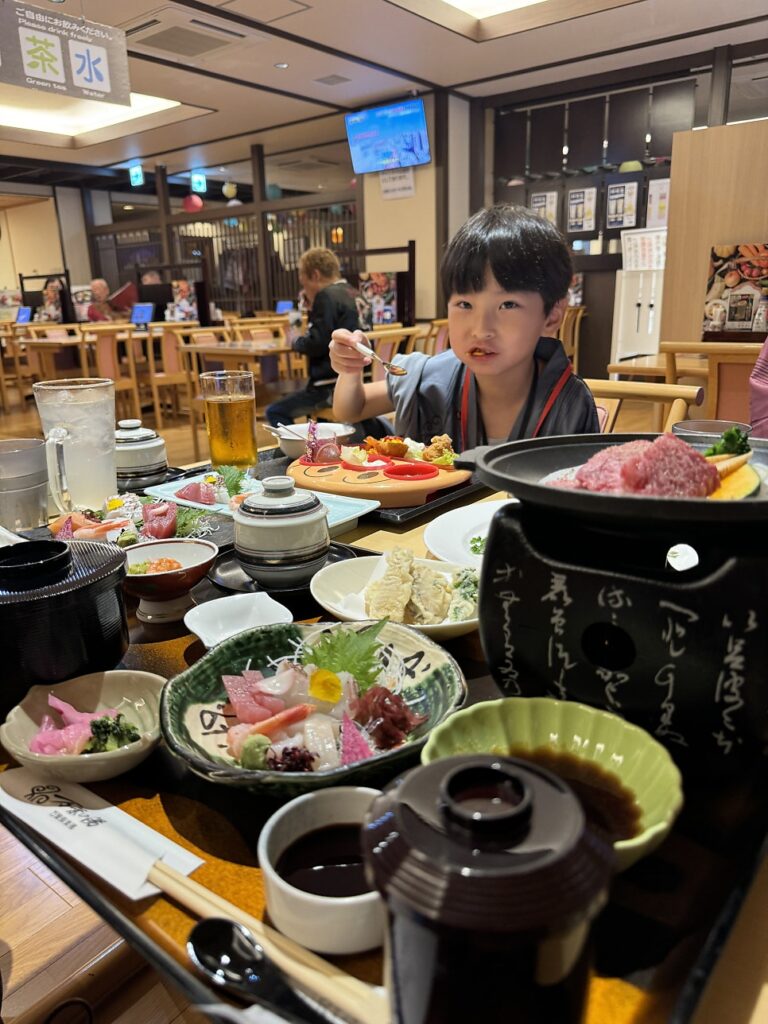
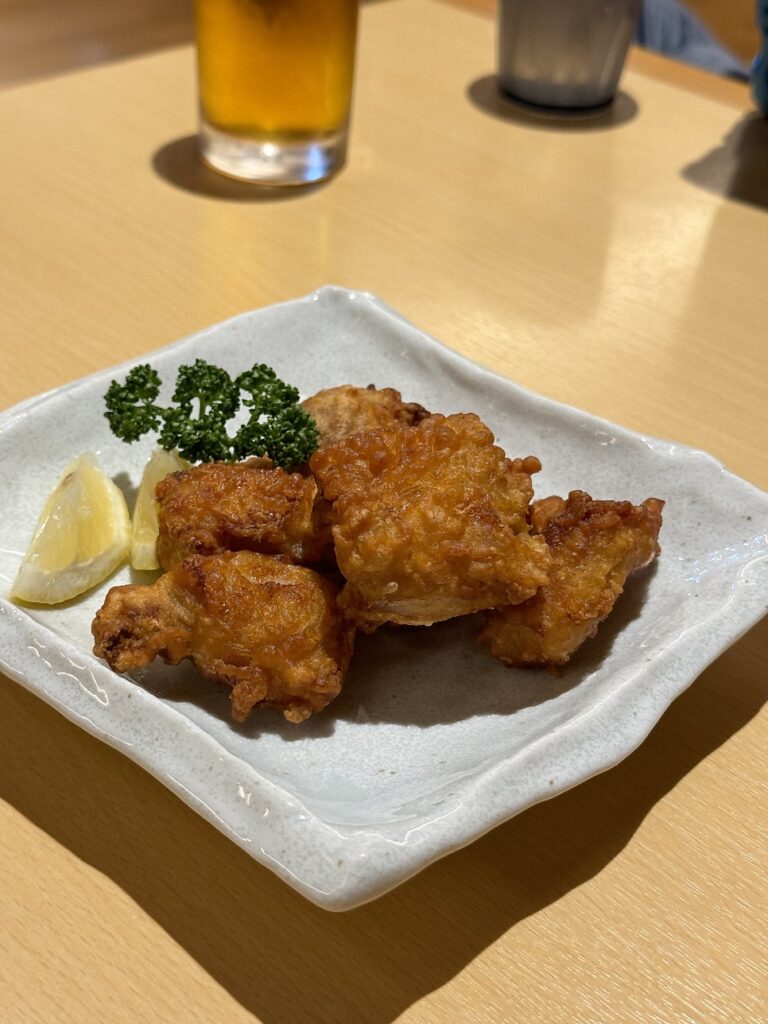
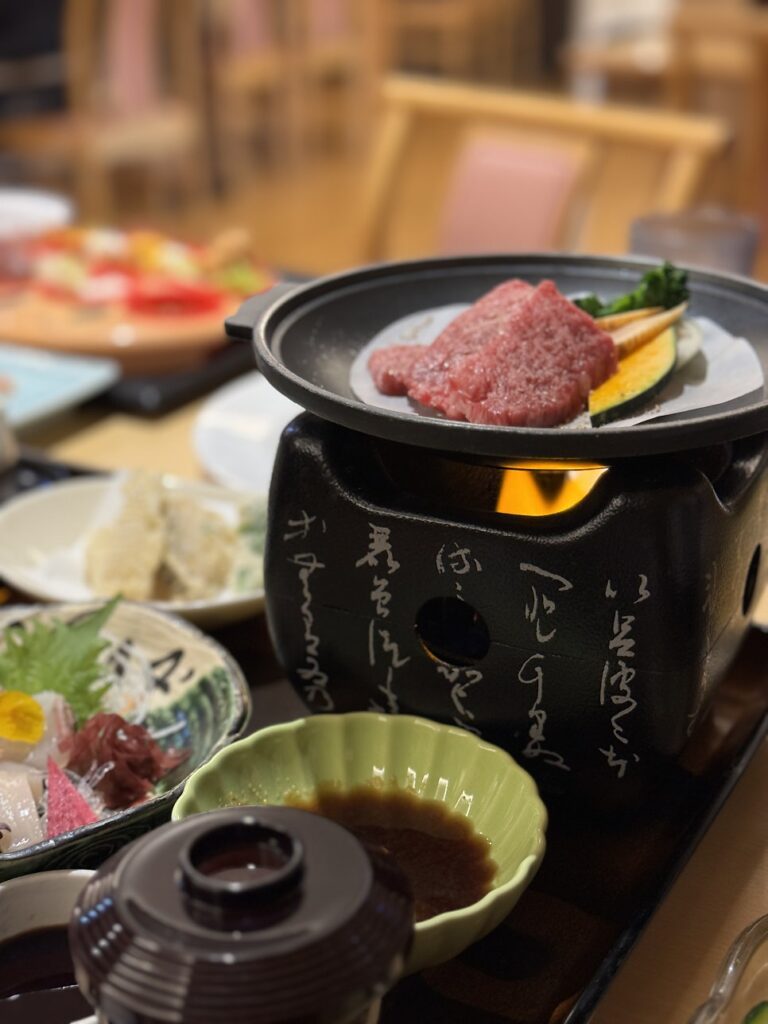
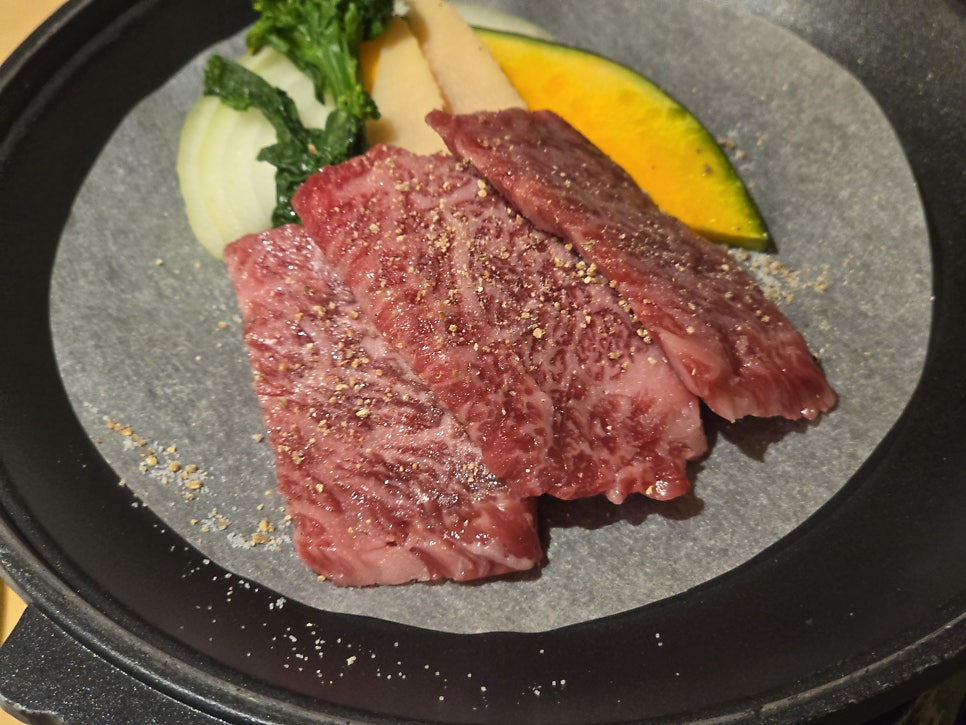
The dinner menu is enormous: karaage and yakiniku,
a variety of sashimi,
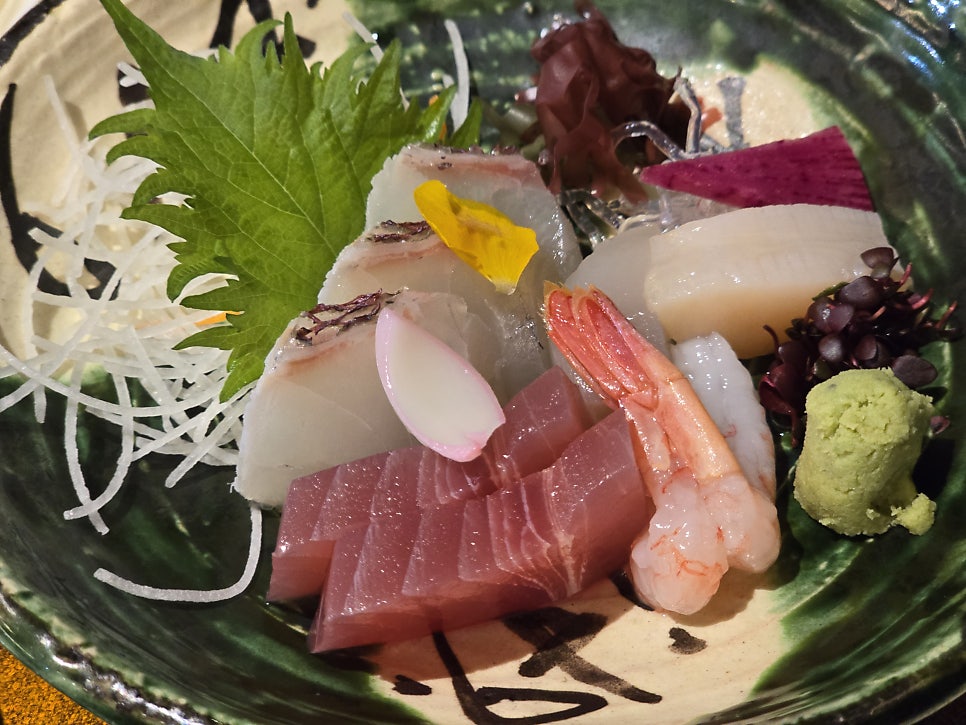
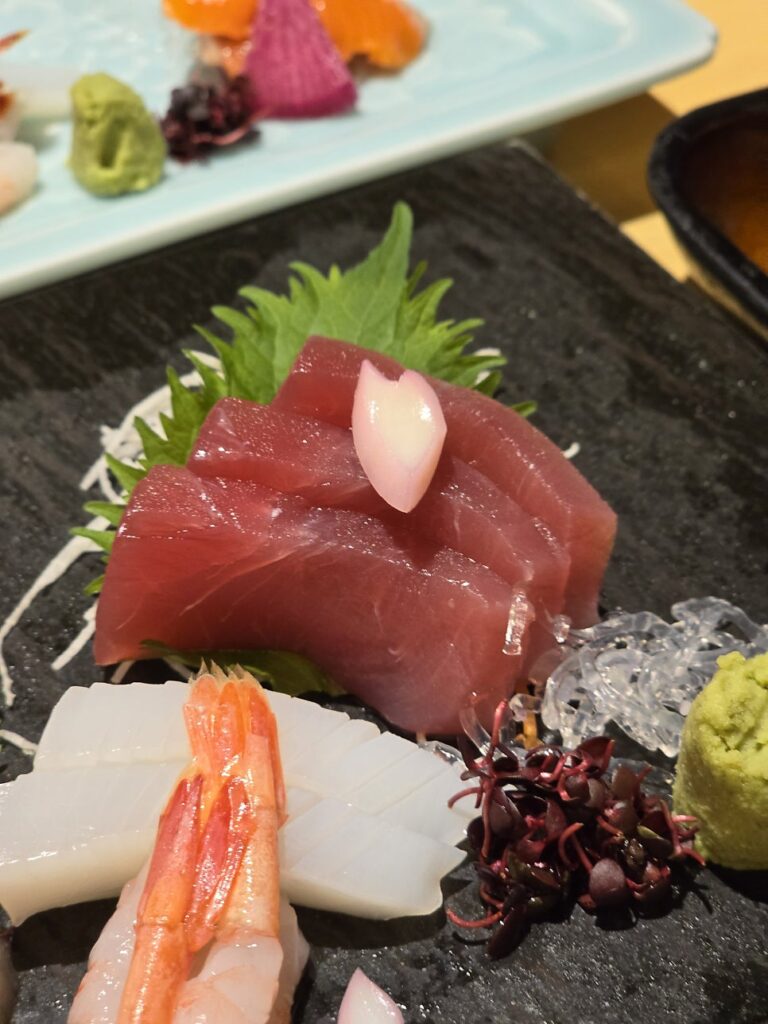
and even horse meat sashimi. We ordered plenty, and the quality was excellent. I was surprised to find sashimi at an onsen restaurant.
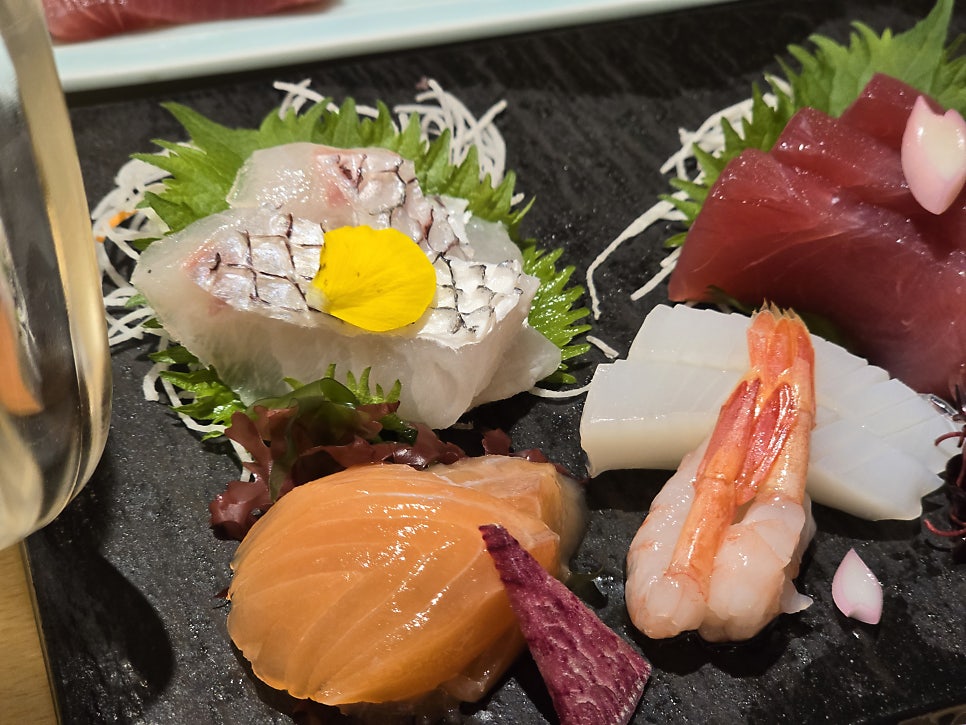
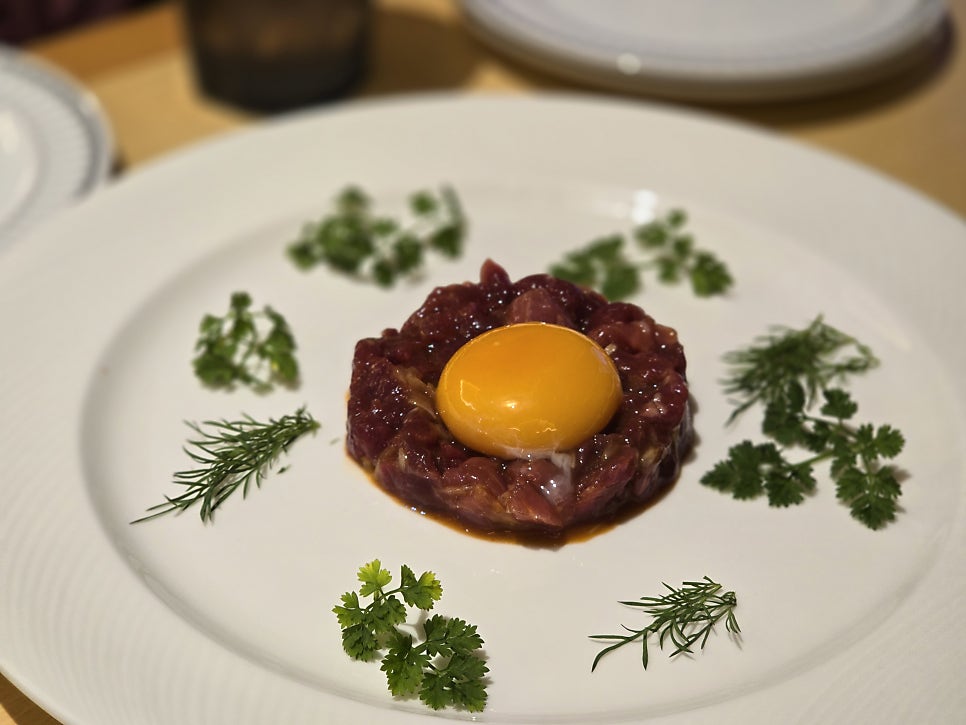
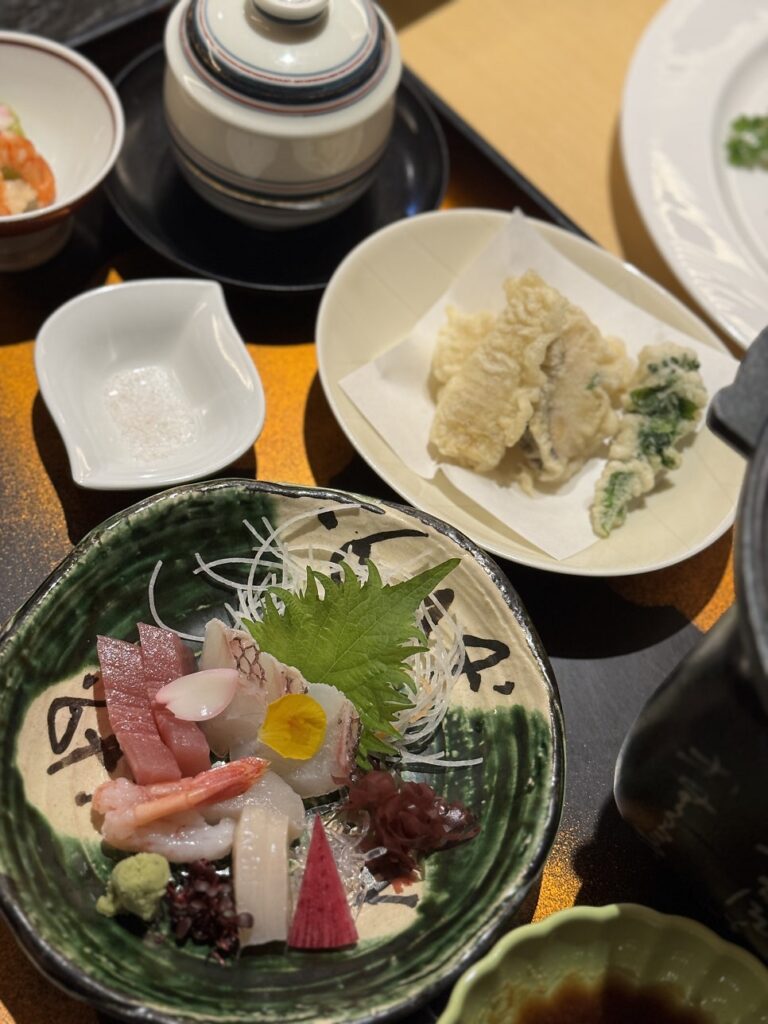
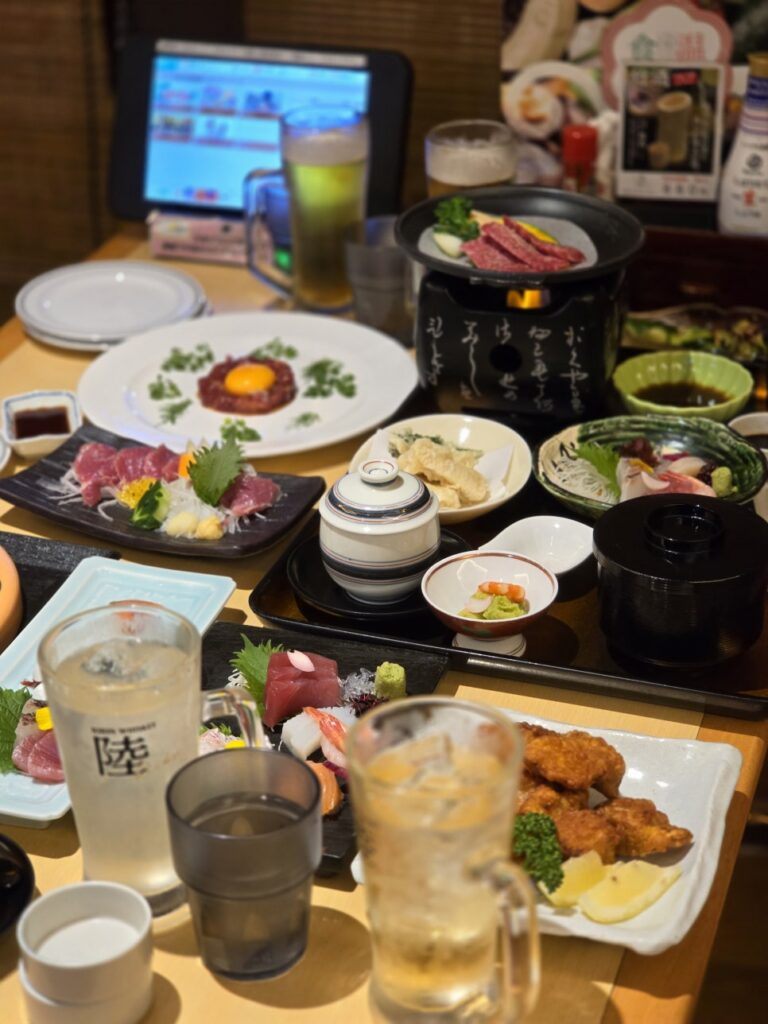
Yans is usually a picky eater, but he ate a lot at Manyo-no-yu.
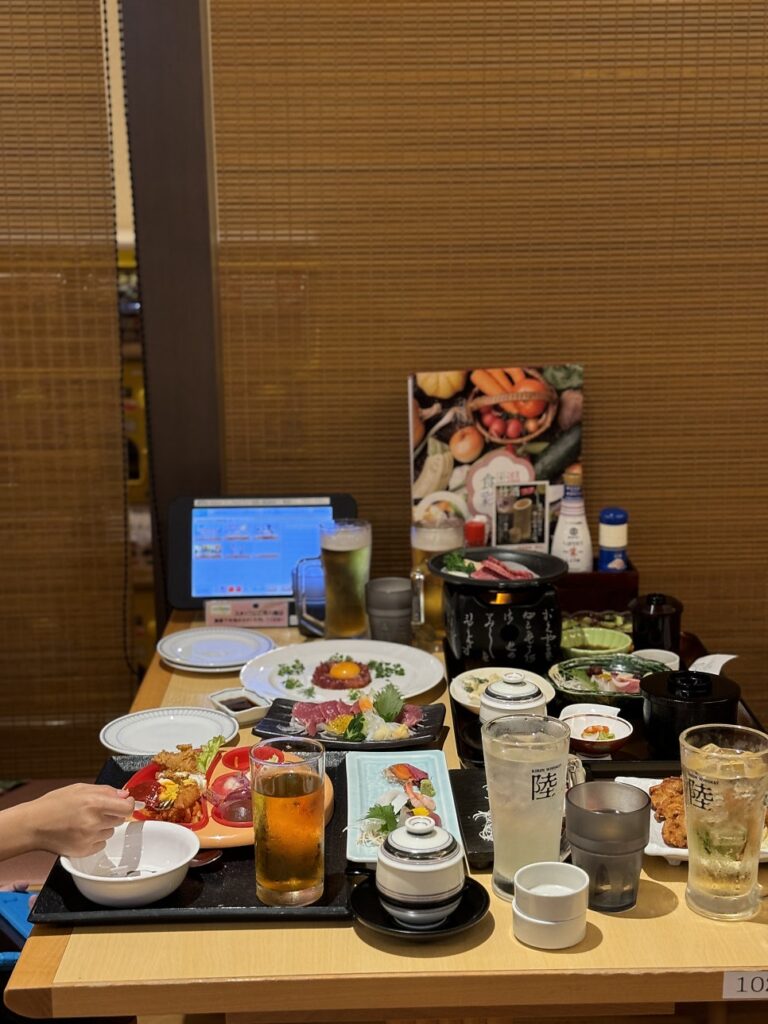
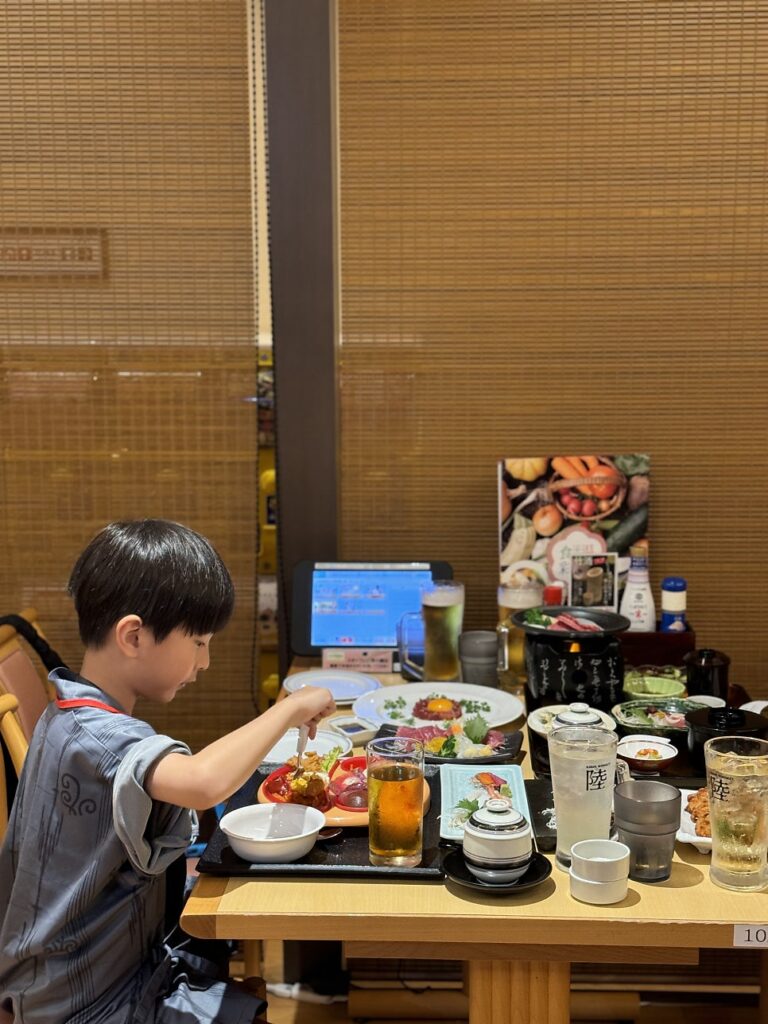
There’s a good choice of desserts, too.
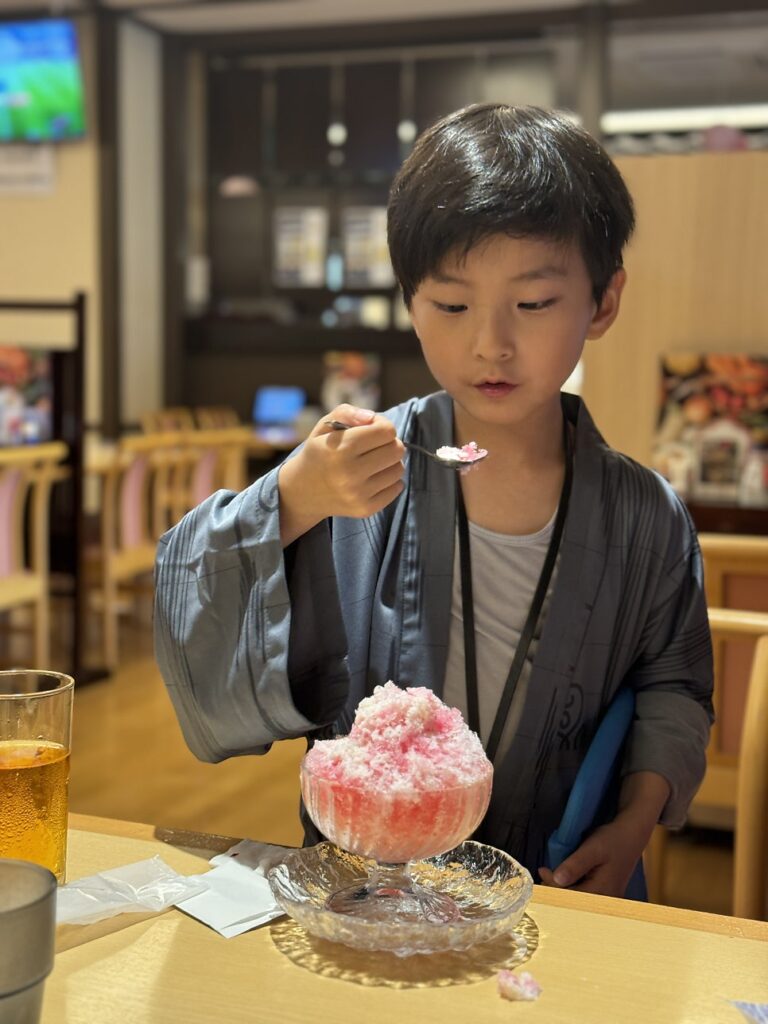
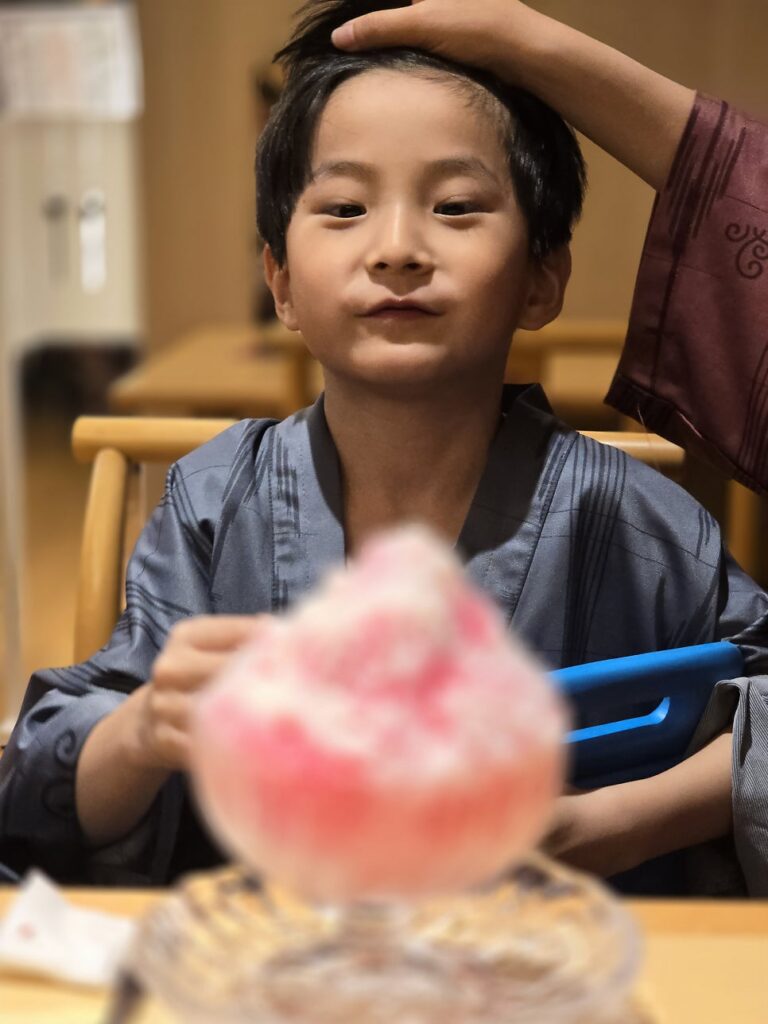
Strawberry shaved ice, baked cheese, and the dessert I’d been craving with rice cake, chestnuts and ice cream.
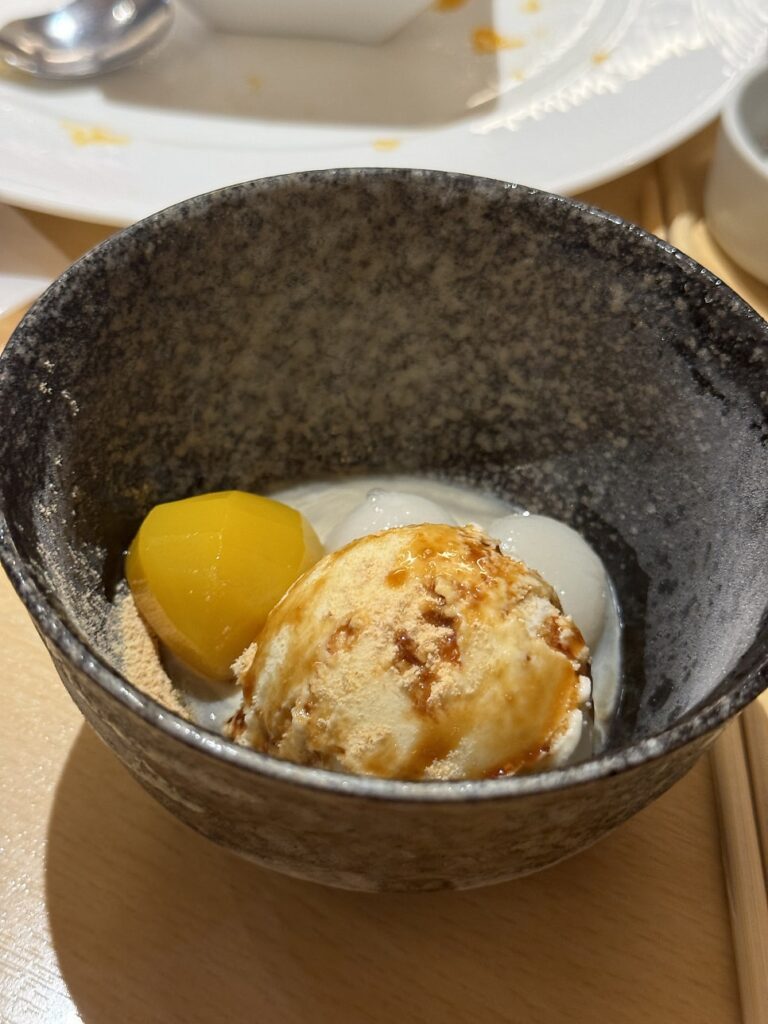
The food is so good that pairing the onsen with dinner here is ideal. Prices aren’t high, so it’s good value without strain, and the quality makes it a great meal after a soak.
6. Breakfast
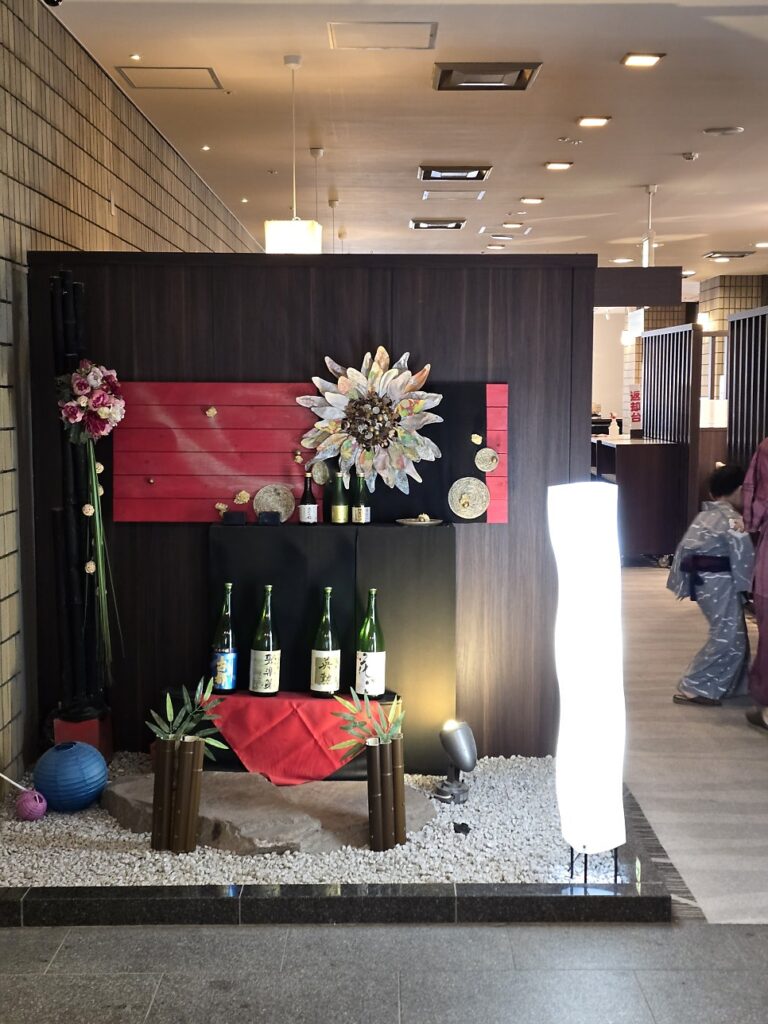
After our overnight stay, we had breakfast the next morning. It starts at 7 a.m., and we went around 8:30.
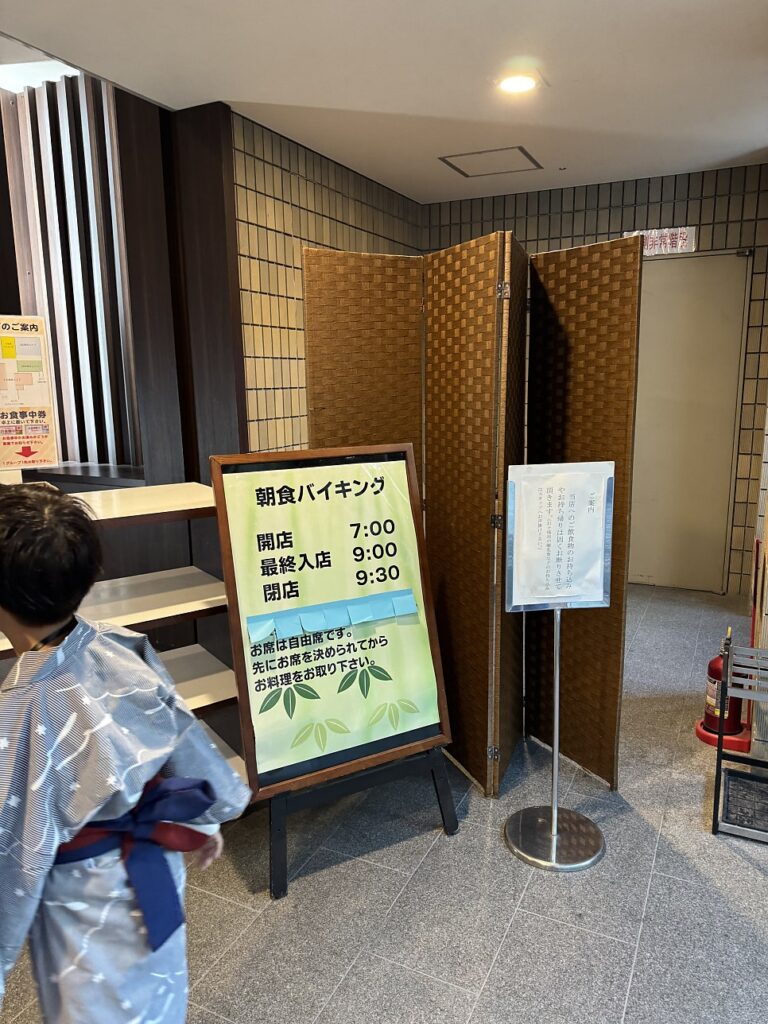
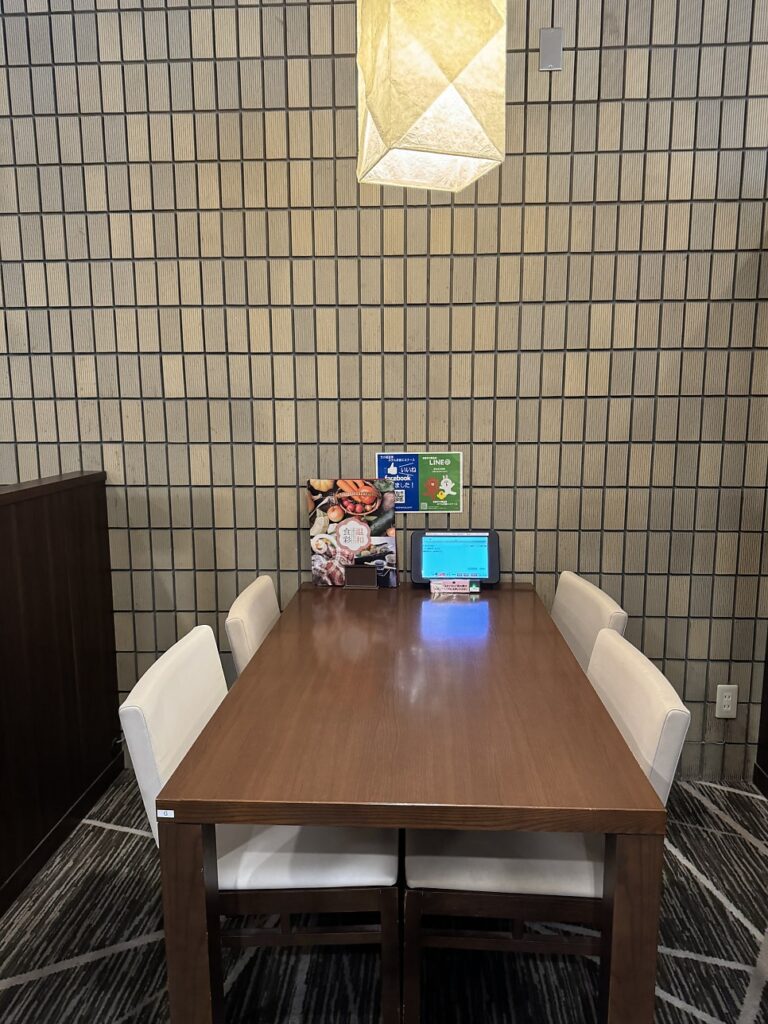
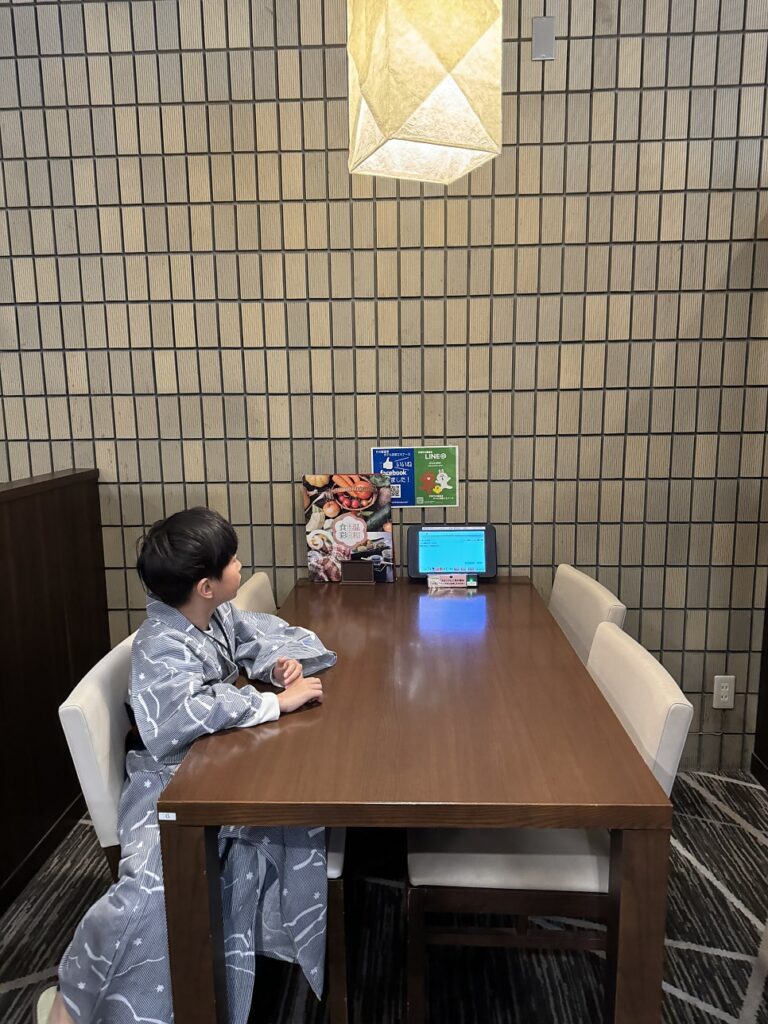
Breakfast is served in the first-floor restaurant, which runs as a buffet in the evening. There are open tables and private booth-style rooms like ours.
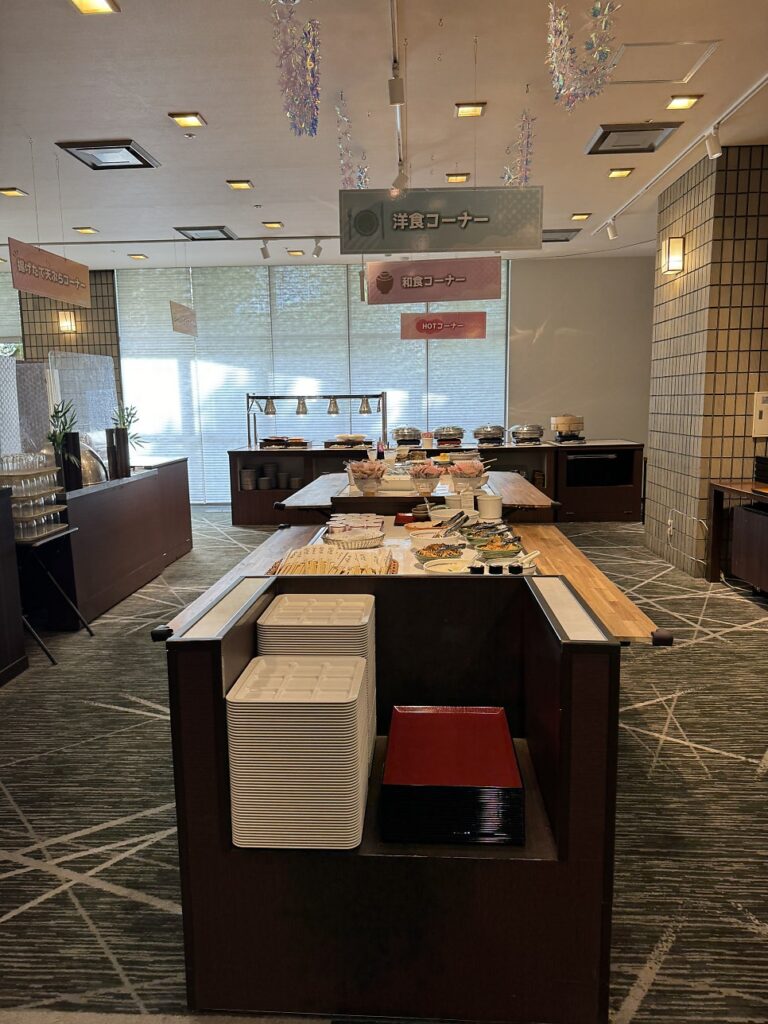
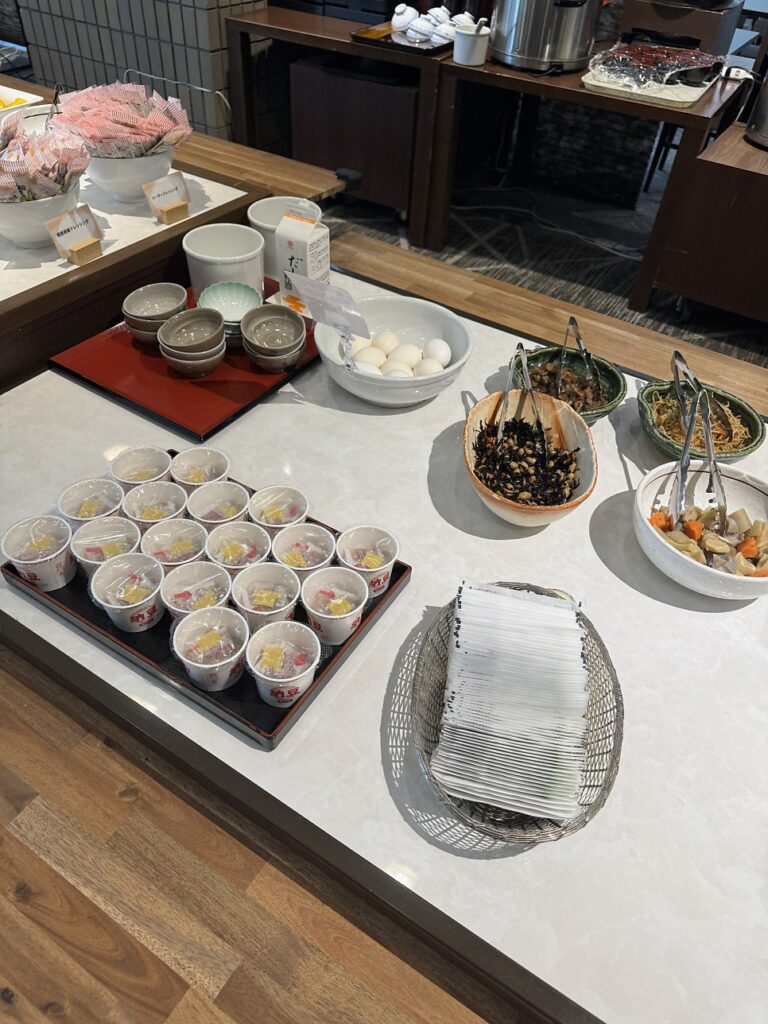
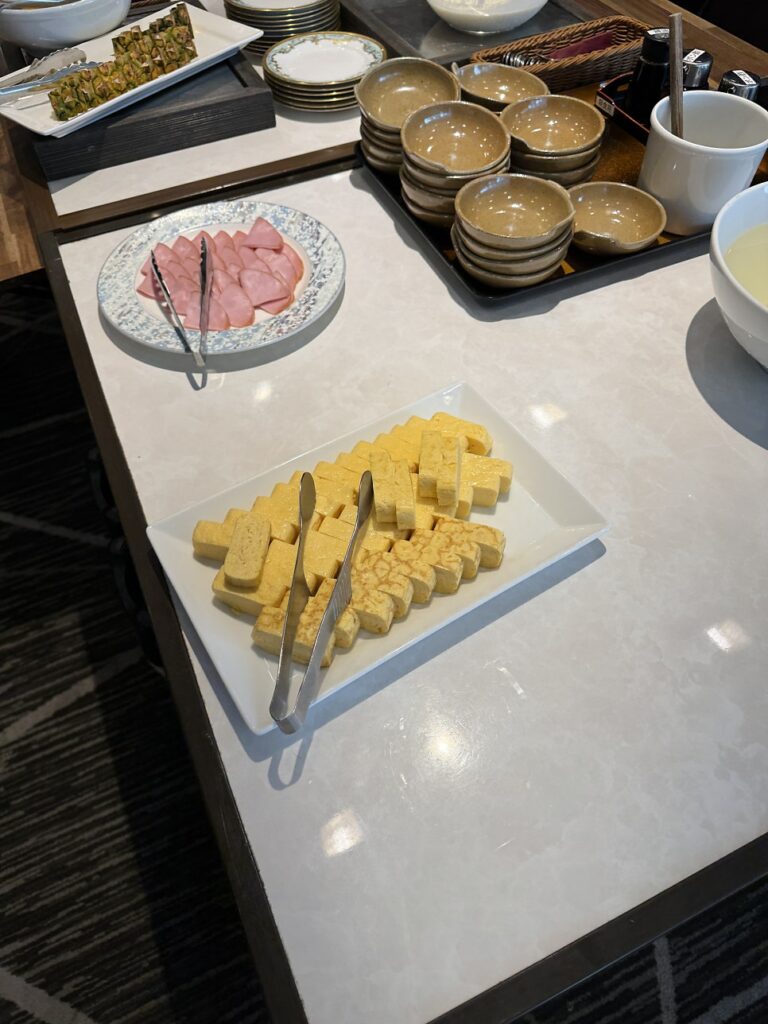
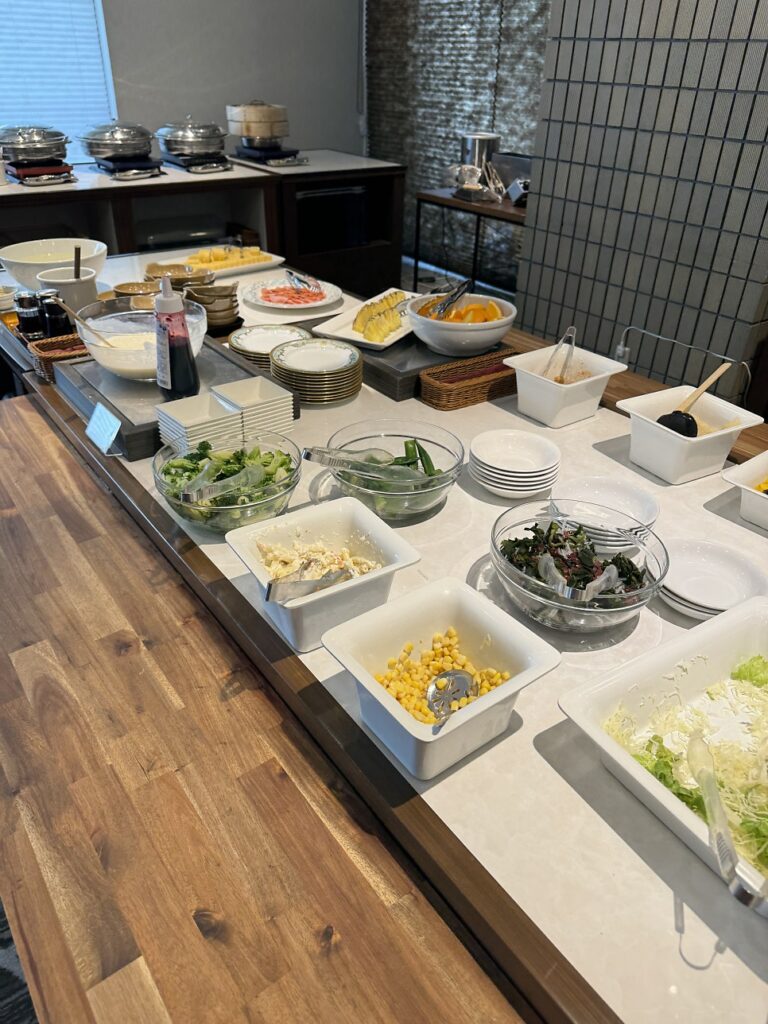
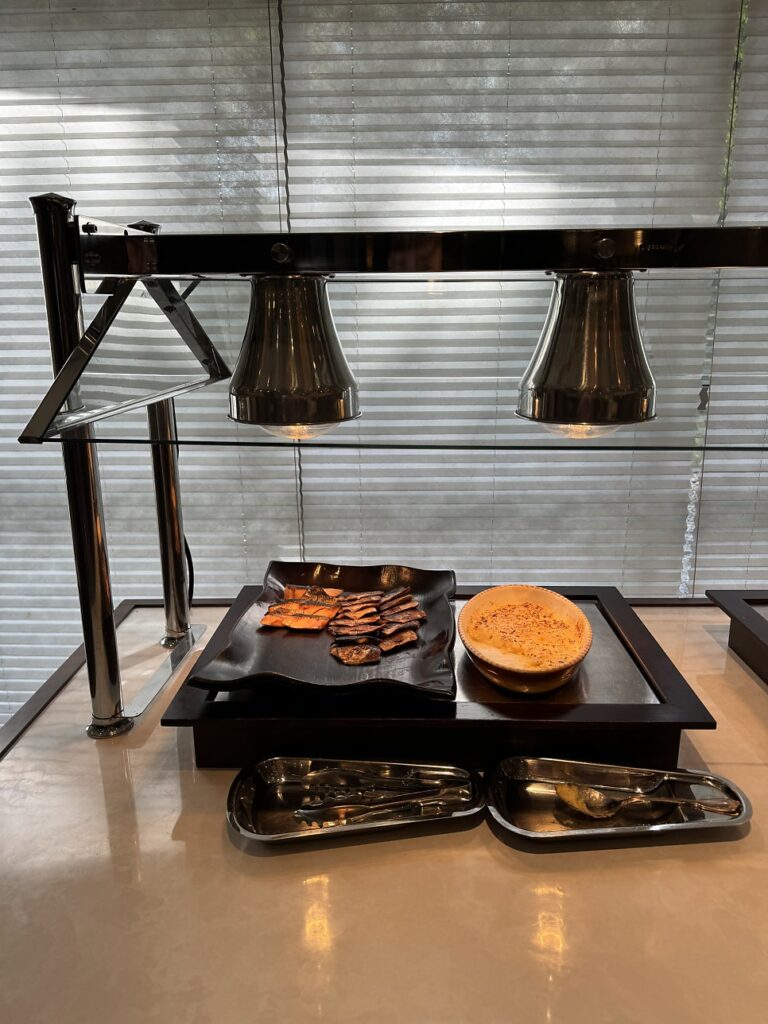
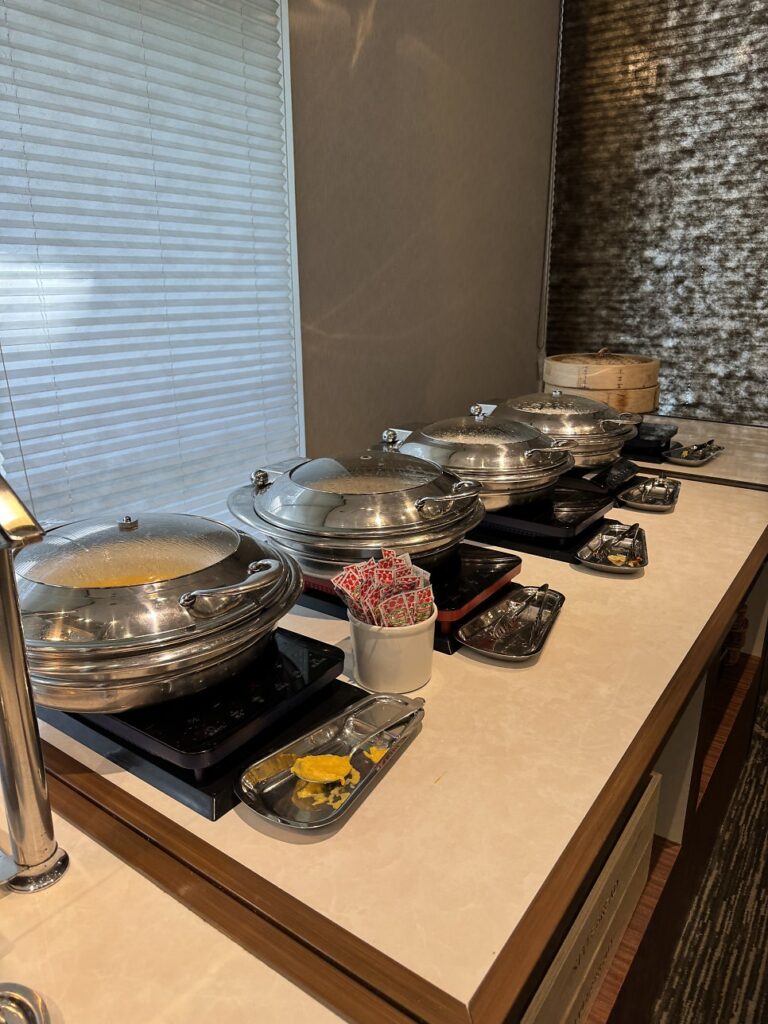
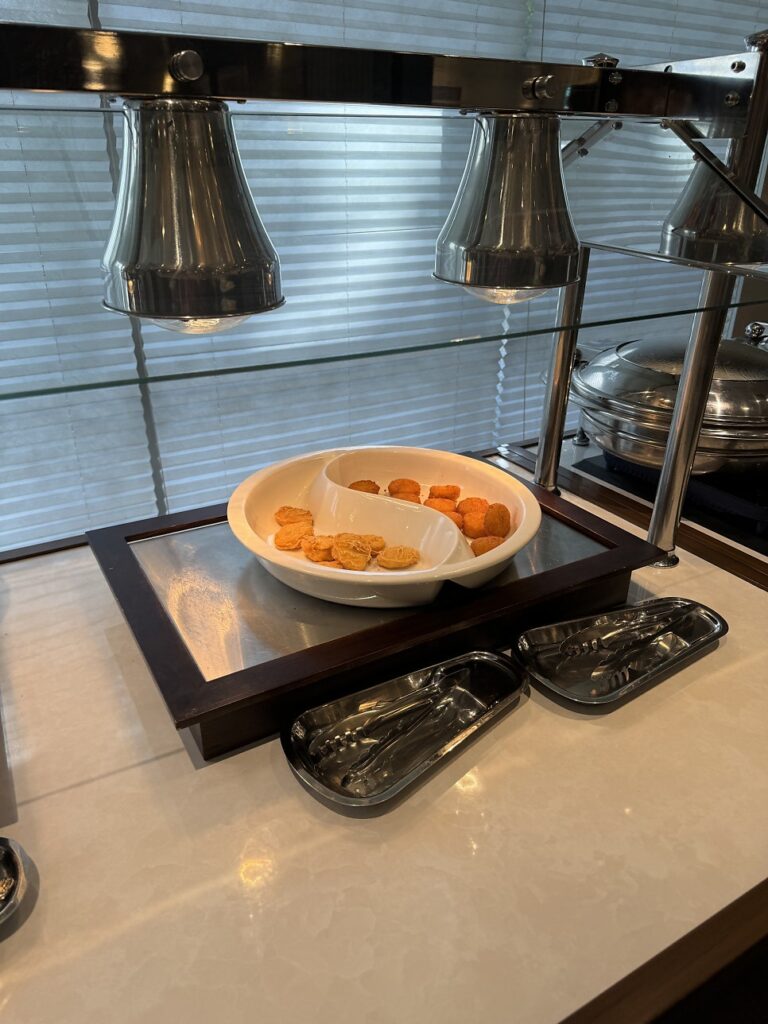
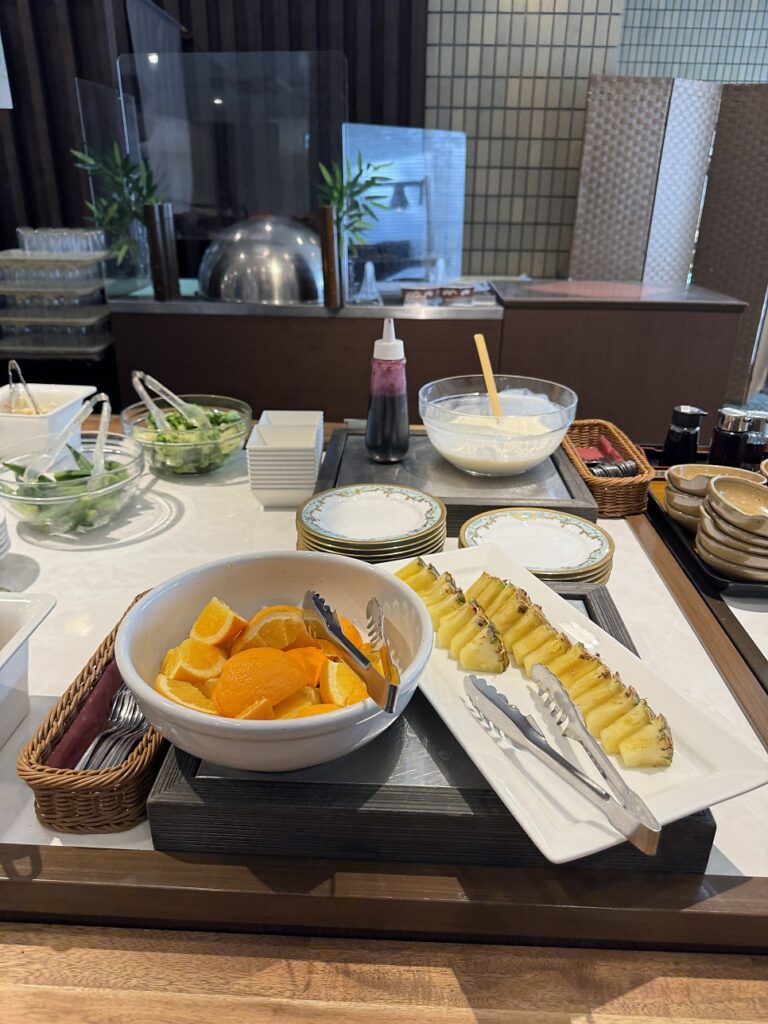
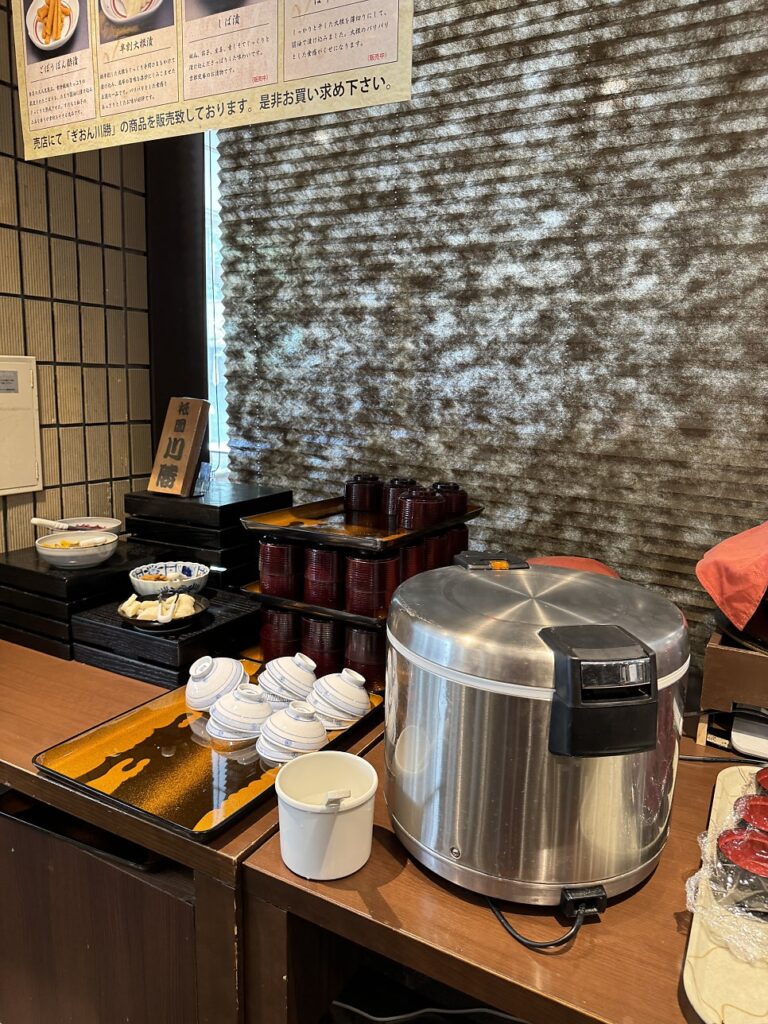
Breakfast is neat like Japanese home cooking. There isn’t a huge selection, but every dish is carefully made: rice, soup, fruit and bread.
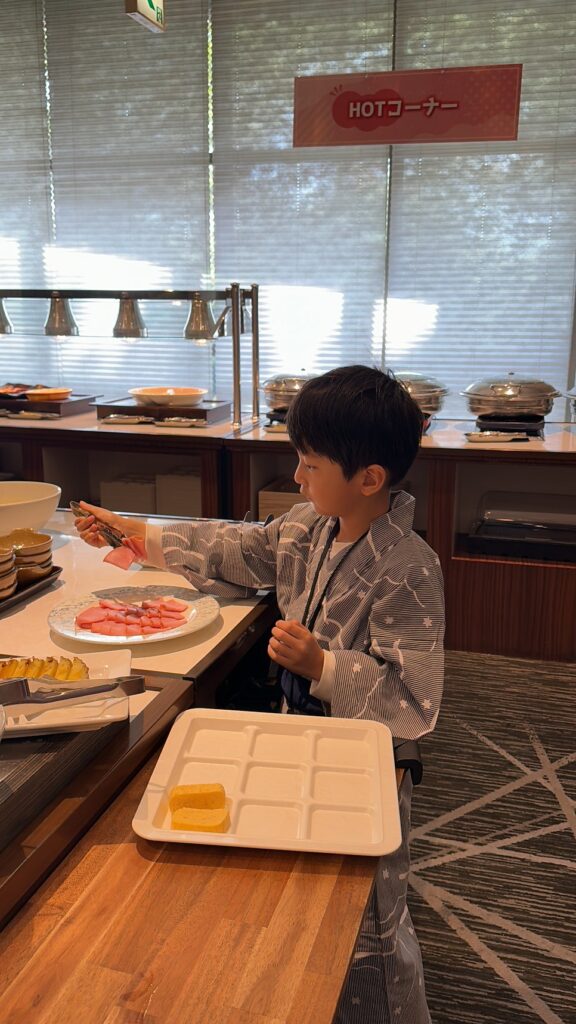
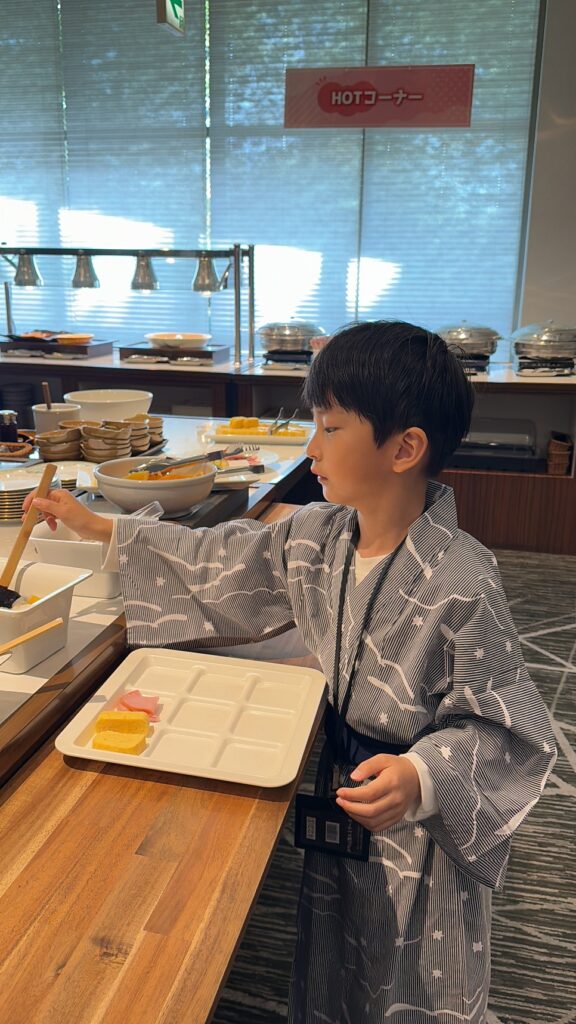
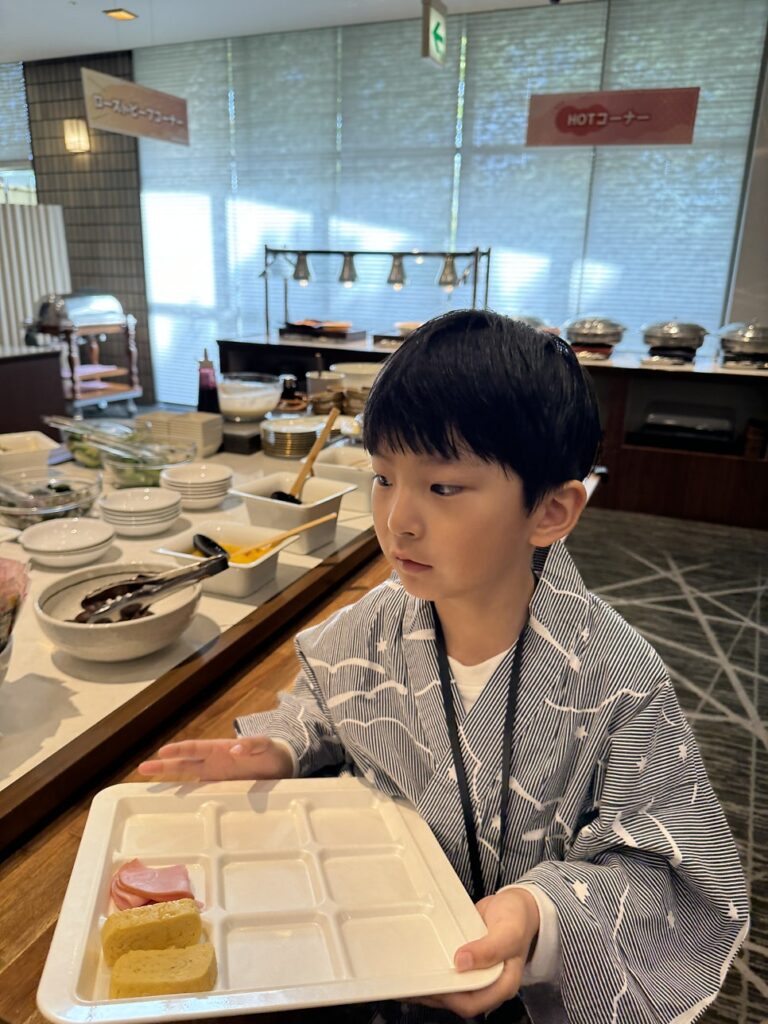
The nine-compartment tray was unique and perfect for small portions of Japanese side dishes, cute and practical.
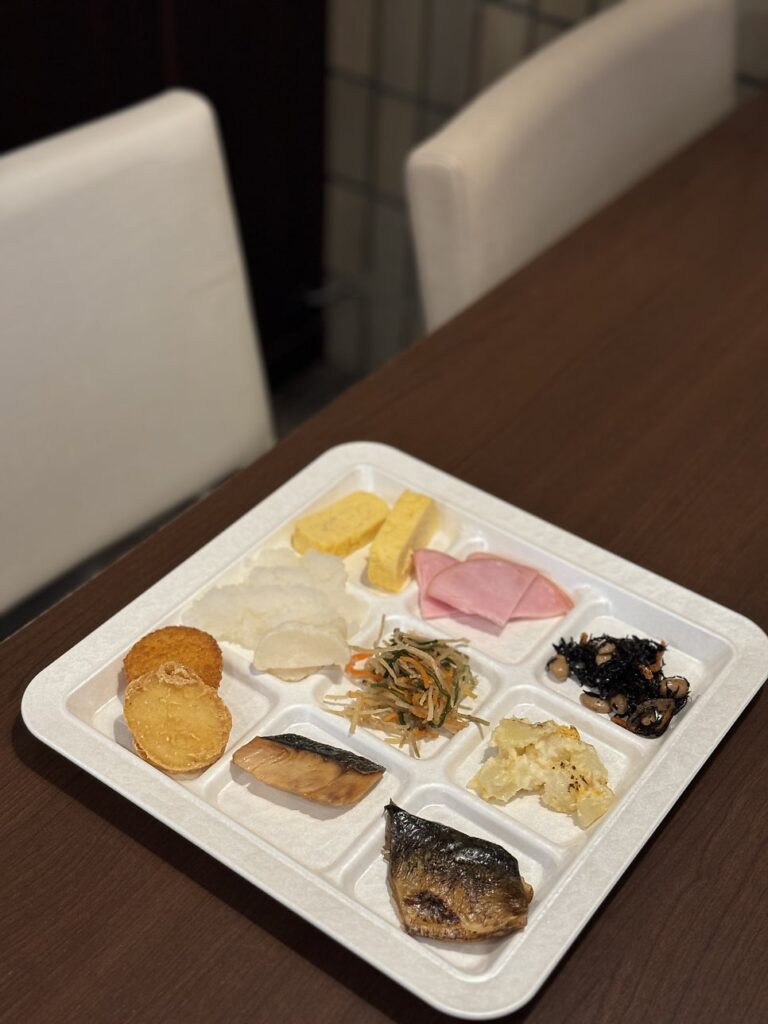
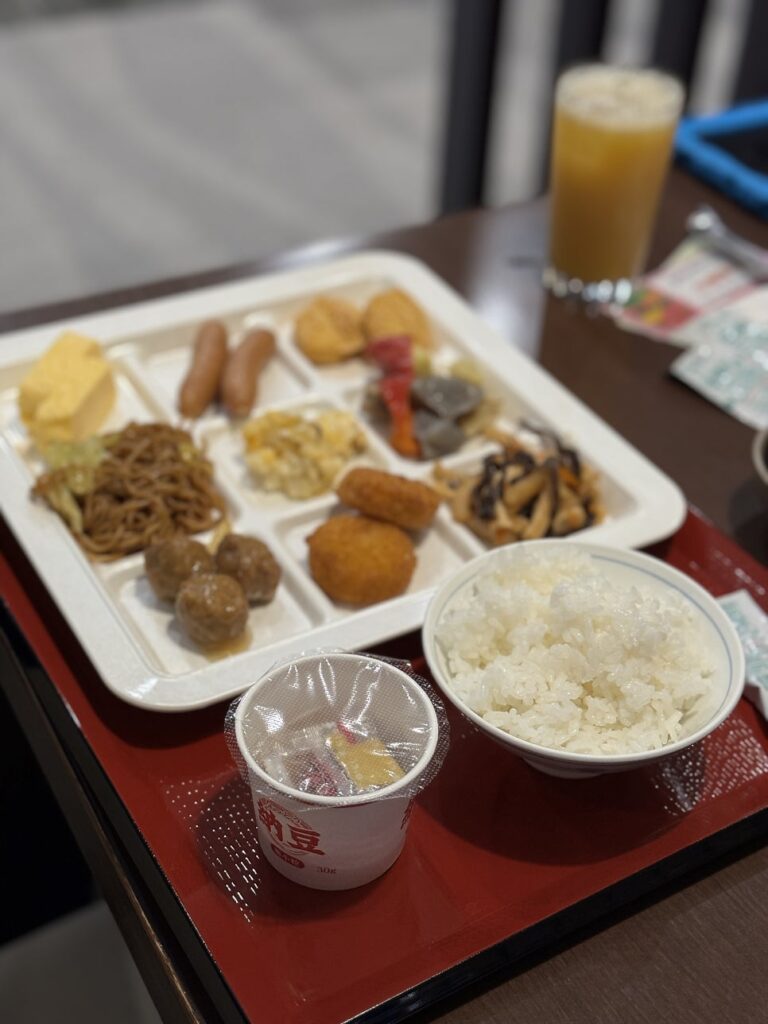
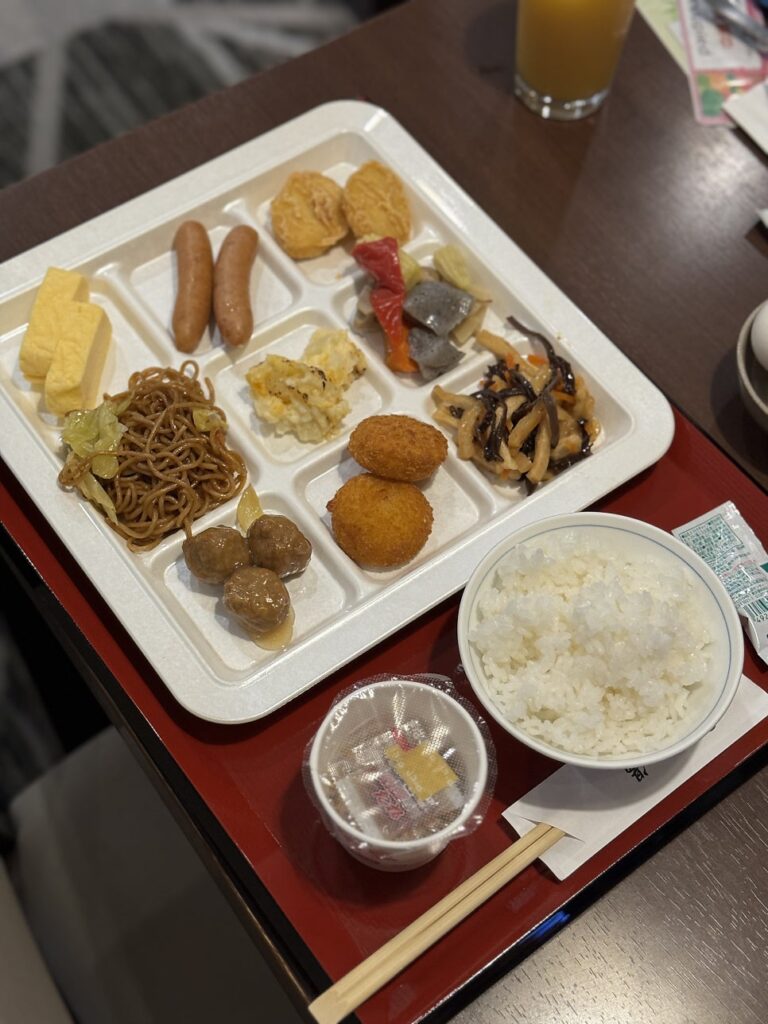
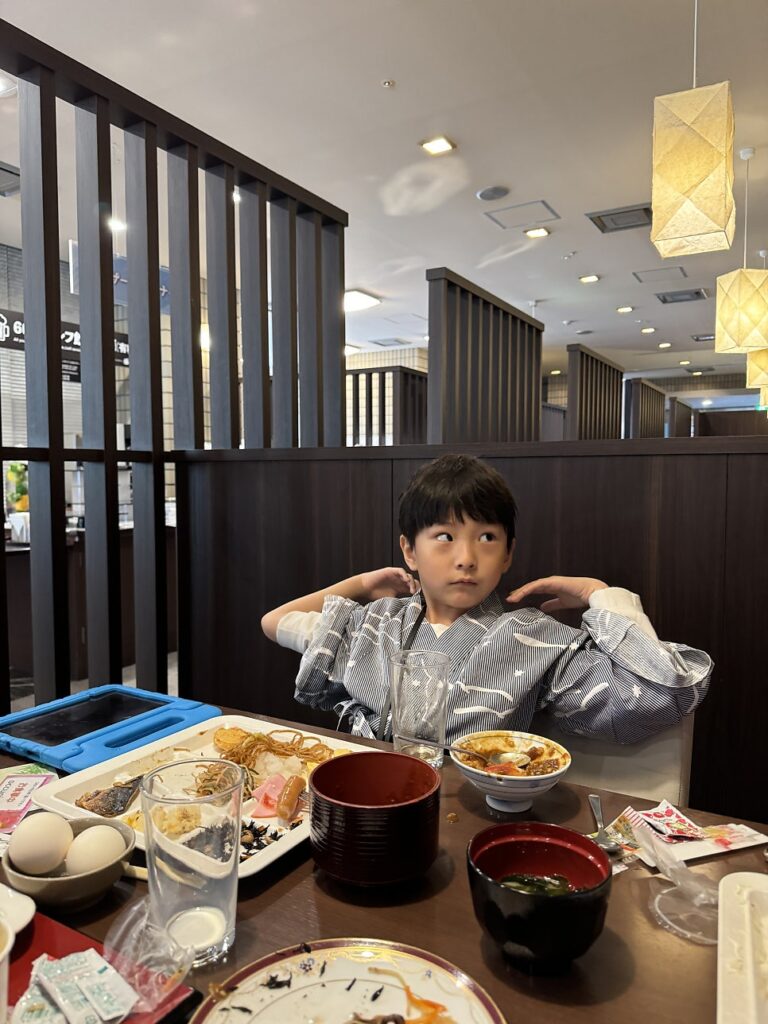
A beautifully laid-out breakfast at Manyo-no-yu. Yans enjoyed every meal at this hotel.
Kyoto is often done as a day trip or one night from Osaka. Manyo-no-yu is a little outside the city center, but it’s easy to fit into your plans. If Kyoto ryokan prices have held you back, this is an affordable way to unwind.
Prices, hours and details in this post are from our visit in May 2024 and may have changed, so check the latest information before you go.